
How to Identify Common Chiffchaff Feathers
A guide to recognizing the plain olive-brown, unmarked feathers of this tiny leaf warbler and separating them from similar warblers.
Read the full Common Chiffchaff encyclopedia entry →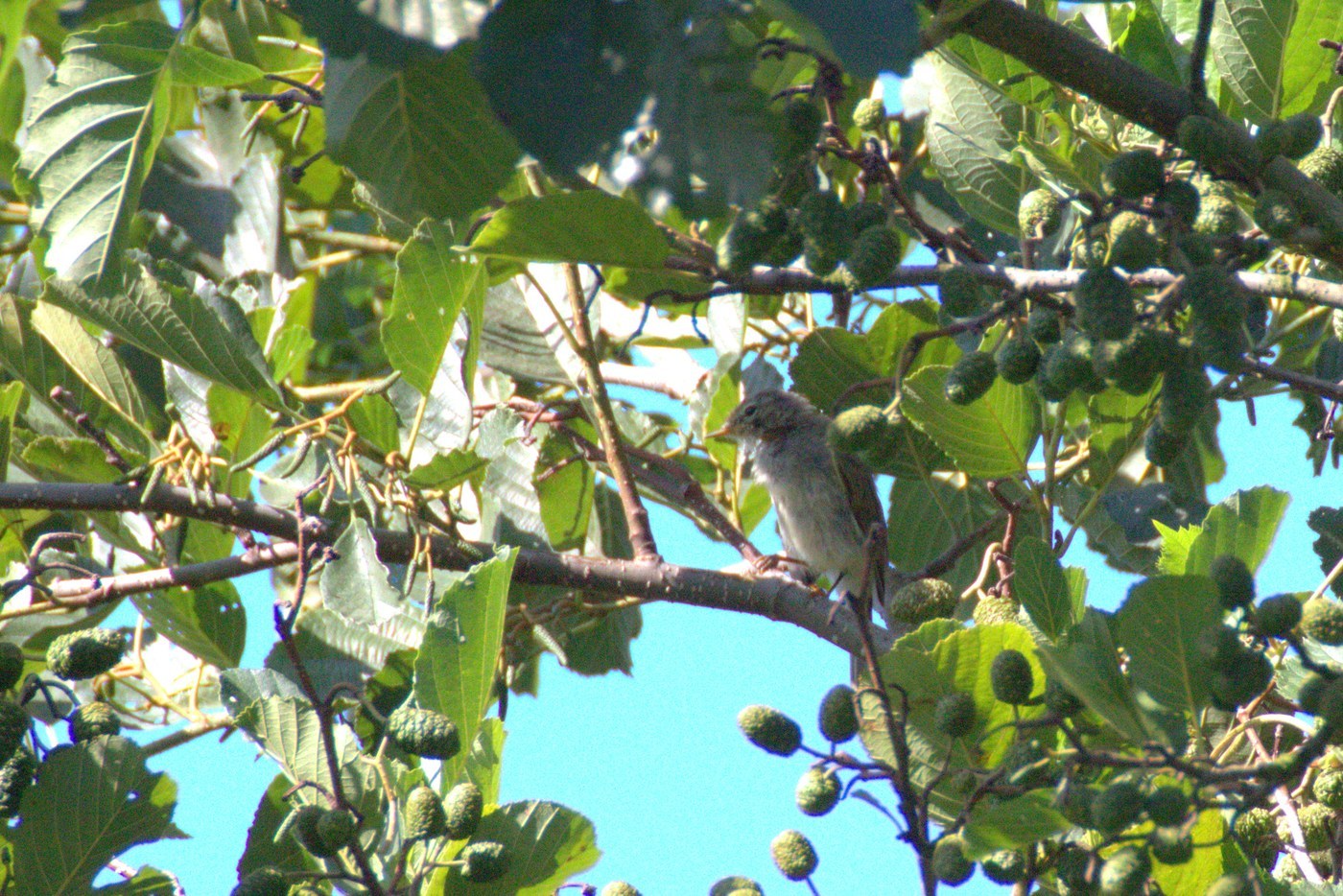
What Common Chiffchaff's Feathers Look Like
The Common Chiffchaff is a tiny, active leaf warbler found across Europe and Asia, and its feathers are deliberately understated — this is a bird identified more by voice than by plumage in the field, and feathers reflect that plainness. Upperpart feathers are a dull olive-brown to greyish-brown, without any bright green or yellow tones, and underparts are pale buffy-white to whitish, sometimes with a faint yellowish wash on the flanks and undertail. Crucially, this species shows no wing bars and no obvious eye-ring contrast on the feathers themselves — a plain, unmarked wing feather is actually a useful clue given how many similar-sized warblers do show wing bars.
Flight feathers are short relative to body size, a reflection of this species' relatively weak, fluttering flight style, and the primary feathers show only a modest primary projection past the longest secondaries — shorter than on more strongly migratory relatives like Willow Warbler. The tail is fairly short and squared, plain olive-brown with no white edges. Overall feather texture is soft, fine, and lightweight, consistent with an insectivorous bird weighing only about 6–8 grams.
Step-by-Step: Is This Feather From a Common Chiffchaff?
- Measure it first. Flight feathers are tiny, often only 4–5.5 cm, and tail feathers around 4.5–5.5 cm — among the smallest feathers you're likely to find from a perching bird.
- Check for plainness. No wing bars, no bold eye-ring, and no strong yellow-green tones is consistent with this species rather than brighter leaf warblers.
- Assess the color carefully. Dull olive-brown to greyish-brown, sometimes with a faint yellow tinge on flank/vent feathers, fits Chiffchaff better than the brighter green-yellow of many Phylloscopus warblers.
- Look at feather softness. Very fine, soft, lightweight feathers fit this tiny insectivore.
- Consider primary length. A comparatively short primary feather relative to the bird's small size hints at a short-distance migrant like Chiffchaff rather than a long-distance migrant warbler.
- Think about habitat. A tiny plain olive-brown feather found in scrub, woodland edge, or reedy habitat during migration season fits this common, widespread species.
Similar Species & How to Tell Them Apart
The Willow Warbler is the classic look-alike and essentially identical in plumage; Willow Warbler tends to be very slightly brighter yellow-green with paler legs (a soft-tissue feature, not visible on a feather), and shows a slightly longer primary projection — feather-only separation between these two is genuinely difficult and often not fully reliable. Wood Warbler is brighter yellow-green above with a cleaner white belly and is noticeably larger, producing bigger feathers. Common Whitethroat and other scrub warblers are larger with warmer brown tones and some show rufous in the wings, unlike Chiffchaff's plain olive-brown. Given the difficulty of separating Chiffchaff from Willow Warbler by feather alone, treat a tentative ID as "Phylloscopus warbler" unless other clues (location, season) tip the balance.
Where & When You'll Find Them
Common Chiffchaffs breed across most of Europe and temperate Asia in woodland with scrubby understory, and many populations migrate to southern Europe and Africa for winter, though increasing numbers now overwinter in milder parts of western Europe. Molt is typically completed on the breeding grounds in late summer before migration, so feathers are most likely to be found near breeding woodland and scrub from July into September, and again near wintering-ground scrub and reedbeds through the colder months in areas where birds overwinter.
Frequently asked questions
How can I tell a Chiffchaff feather from a Willow Warbler feather?
Honestly, it's very difficult — the two species are nearly identical in plumage. Willow Warbler tends to be marginally brighter yellow-green with a slightly longer primary projection, but feather-only separation is often unreliable.
Why does the feather look so plain with no markings?
Chiffchaffs rely on voice rather than striking plumage for identification, and their feathers are correspondingly unmarked — no wing bars, no bold face pattern — which is itself a useful negative clue against species that do show wing bars.
How small should I expect the feathers to be?
Very small — flight feathers often only 4–5.5 cm, reflecting this species' tiny 6–8 gram body size.
Could a brighter yellow-green feather still be a Chiffchaff?
Some individuals and subspecies show slightly more yellow-green tones, so a moderately bright feather isn't automatically ruled out, but a very bright, clean yellow-green feather is more likely a different Phylloscopus warbler.
When are Chiffchaff feathers most likely to turn up?
Late summer near breeding woodland and scrub during the post-breeding molt, and through winter near scrub and reedbeds in areas where the species overwinters.