
How to Identify Collared Aracari Feathers
Recognize a Collared Aracari feather by its glossy black upperparts, bright yellow underparts crossed by a dark belly band, a crimson rump patch, and a chestnut nape collar.
Read the full Collared Aracari encyclopedia entry →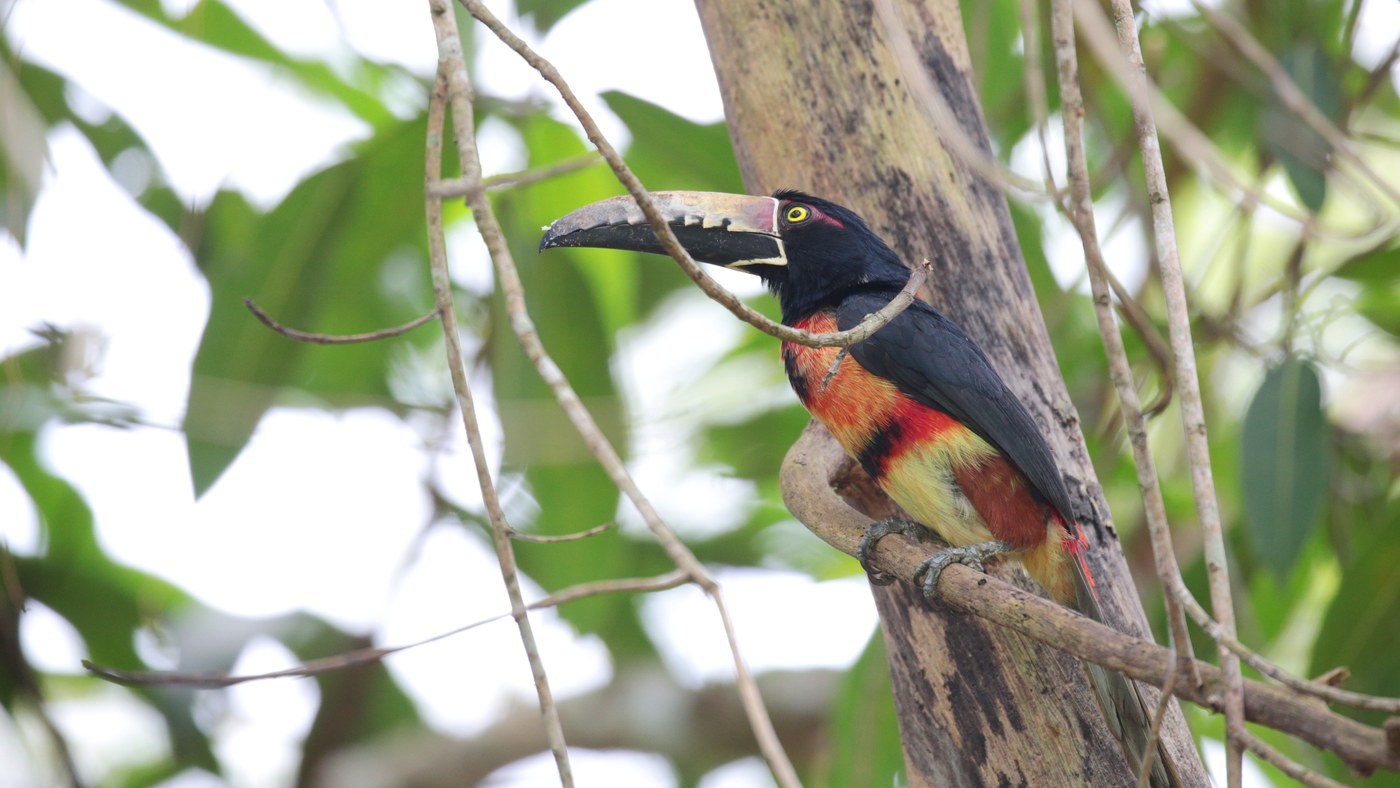
What Collared Aracari Feathers Look Like
The Collared Aracari is a small toucan of Central American lowland forest, and its feathers carry the same bold, tropical color-blocking as the living bird. The crown, back, and wings are glossy black, while the underparts are a bright yellow, crossed by a dark band mixing black and red across the lower breast/belly — look for a yellow contour feather with a contrasting dark or reddish band rather than plain yellow.
One of the best single clues is the rump: a patch of bright crimson-red feathers sits just above the tail, sharply contrasting with the black back — a color combination that stands out immediately even on a single loose feather. The nape carries a chestnut or rust-colored band, giving the species its "collared" name. Tail feathers are long and black, sometimes with reddish highlights near the tip or on the undertail coverts.
Step-by-Step: Is This Feather From a Collared Aracari?
- Check for a crimson rump feather: a bright red patch against an otherwise black-backed bird is highly diagnostic.
- Examine underparts feathers: bright yellow base color with a black-and-red band pattern crossing the belly.
- Look for a chestnut nape feather: a rusty collar-like band at the back of the neck.
- Confirm overall glossy black tone: crown, back, and wing feathers should show a rich black gloss, not dull brown.
- Consider size and range: a mid-sized toucan-family bird found in lowland tropical forest from Mexico to Colombia/Venezuela.
Similar Species & How to Tell Them Apart
- Other aracaris (Fiery-billed Aracari, etc.): share the same general body plan — black upperparts, yellow underparts with a belly band, red rump — so body feathers alone can be hard to separate between aracari species; range is often the most reliable guide, since most areas have only one aracari species present.
- Keel-billed Toucan: much larger overall, with more blue-green and orange tones on the body and no bright crimson rump patch, easily distinguished by its larger size and different color palette.
- Smaller toucanets: generally show more green in the plumage rather than Collared Aracari's black-and-yellow-and-red combination, and lack the chestnut nape collar.
Where & When You'll Find Them
Collared Aracaris live in lowland and foothill tropical forest from Mexico through Central America to Colombia and Venezuela, where they're non-migratory residents. Molt timing is tied loosely to the local breeding season, which varies by region but often clusters around the transition from dry to wet season. Feathers are most likely to be found near fruiting trees and forest canopy gaps, where these highly social, fruit-eating birds spend much of their time, and can turn up in any month given the species' year-round residency.
Frequently asked questions
What's the fastest way to confirm a feather is from an aracari at all?
Look for the combination of glossy black upperparts, bright yellow underparts crossed by a dark belly band, and a crimson rump patch — this general color-blocking is shared across aracari species and quickly narrows the identification.
How do I tell a Collared Aracari apart from other aracari species by feather?
Body feathers can look very similar across aracari species, so range is often the most reliable guide — check which aracari species is documented in the specific region where the feather was found, since most areas have only one.
Why does the rump feather matter so much for identification?
The bright crimson rump patch against black upperparts is a bold, easily recognized color combination that stands out clearly even on a single loose feather, unlike more subtly patterned parts of the body.
Is this a migratory species, meaning feathers only show up seasonally?
No, Collared Aracaris are non-migratory residents throughout their range, so feathers can be found in any month near fruiting trees and forest canopy habitat.