
How to Identify Cirl Bunting Feathers
Tell a Cirl Bunting feather apart using its bold black-and-yellow head pattern, olive-green breast band, and — most importantly — its plain olive rump rather than a chestnut one.
Read the full Cirl Bunting encyclopedia entry →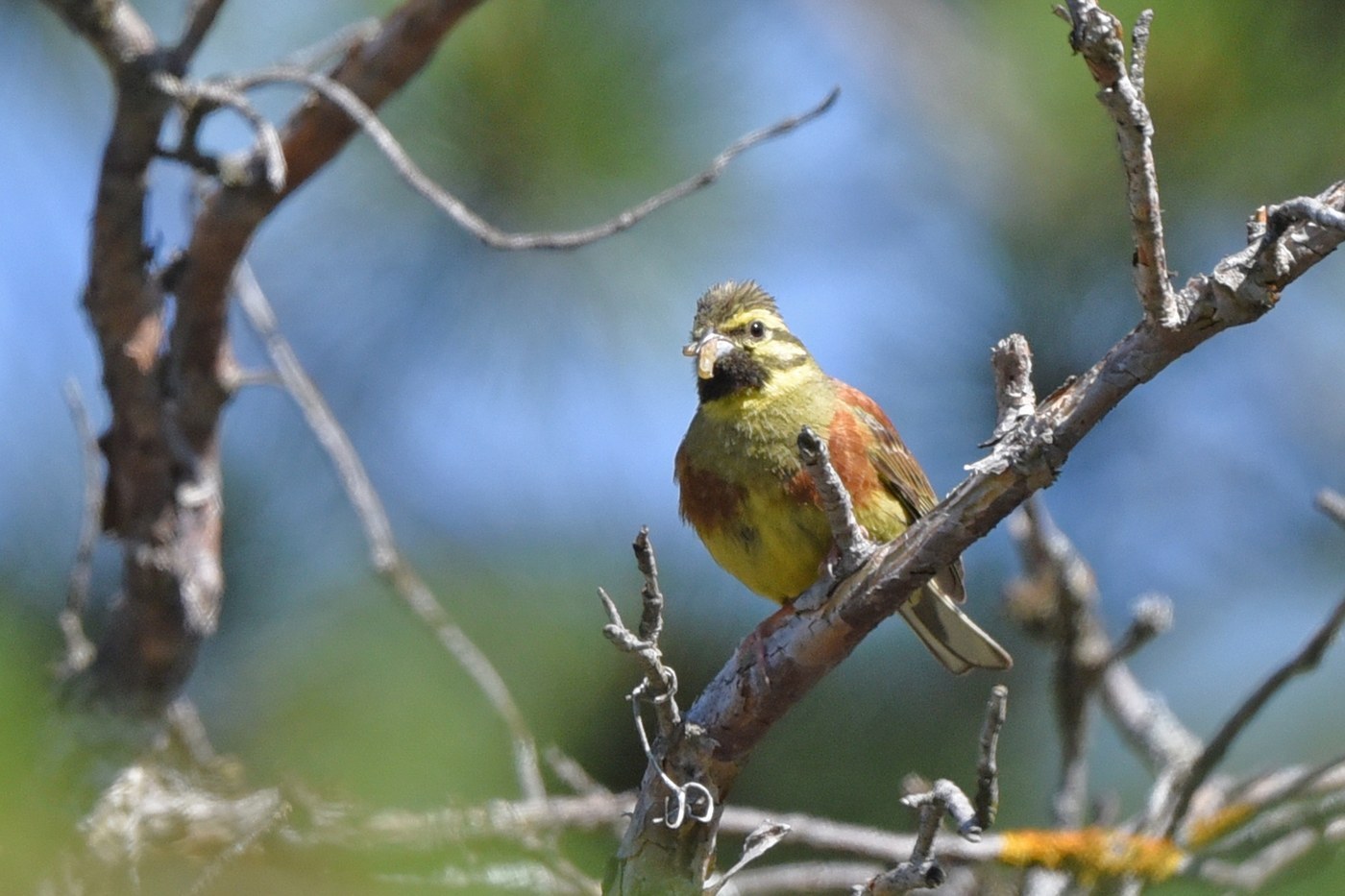
What Cirl Bunting Feathers Look Like
Male Cirl Buntings have one of the most striking head patterns among European buntings: a black crown, black eye-stripe, and black throat set against bright yellow supercilium (eyebrow) and submoustachial stripes, creating a bold, almost wasp-like facial pattern. Below this, an olive-green breast band crosses otherwise yellow underparts, and the belly is yellow.
The back is chestnut-brown with black streaking, typical bunting camouflage. The best single diagnostic feather, though, is from the rump: Cirl Bunting's rump is a plain, unstreaked olive-gray to olive-brown, distinctly different from the warm chestnut rump of its closest relative. The tail is dark with white edges on the outer feathers, standard for the genus.
Step-by-Step: Is This Feather From a Cirl Bunting?
- Check the head feather pattern: black throat and eye-stripe combined with yellow eyebrow/moustache stripes is a strong male indicator.
- Examine the rump feather color: olive-gray or olive-brown, NOT chestnut — this is the most important test if you're comparing against Yellowhammer.
- Look at the breast: an olive-green band crossing otherwise yellow underparts.
- Check the back: chestnut-brown feathers streaked with black.
- Confirm outer tail feathers: white edging typical of Emberiza buntings.
Similar Species & How to Tell Them Apart
- Yellowhammer: the closest relative and biggest identification challenge — Yellowhammer males have an all-yellow head without the black throat pattern, but critically, Yellowhammer's rump is chestnut/rufous, versus Cirl Bunting's olive rump. When only a rump feather is available, this color difference is the single best way to separate the two species.
- Ortolan Bunting: shows a gray-green head and pinkish underparts rather than Cirl Bunting's black-and-yellow facial pattern and olive-green breast band.
- Reed Bunting: has a black head/throat too, but lacks the yellow eyebrow/moustache combination and shows heavily streaked, whitish (not yellow) underparts.
Where & When You'll Find Them
Cirl Buntings favor warm, scrubby farmland, hedgerows, orchards, and vineyards across southern Europe, with a notable reintroduced population in Devon, England. They are largely resident, non-migratory birds, rarely wandering far from a home territory once established. Molt occurs after breeding, typically in late summer, so fresh feathers — including that diagnostic olive rump patch — are most likely to be found near hedgerow nesting and foraging territories from late summer into fall.
Because Cirl Buntings favor warm, insect-rich field margins and unimproved grassland edges for winter feeding, look for feathers along stubble fields, orchard hedges, and south-facing scrubby slopes where small flocks gather outside the breeding season. In cooler, more intensively farmed parts of its historic range the species has become scarce, so a confirmed feather find can be a useful sign of surviving habitat quality nearby.
Frequently asked questions
What's the single best feather to find if I want a confident ID?
A rump feather — Cirl Bunting's rump is olive-gray/olive-brown, while its closest look-alike, the Yellowhammer, has a chestnut/rufous rump, making this the clearest test.
How does the head pattern differ from a Yellowhammer's?
Male Cirl Bunting shows a black throat and black eye-stripe set against yellow eyebrow and moustache stripes, while Yellowhammer's head is essentially all yellow without that black throat patch.
Are Cirl Buntings migratory, meaning feathers only turn up seasonally?
No — they're largely resident year-round, so feathers can be found at any time near suitable scrubby farmland or hedgerow habitat, though most fresh ones appear after the late-summer molt.
Where in Europe is this species most likely to be found?
Warm, scrubby farmland and hedgerows of southern Europe, plus a notable reintroduced population in Devon, southwest England.