
How to Identify Cinnamon Teal Feathers
Identify a Cinnamon Teal feather by the male's solid rust-red body plumage, pale powder-blue wing covert patch, and glossy green speculum bordered in white.
Read the full Cinnamon Teal encyclopedia entry →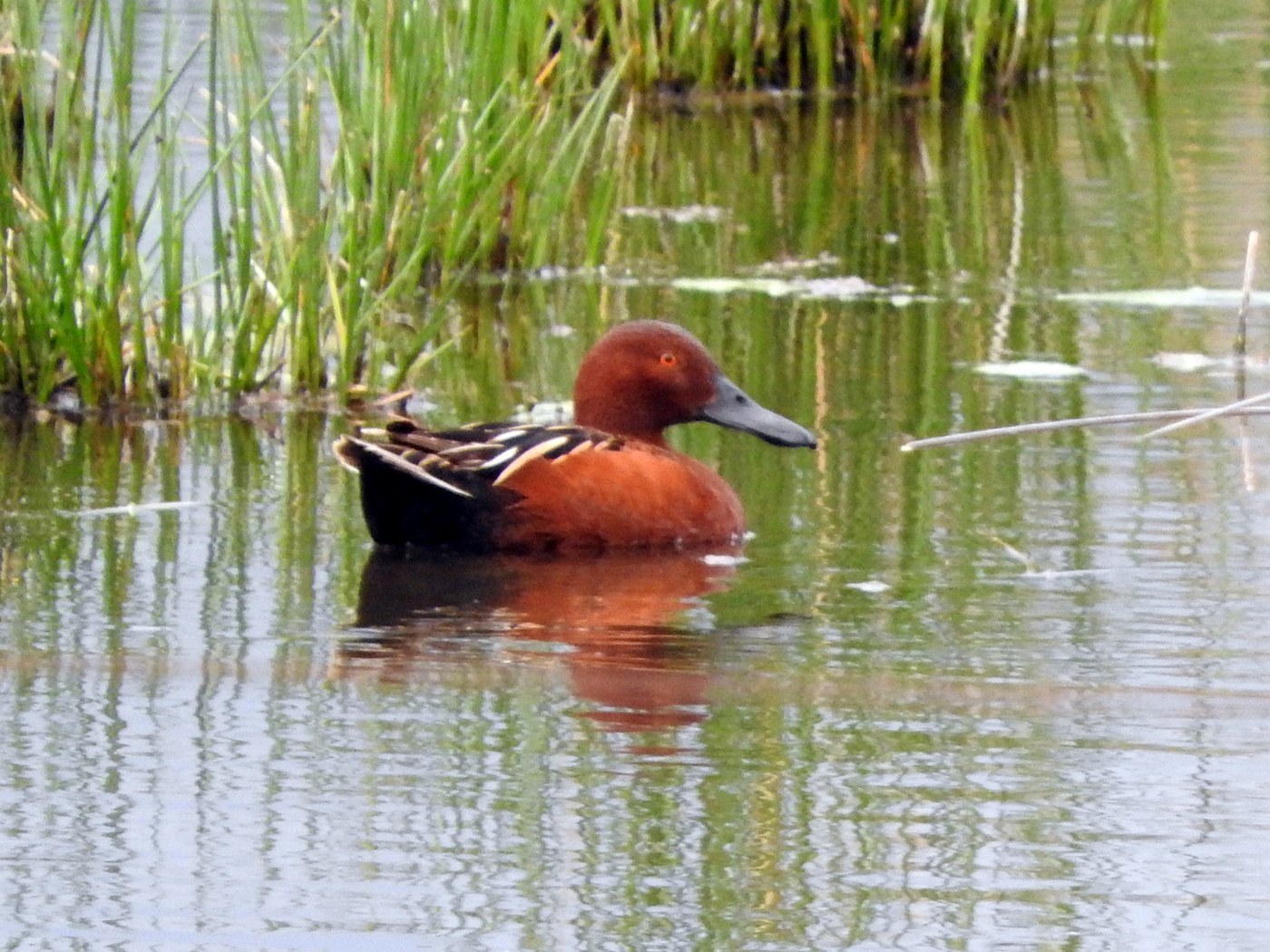
What Cinnamon Teal Feathers Look Like
Breeding male Cinnamon Teal are unmistakable in the field, with solid, deep cinnamon-red body plumage covering the head, neck, breast, and flanks — a rich rust tone with little to no patterning on most contour feathers, aside from occasional faint black speckling on the back. The eye is red, though that's not feather-related.
On the wing, look for a pale powder-blue patch on the upperwing coverts, a chalky sky-blue color found in only a small group of dabbling ducks. Bordering the speculum (the inner secondary feathers) is a thin white line, with the speculum itself showing glossy iridescent green. Females and eclipse-plumage males are cryptically mottled brown with buffy feather edges, much harder to distinguish by color alone, but they retain the same pale blue wing covert patch as a useful clue.
Step-by-Step: Is This Feather From a Cinnamon Teal?
- Check for solid rust-red body color: an unmarked, deep cinnamon contour feather points strongly to a male Cinnamon Teal.
- Look at wing covert feathers: a pale, chalky powder-blue color is diagnostic of the teal/shoveler group and narrows things considerably.
- Check the speculum feather: glossy iridescent green bordered by a white line indicates the secondary feathers of this group.
- If mottled brown: compare structure and blue covert patch — likely a female or eclipse male Cinnamon/Blue-winged Teal rather than another duck.
- Consider size: a small dabbling duck, so feathers are modest in size compared to mallards or pintails.
Similar Species & How to Tell Them Apart
- Blue-winged Teal: shares the identical pale blue wing covert patch and green speculum, making wing feathers alone hard to separate; the best clue is body feather color — Blue-winged Teal males show grayish-brown mottled body plumage, not the solid rust-red of Cinnamon Teal. Females of the two species are extremely similar and often not reliably separable by feather alone.
- Northern Shoveler: also shows a similar pale blue wing patch, but is a larger duck overall with a much bigger, spoon-shaped bill (not feather-related) and males show a glossy green head rather than cinnamon body plumage.
- Green-winged Teal: has a chestnut head but a different (green, not blue) wing patch and a grayish, vermiculated body rather than solid rust — the wing covert color is the quickest separator.
Where & When You'll Find Them
Cinnamon Teal favor freshwater marshes, ponds, and shallow wetlands of western North America, with a separate population in South America. Breeding occurs in spring and summer, and males undergo an "eclipse" molt in mid-to-late summer, temporarily losing their flight feathers all at once (becoming flightless) while taking on a drab, female-like body plumage. This means many contour and flight feathers are shed around wetland margins during this eclipse period. Northern populations migrate to Mexico and Central America for winter.
Frequently asked questions
Can I always tell Cinnamon Teal and Blue-winged Teal apart from feathers?
Body feathers usually work — Cinnamon Teal males are solid rust-red while Blue-winged Teal males are grayish-brown and mottled — but wing covert and speculum feathers look nearly identical between the two species, and females of both are very difficult to separate by feather alone.
Why would I find a drab brown feather from a male Cinnamon Teal?
Males molt into a female-like eclipse plumage in mid-to-late summer after breeding, becoming flightless for a period and shedding both body and flight feathers, so drab brown feathers with a pale blue wing patch can still belong to a male.
What makes the wing covert patch pale blue rather than white?
It's a structural, chalky powder-blue coloration shared by the teal and shoveler group of dabbling ducks, distinct from the bright white seen in some other waterfowl wing patches.
When are Cinnamon Teal feathers most likely to be found at a marsh?
During the mid-to-late summer eclipse molt, when adults are flightless and shedding feathers heavily around wetland vegetation, and again in early spring as breeding plumage feathers get replaced.