
How to Identify Chestnut-headed Oropendola Feathers
A guide to identifying Chestnut-headed Oropendola feathers by the rich chestnut head/neck and bright yellow outer tail feathers.
Read the full Chestnut-headed Oropendola encyclopedia entry →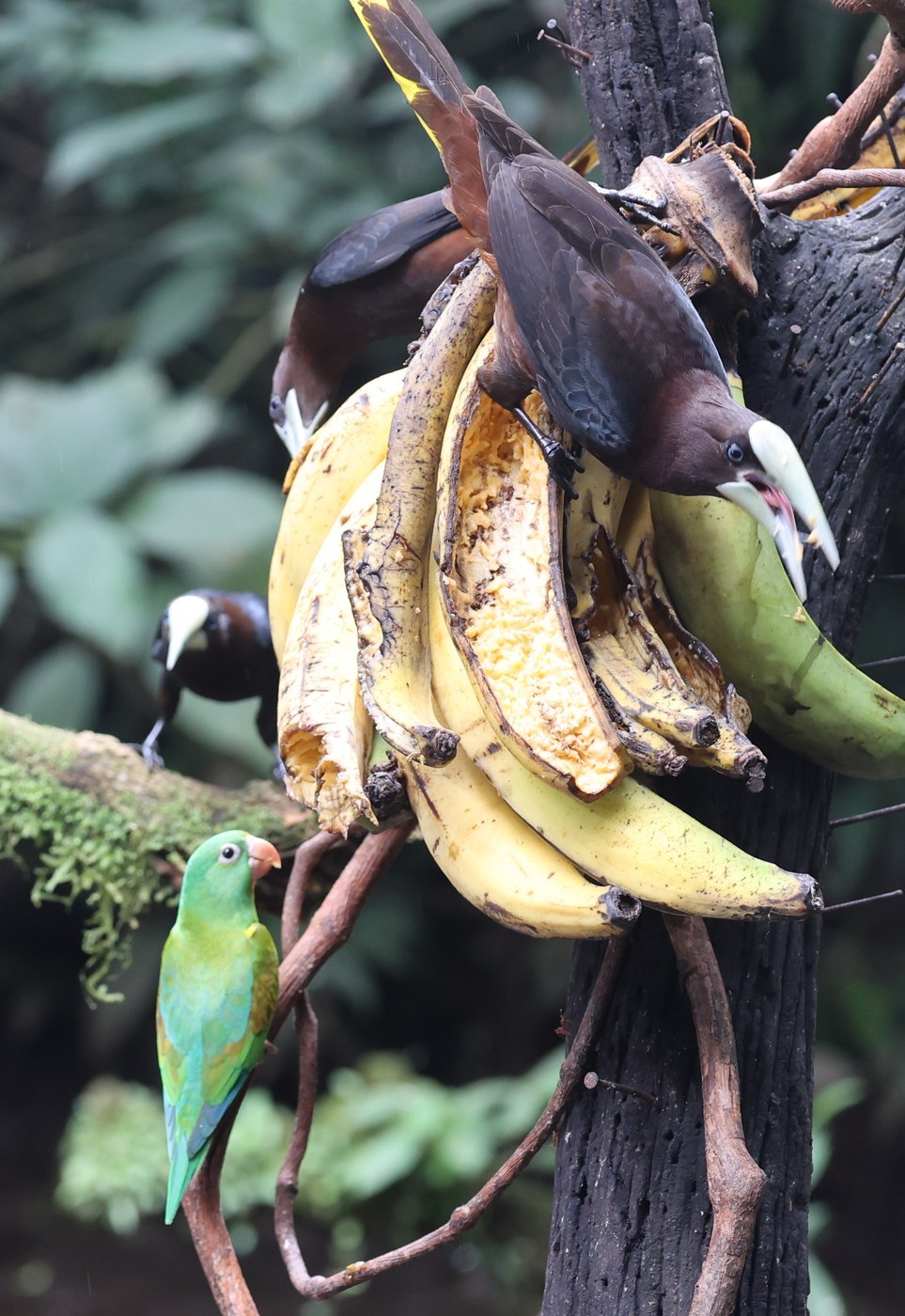
What Chestnut-headed Oropendola's Feathers Look Like
Chestnut-headed Oropendola is a colonial-nesting icterid of Central and northern South America, and its most distinctive feathers come from two very different regions of the body. The head and neck feathers are a rich chestnut/rufous, sharply contrasting with the glossy black feathers covering the rest of the body. The other key diagnostic area is the tail: while the central tail feathers stay black, the outer tail feathers are bright yellow — a hallmark trait of oropendolas in general and clearly visible both in flight and on a single molted feather. Bare cheek skin is pale blue-green, but that's skin rather than feather. Wing feathers are glossy black, and the bill has a pale tip, though bill color isn't a feather trait.
Step-by-Step: Is This Feather From a Chestnut-headed Oropendola?
- Check the head/neck region first. A rich chestnut feather specifically from the head or neck (not the body) is a strong diagnostic clue.
- Look at outer tail feathers. A bright yellow tail feather, especially paired with black central tail feathers from the same bird, is one of the most reliable oropendola-family clues available.
- Assess body feather color. Glossy black elsewhere on the body supports this species.
- Measure size. Moderate size — smaller than the much larger Montezuma Oropendola.
- Consider the color layout. Chestnut confined to head/neck only (not spreading across the body) is key — see the comparison below.
- Consider range. Humid lowland/foothill forest from Central America into northwestern South America supports this species.
Similar Species & How to Tell Them Apart
- Montezuma Oropendola is much larger and shows the opposite color layout: a chestnut body with a black head and neck, plus a bicolored red-and-orange bill tip — essentially reversed from Chestnut-headed Oropendola's chestnut head/black body pattern.
- Other oropendolas and caciques in the region generally lack chestnut coloring on the head altogether, making a chestnut-headed feather with bright yellow outer tail feathers fairly distinctive once size rules out Montezuma.
- The yellow outer tail feathers are shared across the oropendola family broadly, so use head/body color layout, not tail color alone, to nail down the species.
Where & When You'll Find Them
Chestnut-headed Oropendola inhabits humid lowland and foothill forest from Central America south into northwestern South America, nesting colonially with distinctive long, hanging woven nests in tall trees. As a tropical resident, it molts gradually throughout the year rather than on a sharply defined seasonal schedule, with feathers most often found on the ground beneath colony trees where dozens of hanging nests may be clustered together.
Frequently asked questions
What's the key diagnostic feather for Chestnut-headed Oropendola?
A rich chestnut feather specifically from the head or neck, paired with bright yellow outer tail feathers and glossy black body feathers.
How is this different from Montezuma Oropendola?
Montezuma Oropendola has the reverse pattern — chestnut body with a black head and neck — plus a much larger overall size.
Are yellow outer tail feathers unique to this species?
No, they're a shared trait across oropendolas generally, so use head/body color layout to confirm the specific species.
Is there a specific molt season?
No strong seasonality — as a tropical resident, molt is gradual throughout the year.
Where should I look for these feathers?
Beneath colony trees with hanging woven nests in humid lowland or foothill forest from Central America into northwestern South America.