
How to Identify Chestnut-eared Bunting Feathers
A guide to identifying Chestnut-eared Bunting feathers, marked by a chestnut cheek patch and a spotted chestnut breast band.
Read the full Chestnut-eared Bunting encyclopedia entry →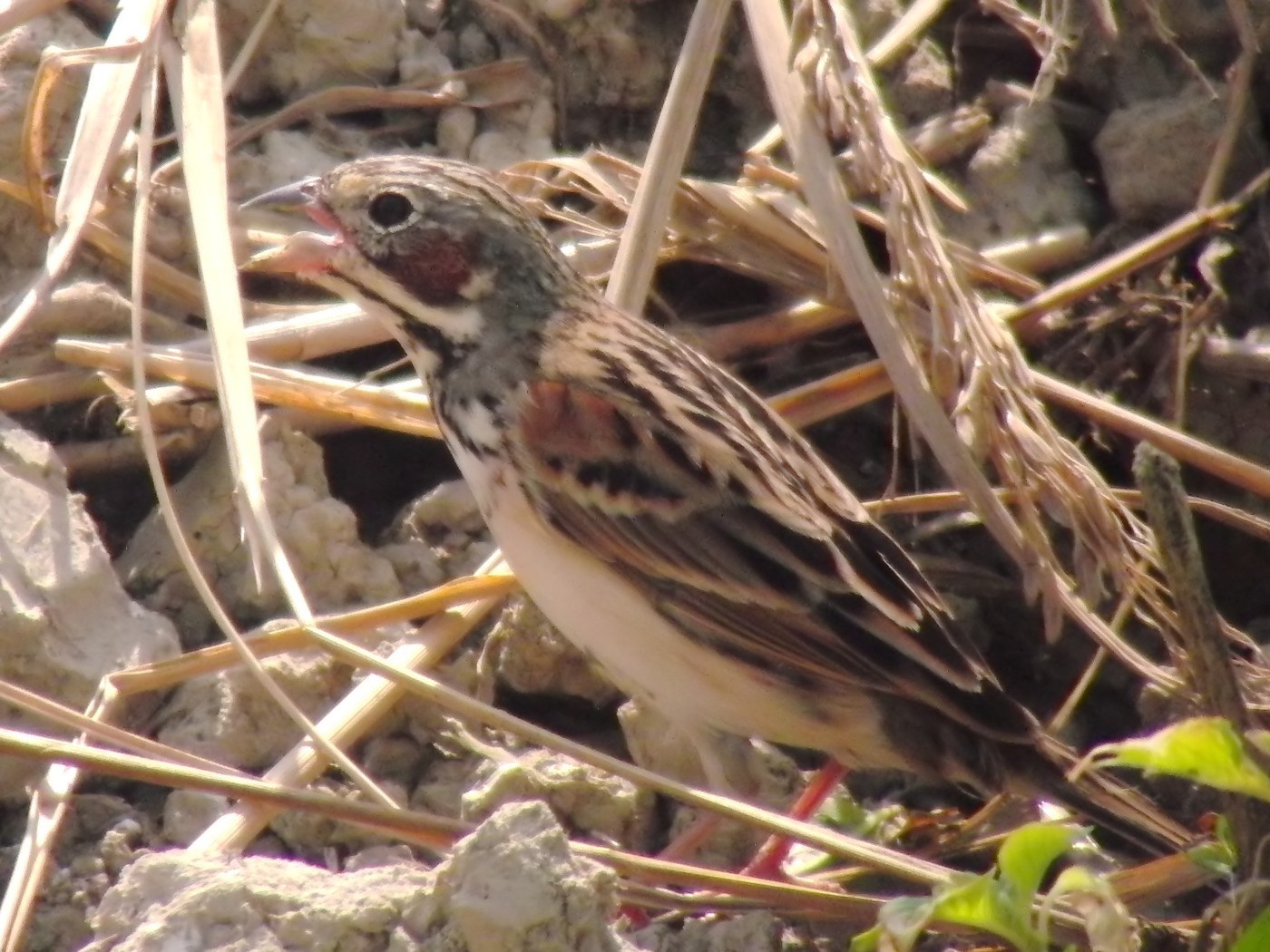
What Chestnut-eared Bunting's Feathers Look Like
Breeding male Chestnut-eared Bunting shows a gray head with a distinctive chestnut ear/cheek patch — a warm rufous stripe across the side of the face that stands out against the cooler gray crown. Below that, a chestnut breast band flecked with black spotting crosses an otherwise white underside, giving the bird a "necklace" appearance similar in concept to some other buntings but with its own specific color combination. The back is streaked brown, black, and buff, and the tail feathers are dark with narrow white edges on the outer feathers, a common bunting-family trait.
Step-by-Step: Is This Feather From a Chestnut-eared Bunting?
- Check the cheek/ear region. A chestnut-colored feather from the side of the face, set against gray crown feathers, is the most diagnostic clue.
- Look at the breast area. A chestnut feather with fine black spotting, from a band-like region across the upper breast, supports this species strongly.
- Assess the crown. Gray, lightly streaked crown feathers (not solidly chestnut like the cheek) fit the pattern.
- Check tail feather edges. Narrow white edges on dark outer tail feathers confirm bunting family membership.
- Measure size. Small, typical bunting-sized feathers fit the profile.
- Consider range and season. Northeast Asian grassy wetland edges in summer, or South China/Southeast Asia/India in winter, supports this species.
Similar Species & How to Tell Them Apart
- Chestnut Bunting is an entirely different pattern — overall chestnut head/back with plain yellow underparts and no breast band or cheek-specific patch — so a chestnut cheek feather paired with a spotted breast band clearly points to Chestnut-eared rather than Chestnut Bunting.
- Meadow Bunting, a close relative with a similar streaked breast band, has a broader, bolder white supercilium (eyebrow stripe) and lacks as bold a chestnut cheek patch — the strength and boldness of the cheek patch is the best way to separate the two.
- The specific combination of chestnut cheek patch + spotted chestnut breast necklace is what narrows the ID to Chestnut-eared Bunting among regional buntings.
Where & When You'll Find Them
Chestnut-eared Bunting breeds across northeastern Asia — Siberia, China, Japan, and Korea — favoring grassy wetland edges, damp meadows, and scrubby habitat near water rather than dry open steppe. It's migratory, wintering across southern China, Southeast Asia, and parts of India, typically in similar damp grassy or reedy habitat. The post-breeding molt happens in July and August after nesting concludes, so feathers are most likely to be found near breeding-ground wetland edges in late summer, or on wintering grasslands and marsh edges further south through the colder months.
Frequently asked questions
What's the key identifying feature of a Chestnut-eared Bunting feather?
A chestnut-colored cheek/ear patch feather paired with a black-spotted chestnut breast band feather, set against a gray crown.
How is this different from Chestnut Bunting?
Chestnut Bunting has an overall chestnut head and back with plain yellow underparts and no breast band, a completely different pattern.
What about Meadow Bunting?
Meadow Bunting has a bolder, broader white eyebrow stripe and a less pronounced chestnut cheek patch than Chestnut-eared Bunting.
When does this species molt?
Post-breeding molt occurs in July and August after nesting, before migration south.
Where should I look for these feathers?
Grassy wetland edges in northeastern Asia during breeding season, or grasslands of southern China, Southeast Asia, and India in winter.