
How to Identify Cave Swallow Feathers
How to recognize Cave Swallow feathers by their cinnamon forehead and throat, and separate them from the very similar Cliff and Barn Swallows.
Read the full Cave Swallow encyclopedia entry →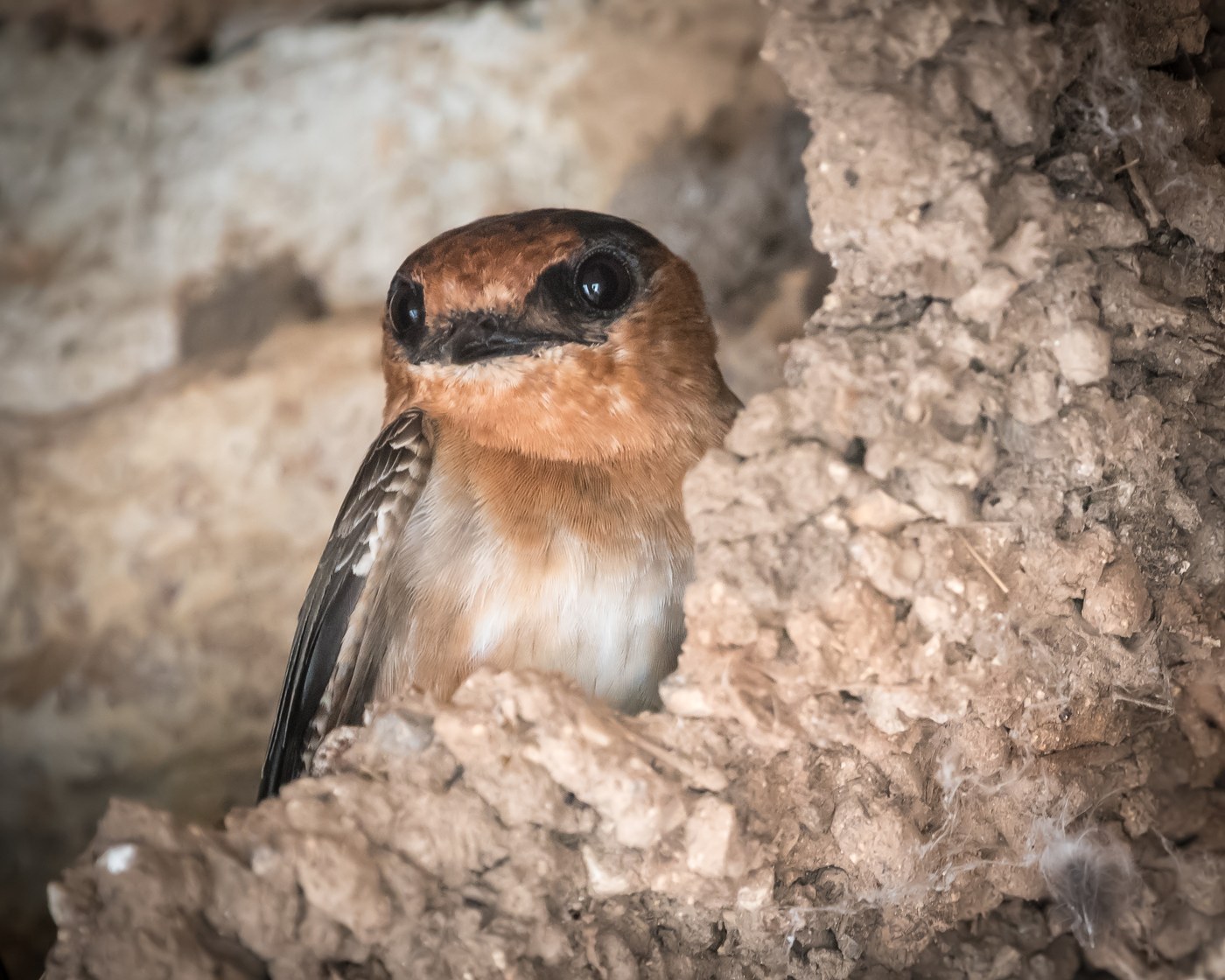
What Cave Swallow's Feathers Look Like
Cave Swallow is a small, compact swallow with a steel-blue crown and back, a buffy cinnamon forehead patch, and a pale cinnamon throat — the two features that give this species away even from a single feather. Body contour feathers are tiny, typically 2–4 cm, with the throat and forehead feathers washed warm buff-orange while the back and crown feathers are dark, glossy blue-black. The rump is a rich chestnut/rufous patch, similar to its close relative the Cliff Swallow. The tail is only shallowly notched (not deeply forked), and tail feathers are short, dark, and squared-off compared to Barn Swallow. Flight feathers (primaries) are narrow and pointed, built for the fast, agile flight typical of aerial insect-hunters.
Step-by-Step: Is This Feather From a Cave Swallow?
- Measure it. Contour feathers under 4 cm and flight feathers around 8–9 cm fit a small swallow; anything larger is a different bird.
- Check the throat/forehead tone. A warm cinnamon-buff color on throat or forehead feathers (not stark white, not dark rufous-red) points to Cave Swallow.
- Look at the rump feathers. A solid chestnut rump feather supports this group of swallows (Cave and Cliff) over Barn Swallow.
- Examine tail shape. A shallow notch rather than long streamers rules out Barn Swallow.
- Note gloss. Crown and back feathers should have a blue-black sheen typical of swallows, not a duller brown.
- Factor in location. A cinnamon-throated swallow feather found near caves, culverts, or bridges in Texas, Florida, or the Caribbean strongly favors Cave Swallow.
Similar Species & How to Tell Them Apart
- Cliff Swallow looks nearly identical in structure but has a pale, whitish forehead patch and a darker, more chestnut throat, essentially the reverse color pattern from Cave Swallow's cinnamon forehead and paler throat.
- Barn Swallow has a deeply forked tail with long streamers, a solid rufous forehead and throat, and a glossy blue-black back without the pale rump patch — the tail shape alone separates it from both Cave and Cliff Swallow feathers.
- Within the Cave/Cliff pair, comparing forehead versus throat color is the most reliable single test: Cave Swallow's forehead is the paler, buffier of the two areas; Cliff Swallow's forehead is paler than its throat, but the tones run opposite.
Where & When You'll Find Them
Cave Swallows nest colonially in caves, sinkholes, culverts, and increasingly under highway bridges and overpasses across Texas, the Caribbean, Mexico, and (a resident subspecies) Florida. Most feathers are recovered near these nest colonies during the breeding season (spring through summer). Many populations winter in Mexico and Central America, undergoing a complete molt on the wintering grounds, so fresh feathers found at nest sites in late summer through fall are typically from the breeding attempt just finished.
Frequently asked questions
What's the quickest way to tell Cave Swallow from Cliff Swallow feathers?
Compare forehead and throat color: Cave Swallow has a cinnamon-buff forehead and paler throat, while Cliff Swallow has a pale/whitish forehead and darker chestnut throat — essentially opposite emphasis.
Does a deeply forked tail feather rule out Cave Swallow?
Yes. Cave Swallow's tail is only shallowly notched; long forked streamers belong to Barn Swallow.
Where are Cave Swallow feathers most likely to be found?
Near their colonial nest sites in caves, culverts, sinkholes, and bridge undersides, especially in Texas, Florida, the Caribbean, and Mexico.
Are Cave Swallow flight feathers long like a swift's?
They're narrow and pointed for agile flight, but shorter overall than a swift's, matching the swallow's smaller body size.
Is the chestnut rump feather unique to Cave Swallow?
No, Cliff Swallow shares a similar chestnut rump, so rump color alone won't separate the two — use the forehead/throat comparison instead.