
How to Identify Burrowing Owl Feathers
A field guide to the barred, ground-adapted feathers of this long-legged prairie and desert owl.
Read the full Burrowing Owl encyclopedia entry →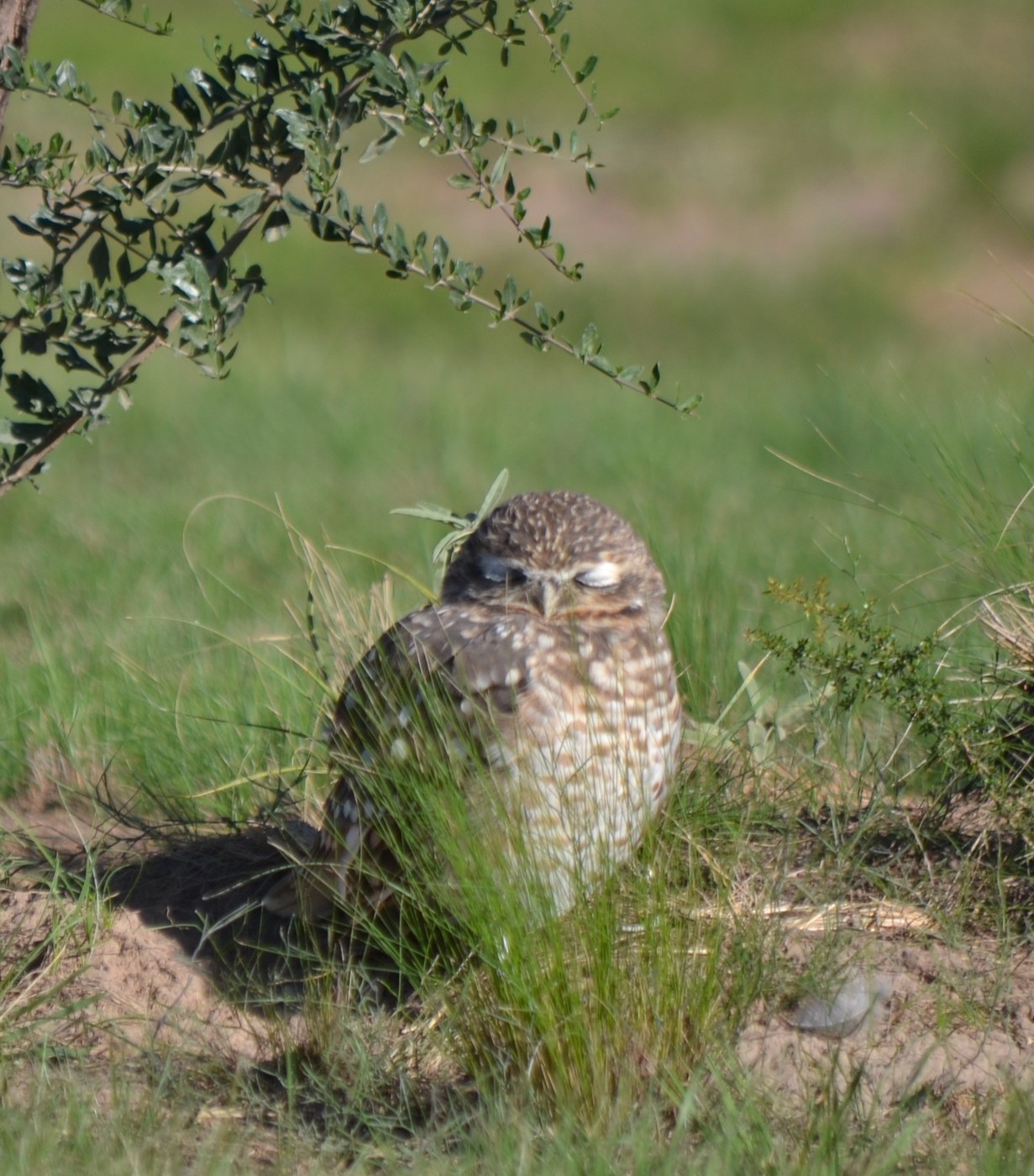
What Burrowing Owl's Feathers Look Like
Burrowing Owls are small, ground-dwelling owls without ear tufts, and their feathers reflect an open-country lifestyle rather than a forest one. Back and crown feathers are earthy brown, spotted with white or buff, giving a mottled, sandy appearance well suited to camouflage against dirt mounds and dry grass. Underparts feathers are pale, showing fine brown barring on a white or buffy background, particularly across the breast and belly, rather than the bold spotting of the upperparts.
The facial disc is plain buffy-brown with prominent white eyebrow-like markings above each eye, and the eyes themselves are bright yellow. Because this owl spends much of its life on the ground and walking on long, sparsely feathered legs, leg feathering is notably reduced and short compared to more typical owls, with feathering giving way to bare skin lower down the leg. Flight feathers are relatively short and rounded, brown with pale buff barring, an adaptation for low, direct flight over open ground rather than maneuvering through trees.
Step-by-Step: Is This Feather From a Burrowing Owl?
- Check the barring pattern. Fine brown bars on white or buffy underparts feathers, paired with mottled brown-and-white spotting on back feathers, fits this species.
- Look at leg feathering, if present. Sparse, short feathering that stops well above the foot supports Burrowing Owl's ground-adapted legs.
- Assess size. This is a small owl, so feathers will be modest in size, generally smaller than most North American owls apart from screech-owls and pygmy-owls.
- Note facial feather pattern. White markings resembling eyebrows on an otherwise plain buffy face is a helpful clue if a facial feather is found.
- Consider flight feather shape. Short, rounded flight feathers suit a bird that flies low over open ground rather than through trees.
- Factor in habitat. A feather found in open grassland, desert scrub, prairie dog colonies, golf courses, or airport margins strongly supports this species over forest owls.
Similar Species & How to Tell Them Apart
Eastern and Western Screech-Owls are similarly small but show much bolder, more contrasting vertical streaking, ear tufts (visible on a whole bird), and typically live in trees rather than burrows. Short-eared Owl, another open-country species, is considerably larger with more heavily streaked underparts and longer wings built for buoyant flight over marshes and fields. Small falcons like American Kestrel can share open habitat but have entirely different feather texture — kestrel feathers are stiffer and more vividly rufous/blue-gray, lacking the soft owl-type barring. The combination of small size, ground/burrow habitat, and fine barring without ear tufts is distinctive for Burrowing Owl.
Where & When You'll Find Them
Burrowing Owls live in open grassland, prairie, desert, and agricultural habitats across the western United States and parts of Florida, as well as much of Latin America, nesting in abandoned burrows dug by prairie dogs, ground squirrels, or tortoises rather than tree cavities. Feathers are most often found at or near active burrow entrances, where owls perch on mounds and molt through the year, with the heaviest feather turnover following the breeding season in late summer. In migratory northern populations, feathers may also be found along travel routes in spring and fall, while southern and Florida populations are largely resident year-round.
Frequently asked questions
How do I know a feather is from a ground-dwelling owl rather than a tree-dwelling one?
Sparse, short leg feathering that gives way to bare lower legs is a strong clue tied to Burrowing Owl's habit of walking on the ground and around burrows.
What's the main pattern difference between back and breast feathers?
Back and crown feathers show bold white/buff spotting on brown, while breast and belly feathers show finer brown barring on a paler background.
Could this be a screech-owl feather instead?
Screech-owls show bolder vertical streaking and typically have ear tufts, plus they favor trees over open ground and burrows, which helps separate the two.
Why would I find this feather near a prairie dog colony?
Burrowing Owls commonly nest in old prairie dog or ground squirrel burrows, so feathers often accumulate right at burrow entrances where owls perch and roost.
When is the best time to find fresh feathers?
Late summer, following the breeding season, is typically when feather turnover peaks, though resident southern populations can produce feathers throughout the year.
Burrowing Owl identified by the community
Recent Burrowing Owl feathers identified with Feather Identifier.

