
How to Identify Brolga Feathers
How to tell whether a large gray feather with a drooping, loose-plumed shape came from a Brolga, Australia's tall wetland crane.
Read the full Brolga encyclopedia entry →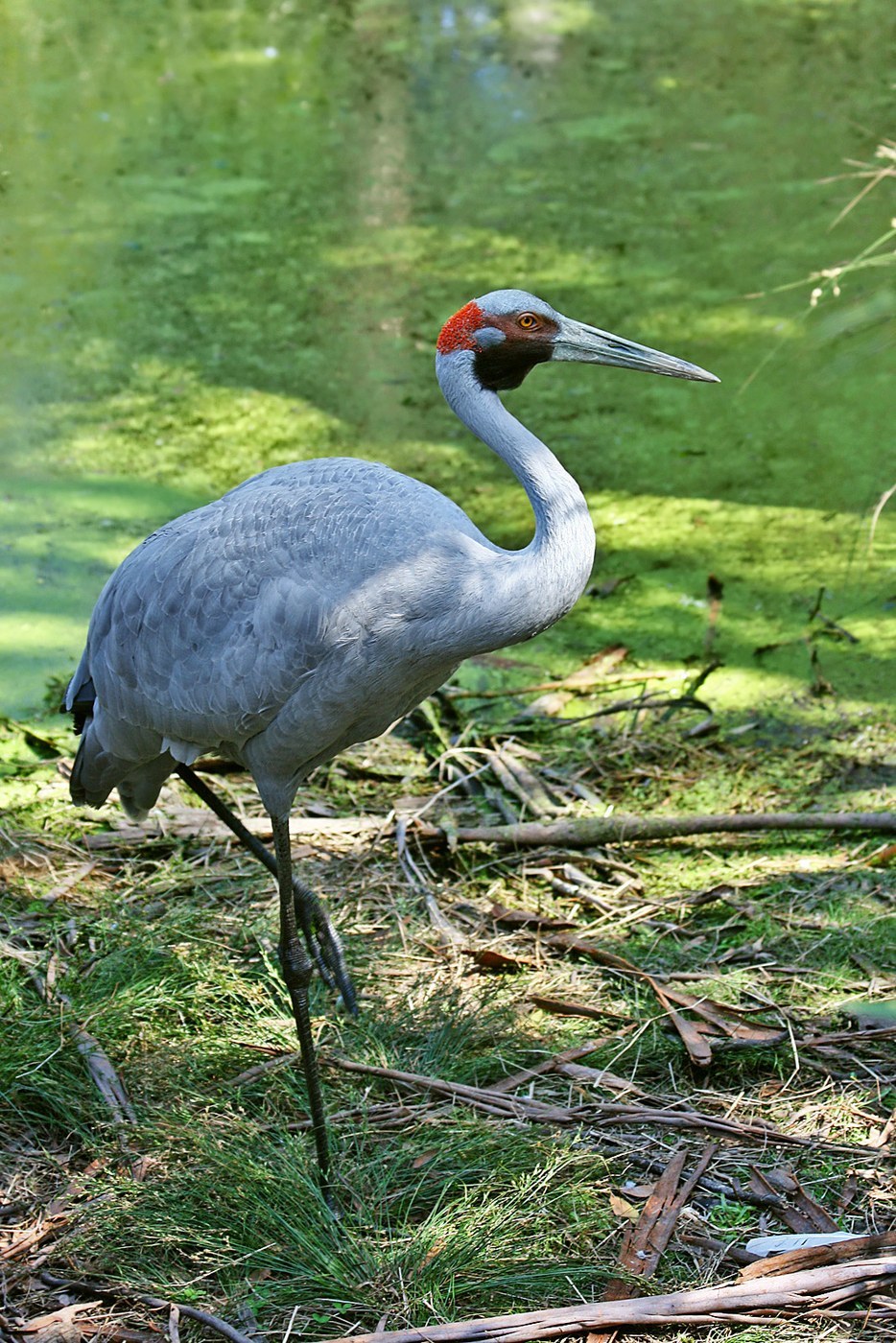
What Brolga Feathers Look Like
Brolgas are among the tallest birds in Australia, standing up to 1.7 m with a wingspan over 2 m, and their feathers scale accordingly.
- Body/contour feathers: soft, loosely textured, and pale gray overall — cranes have a distinctively fluffy, almost fur-like body plumage compared to the sleeker feathers of herons or ducks.
- Flight feathers: long and broad (often 30-45 cm), blackish-gray, stiff-vaned, found on the outer wing.
- Tertials ("bustle" feathers): elongated, curved, drooping plumes that arch over the tail when the wing is folded — this loose, ornamental over-tail plume is a signature crane feature not seen in herons, ibises, or bustards.
- Tail feathers: short, blackish-gray, largely hidden beneath the tertial bustle in life.
- Shaft color: dark gray to blackish on flight feathers, paler on body feathers.
Step-by-Step: Is This Feather From a Brolga?
- Measure it. Anything in the 30-45 cm range for a flight feather, or a very large, soft gray body feather, is consistent with a crane-sized bird.
- Check for the drooping "bustle" shape. If the feather is elongated, curved, and loosely plumed rather than a tight symmetrical vane, it likely came from the tertial/covert region unique to cranes.
- Confirm the color is a clean, even gray, not patterned, spotted, or richly colored — Brolgas lack the barring or plumes seen in herons and bustards.
- Feel the texture. Crane body feathers are notably soft and loosely barbed compared with a heron's stiffer, more compact plumage.
- Factor in location. A feather this size found near a wetland, floodplain, or grassy plain in northern or eastern Australia strongly favors Brolga over other large gray birds.
Similar Species & How to Tell Them Apart
- Sarus Crane: overlaps in northern Australia; its feathers run slightly larger and often show a browner or duller gray tone, and its red bare-skin head extends further down the neck (not feather-relevant, but a clue if head skin is attached).
- Herons and egrets: have softer, more filamentous plumes on the breeding aigrettes but a different overall feather shape — heron contour feathers lack the crane's distinctive drooping bustle tertials, and their flight feathers are proportionally shorter for the bird's size.
- Australian Bustard: has cryptic brown and buff mottled patterning, quite unlike the Brolga's clean, even gray tone.
Where & When You'll Find Them
Brolgas favor shallow wetlands, floodplains, and open grassy plains across northern and eastern Australia and parts of New Guinea. They molt after the breeding season, which follows the wet season (roughly January to March in the tropical north), and undergo a period of reduced flight during wing molt. Feathers are most likely to be found near wetland roosts, breeding grounds, and the grassy margins of floodplains where family groups forage.
Frequently asked questions
What makes a Brolga feather different from a heron's?
Brolga feathers are softer and looser overall, and the tertials form a distinctive drooping 'bustle' over the tail — a crane-specific feature herons lack.
How can I tell a Brolga feather from a Sarus Crane feather?
Sarus Crane feathers tend to run slightly larger and browner in tone; range also helps, since Sarus Crane is largely restricted to northern Australia.
Is color pattern useful for identifying Brolga feathers?
Yes — Brolga feathers are a clean, even gray without barring or spotting, unlike the mottled brown-and-buff feathers of an Australian Bustard.
When are Brolga feathers most likely to be shed?
Mainly after the breeding season, roughly January to March, when adults undergo wing molt near wetland territories.
Where should I look for Brolga feathers?
Near shallow wetlands, floodplains, and open grassy plains in northern and eastern Australia, especially around roost sites.