
How to Identify Bridled Tern Feathers
Learn to identify the dark gray-brown back, white forehead patch, and long forked tail feathers of the Bridled Tern, a tropical seabird rarely seen from shore.
Read the full Bridled Tern encyclopedia entry →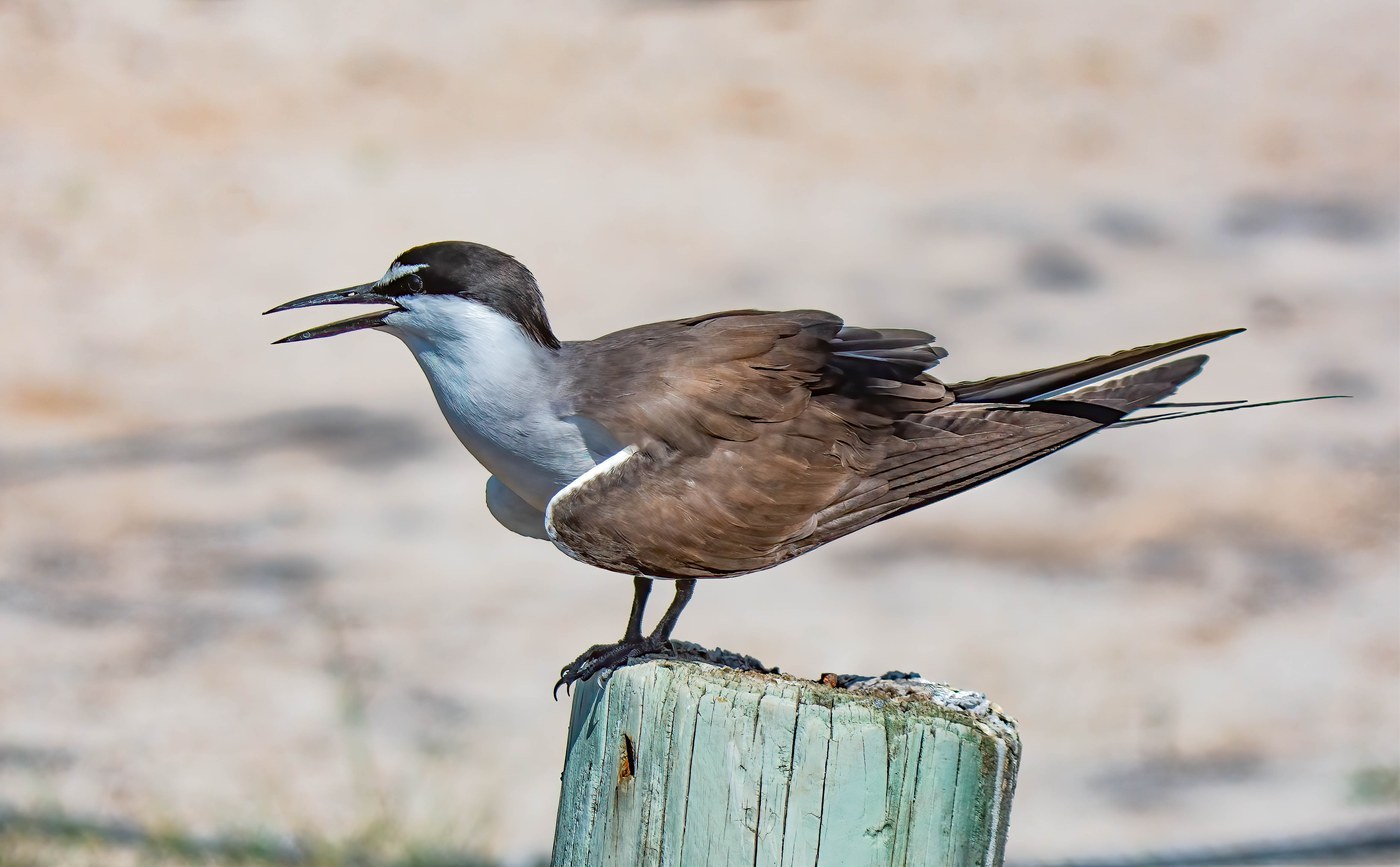
What Bridled Tern Feathers Look Like
The Bridled Tern is a dark-backed, pelagic tropical tern that spends most of its life far out at sea, and its feathers reflect both this open-ocean lifestyle and a distinctive facial pattern.
- Back/mantle feathers: dark sooty gray-brown, notably darker than most temperate terns, feathers 4-7 cm with a slightly grayish-brown (not blackish) cast that helps separate it from Sooty Tern.
- Forehead/face feathers: crisp white forehead patch extending back as a thin white stripe over the eye (the "bridle"), bordered by a black line through the eye — this white-stripe-through-black-mask combination is the species' namesake feature and highly diagnostic if the head feathers are found together.
- Crown/nape feathers: black, sharply demarcated from the white forehead, contrasting cleanly.
- Underpart feathers: white to very pale gray, clean and unmarked.
- Flight feathers (primaries): dark gray-brown above, contrastingly paler grayish-white below, long and narrow (18-24 cm) typical of a strong, sustained-flight seabird.
- Tail feathers: long, deeply forked, dark gray-brown centrally with white outer edges, 12-16 cm — the white-edged outer tail feathers are another useful field mark.
- Shaft color: pale gray to whitish.
Step-by-Step: Is This Feather From a Bridled Tern?
- Look for the white "bridle" stripe. A white forehead feather that extends backward as a narrow white line (rather than stopping abruptly at the eye) is the species' signature mark and the strongest single clue.
- Assess back color. A gray-brown (not solid sooty-black) mantle feather fits Bridled Tern better than the blacker-backed Sooty Tern.
- Check the tail feathers. Long, deeply forked feathers with white outer edges support this identification.
- Measure flight feather length. Feathers in the 18-24 cm range fit a medium-sized tern built for sustained pelagic flight.
- Consider the finding location. Because this species is highly pelagic, a feather found on a remote tropical or subtropical beach, especially after a storm, is more likely than one found on a typical coastal beach with common nearshore gulls and terns.
Similar Species & How to Tell Them Apart
- Sooty Tern: very similar overall dark-backed tern; Sooty Tern's back is more solidly black (less gray-brown) and its white forehead patch is shorter, stopping at or just behind the eye rather than extending back as a long thin stripe — this "bridle" length is the key separator.
- Common Tern/Forster's Tern: much paler gray backs overall, without the sooty dark tone of Bridled Tern, and lack the black mask entirely in breeding plumage.
- Black Noddy/Brown Noddy: uniformly dark all over including the crown (noddies show a pale cap, not a white forehead-and-stripe combination), and their tails are wedge-shaped rather than deeply forked.
- Juvenile Bridled Tern: shows more pale mottling on the back but retains the general gray-brown (not black) tone and facial stripe pattern in reduced form.
Where & When You'll Find Them
Bridled Terns breed on remote tropical and subtropical islands across the Atlantic, Indian, and Pacific Oceans, spending the rest of the year far offshore over open tropical seas, rarely approaching mainland coasts except during storms. Feathers are most likely to wash ashore after tropical storms or hurricanes push pelagic birds toward land, or be found directly on remote breeding islands during the breeding season (timing varies by ocean basin, generally warmer months). Because of its pelagic habits, finding a Bridled Tern feather on an ordinary beach is uncommon outside of storm-driven events.
Frequently asked questions
What is the 'bridle' referred to in this species' name?
A white forehead patch that extends backward as a narrow white stripe over and behind the eye, bordered by a black mask — the feature that gives the species its name.
How do I tell this apart from a Sooty Tern feather?
Bridled Tern's back is gray-brown rather than solid black, and its white forehead stripe extends further back past the eye, while Sooty Tern's white patch stops at or just behind the eye.
Why would I find this feather on a beach far from the tropics?
Tropical storms and hurricanes can displace pelagic Bridled Terns toward unusual coastlines, sometimes depositing feathers well outside their normal range.
What does the tail feather look like?
Long and deeply forked, dark gray-brown in the center with white outer edges, typical of an agile open-ocean tern.