
How to Identify Bourke's Parrot Feathers
Learn the soft dusky-pink and brown body feathers and pale blue flight-feather edges that make Bourke's Parrot one of the most subtly colored parrots of the Australian outback.
Read the full Bourke's Parrot encyclopedia entry →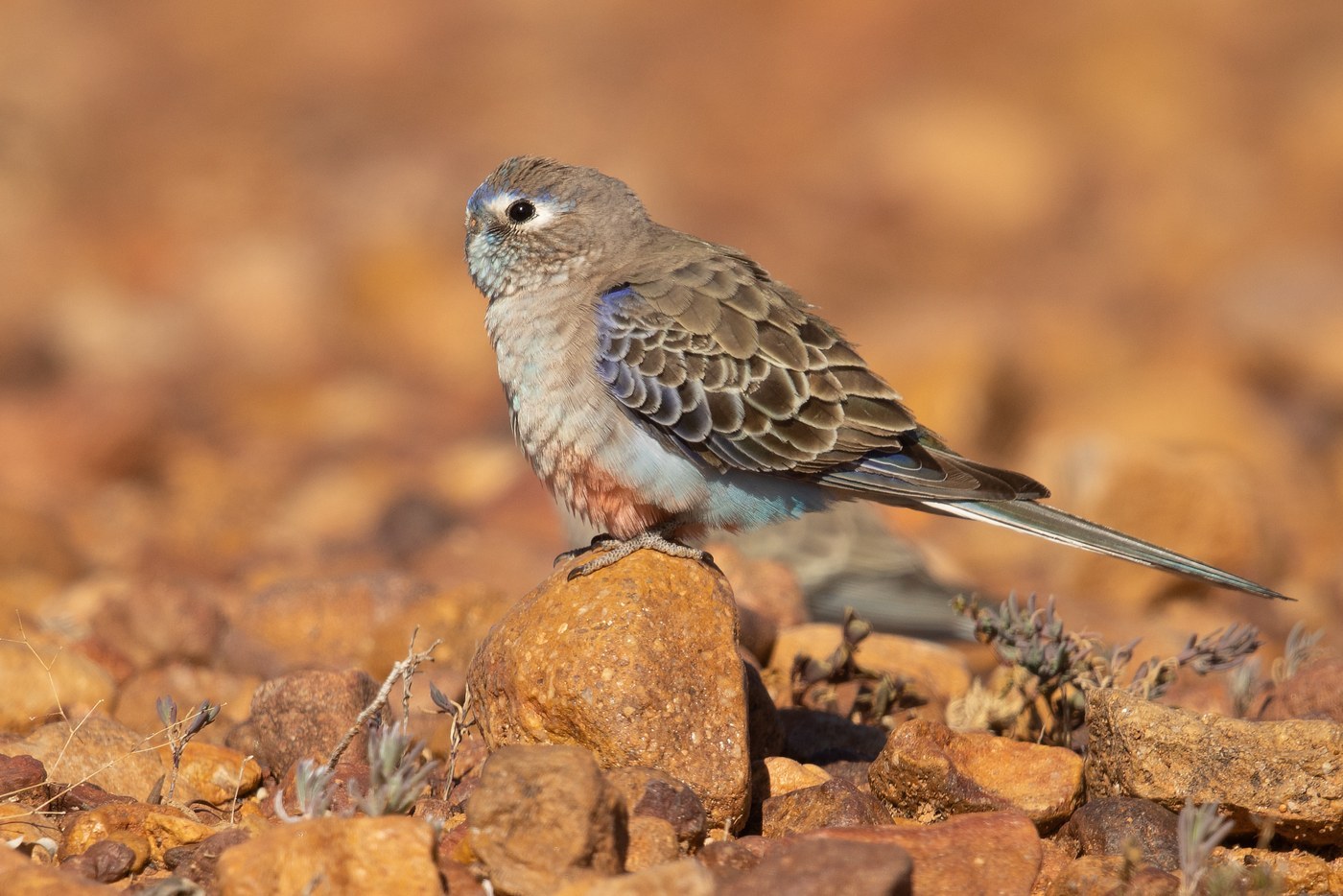
What Bourke's Parrot Feathers Look Like
Bourke's Parrot is a small, softly colored Australian parrot that breaks from the stereotype of bright, bold parrot plumage, instead showing a delicate blend of browns and pinks suited to camouflage in dry scrubland.
- Body/contour feathers: grayish-brown on the back and crown with fine pale scalloping, transitioning to a warm dusky pink to rose wash on the breast and belly — this soft pink-brown combination is quite distinctive among Australian parrots.
- Face feathers: pale grayish-brown with a whitish area around the bill, understated compared to the bold facial patterns of many other parrots.
- Rump feathers: pale sky-blue to turquoise, a surprising and diagnostic contrast against the muted brown-and-pink body — this patch is a strong identifying feature if found intact.
- Flight feathers (primaries/secondaries): brownish-gray with pale blue outer edges/fringes, 6-9 cm, softer and less glossy than many parrot flight feathers.
- Tail feathers: brownish-gray centrally with blue-edged outer feathers, medium length (6-8 cm) and slightly tapered.
- Male vs. female differences: males typically show a bit more blue on the forehead/lores; females are slightly plainer overall but share the same general pink-brown-blue combination.
- Shaft color: pale brown to grayish.
Step-by-Step: Is This Feather From a Bourke's Parrot?
- Check for the pink-and-brown combination. A soft dusky-pink or rose wash paired with grayish-brown scalloped feathers is a strong and fairly unusual combination pointing to this species.
- Look for a blue rump patch. A small feather showing sky-blue to turquoise color, especially if paler brown feathers are found alongside it, supports Bourke's Parrot.
- Inspect flight feather edges. Pale blue fringing along an otherwise brownish-gray flight feather is a useful secondary clue.
- Assess overall softness. The muted, almost powdery texture and coloring (rather than bright glossy parrot colors) fits this species' understated look.
- Match to arid habitat. Feathers found in dry mulga, mallee, or acacia scrubland in the Australian interior support this identification, since the species favors arid and semi-arid country.
Similar Species & How to Tell Them Apart
- Regent Parrot: much more brightly yellow-green overall, lacking any pink wash, and considerably larger.
- Blue-winged Parrot and other grass parrots: show bold green body plumage rather than Bourke's muted brown-pink combination, though both may show some blue in the wing.
- Budgerigar (wild-type): bright yellow-green and black-barred, entirely different from Bourke's soft brown-pink-blue palette.
- Other Australian desert parrots: most show brighter greens or yellows; the dusky pink breast combined with a blue rump is essentially unique to Bourke's Parrot among Australian arid-zone parrots.
Where & When You'll Find Them
Bourke's Parrots are non-migratory (though locally nomadic in response to rainfall and food availability) residents of arid and semi-arid scrubland, mulga, and mallee woodland across the Australian interior. Because they follow food and water availability rather than a fixed migration, feathers can turn up at variable times, but breeding typically follows good rains, with a post-breeding molt producing the most feather drop. They're crepuscular/nocturnal in habits, often drinking at waterholes at dawn or dusk, so feathers may accumulate near remote outback water sources.
Frequently asked questions
What's the most distinctive color combination on this species?
A soft dusky-pink to rose breast wash paired with grayish-brown scalloped upperparts and a surprising sky-blue rump patch — a combination essentially unique among Australian parrots.
How can I tell males and females apart by feather?
Males typically show a bit more blue on the forehead/lores, but both sexes share the overall pink-brown-blue pattern, so the difference is subtle.
Why don't Bourke's Parrot feathers look like typical bright parrot feathers?
The species has evolved a muted, camouflage-friendly palette suited to dry scrubland, unlike the bold greens and yellows of many other parrots.
Where in the habitat would feathers most likely be found?
Near outback waterholes at dawn or dusk, since this species is crepuscular and often visits water sources in the arid interior.