
How to Identify Boat-billed Heron Feathers
Understand the soft gray body plumage, black cap, and elongated crest feathers that set the nocturnal Boat-billed Heron apart from night-herons and other wading birds.
Read the full Boat-billed Heron encyclopedia entry →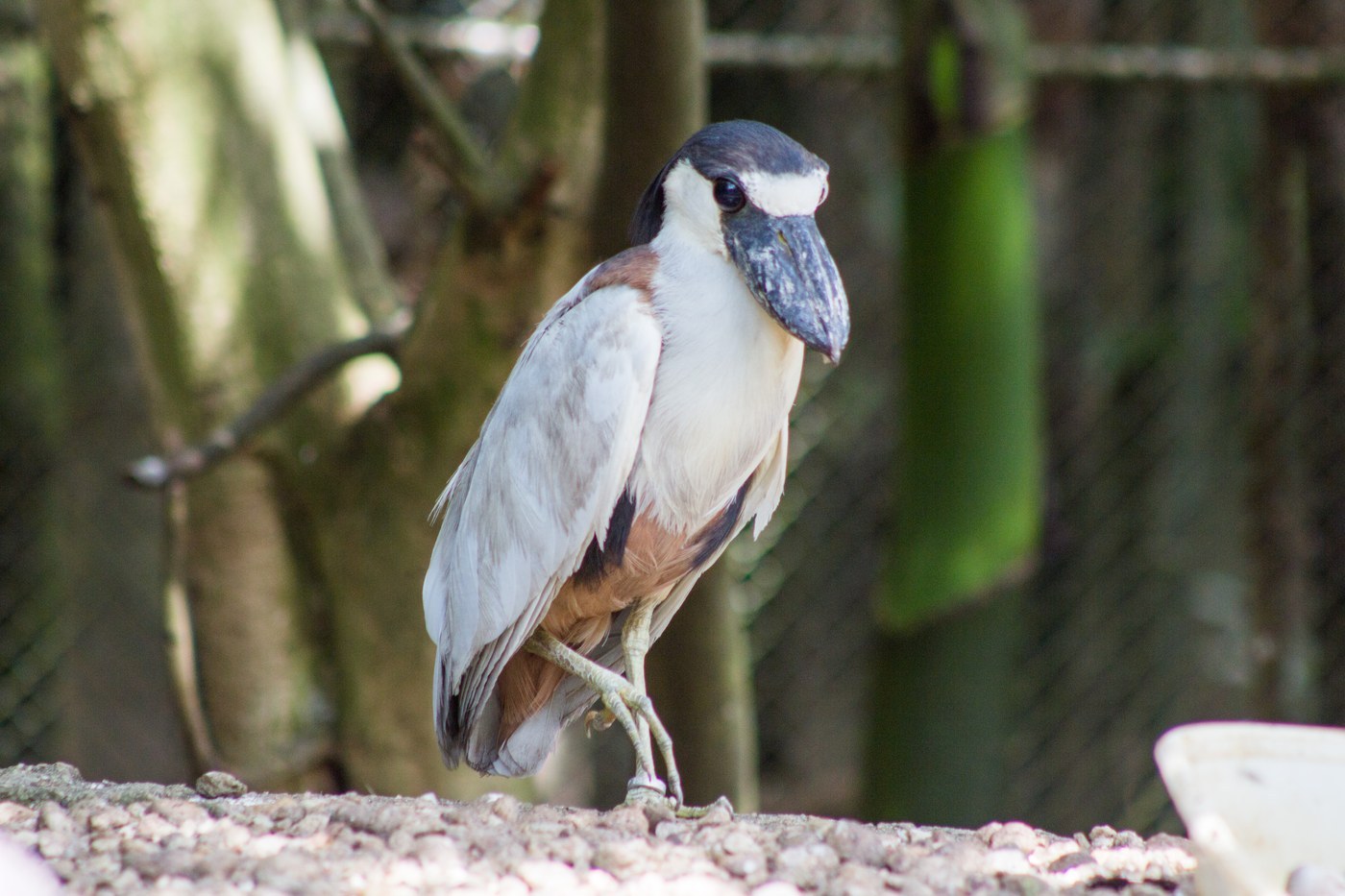
What Boat-billed Heron Feathers Look Like
The Boat-billed Heron is a stocky, nocturnal wading bird (roughly 45-56 cm) related to night-herons, and its feathers reflect a soft, muted palette suited to hiding in mangrove shadows during the day.
- Body/contour feathers: pale bluish-gray to slate-gray on the back and wings, fading to whitish or buffy-gray on the belly, generally 4-8 cm long with a soft, slightly loose texture typical of herons.
- Crest feathers: long, narrow, blackish plumes from the crown, often 8-12 cm, thin and wispy rather than broad — these droop backward off the head in life and are a strong diagnostic if found intact.
- Cap/crown feathers: solid glossy black, contrasting sharply with the pale gray body — a small black feather with a slight sheen likely comes from the crown.
- Flight feathers (primaries/secondaries): broad, gray with darker gray-black tips, 15-22 cm long, rounded tips typical of herons (built for slow flapping flight, not speed).
- Chestnut flank patch feathers: a small, chestnut-rufous wash on the flanks/lower belly is unique and useful — no gray heron of similar size shows this warm patch.
- Shaft color: pale gray to cream, unremarkable.
Step-by-Step: Is This Feather From a Boat-billed Heron?
- Measure it. Flight feathers in the 15-22 cm range with a rounded (not pointed) tip suggest a heavy-bodied wading bird rather than a shorebird or gull.
- Check for the black cap and crest. A glossy black feather with an unusually long, narrow, wispy shape strongly suggests the crown/crest.
- Look for chestnut on the flanks. A gray feather with a rufous or chestnut wash near its base is distinctive to this species among similarly sized gray herons.
- Confirm the gray tone. The body gray should look powdery or bluish rather than brownish, ruling out immature or brown-plumaged herons.
- Factor in locality. Found near mangroves, coastal lagoons, or dense swamp forest in the Neotropics, especially near roost sites used during the day.
Similar Species & How to Tell Them Apart
- Black-crowned Night-Heron: has a similar black cap but a whiter, cleaner gray body without the chestnut flank wash, and its crest is typically two or three long white plumes, not black.
- Yellow-crowned Night-Heron: shows more slate-blue overall tone and a pale crown patch, lacking the solid glossy black cap of the Boat-billed Heron.
- Little Blue Heron: overall slaty-blue but lacks the sharply demarcated black cap and chestnut flank patch, and its feathers run narrower and more uniform in color.
- Herons in general: the Boat-billed Heron's feathers tend to feel softer and looser-webbed, an adaptation for silent nocturnal flight, compared to the crisper feathers of day-active herons.
Where & When You'll Find Them
Boat-billed Herons live year-round in mangroves, swamp forests, and quiet freshwater edges from Mexico through much of tropical South America, roosting communally in dense foliage by day and foraging at night. Because they are non-migratory, feathers can be found at any time of year near roost trees, with body feather molt occurring gradually rather than in a sharp seasonal wave — look on the ground beneath tangled mangrove roosts where droppings and feathers accumulate.
Frequently asked questions
How can I tell a Boat-billed Heron feather from a night-heron feather?
Look for a chestnut or rufous wash on the flank feathers and a solid glossy-black cap; night-herons lack the chestnut patch and often show whiter crest plumes.
Are Boat-billed Heron feathers soft or stiff?
They're notably soft and loosely webbed compared to day-hunting herons, an adaptation that helps this nocturnal species fly silently.
What color are the crest feathers?
The crest is glossy black, long and wispy, unlike the often white or pale crest plumes of related night-herons.
Where would I most likely find a shed feather?
Beneath dense mangrove or swamp-forest roost sites in Central and South America, where the birds spend daylight hours packed together.