
How to Identify Black-winged Stilt Feathers
A guide to the solid glossy black flight feathers and pure white body plumage that identify this long-legged wetland shorebird.
Read the full Black-winged Stilt encyclopedia entry →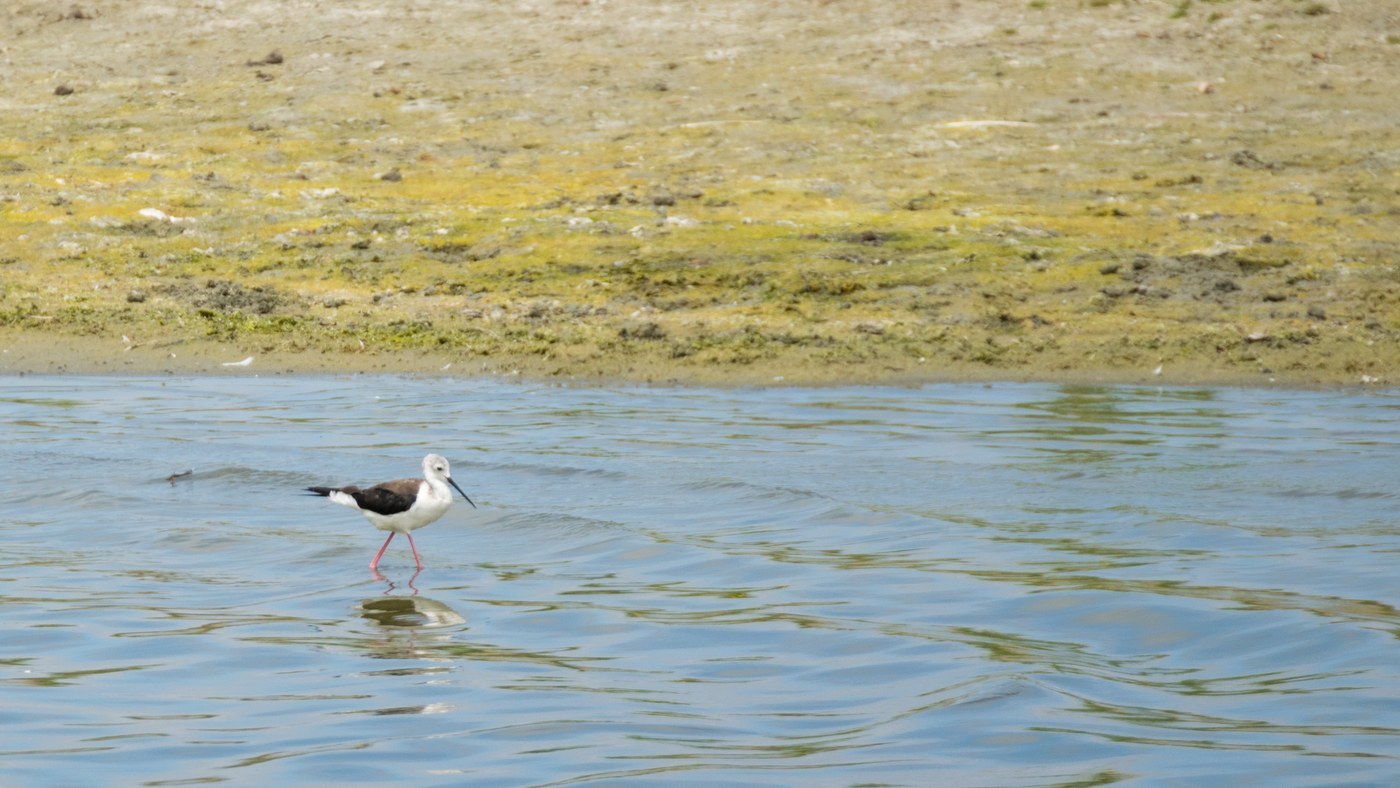
What Black-winged Stilt Feathers Look Like
Black-winged Stilt shows a stark, high-contrast pattern with almost no intermediate shading: flight feathers are solid glossy black, sometimes with a faint greenish sheen, while body feathers (head, neck, underparts) are pure white. The amount of black or dusky marking on the head and hindneck varies by subspecies and individual — some show a dark cap or smudge on the back of the neck, while others are entirely clean white-headed. Flight feathers are long and pointed, typical of a shorebird built for sustained flight. The tail is pale gray to whitish and unbarred. This is a fairly large, long-legged shorebird, so feathers run larger than typical sandpiper feathers.
Step-by-Step: Is This Feather From a Black-winged Stilt?
- Check for solid black without any barring or spotting. A long, pointed, solid glossy black flight feather with no pattern at all is unusual among shorebirds and a strong clue for this species.
- Look for a paired pure white body feather. Finding a stark white contour feather alongside the solid black flight feather matches this species' high-contrast plumage.
- Assess head/neck feathers for dark markings. Some individuals show a dark cap or neck smudge — this is normal individual/subspecies variation, not a different species.
- Measure it. Larger flight feathers befitting a mid-sized, long-legged shorebird support this identification over small sandpipers.
- Note leg color if present. Extremely long, thin, bright pink to red legs are unmistakable for this species if attached to the feather.
Similar Species & How to Tell Them Apart
American Avocet has an upturned bill and a black-and-white wing pattern that is patterned and patchy rather than solid black, plus a cinnamon or gray wash on the head in some plumages — quite different from the stilt's stark, unbroken black-and-white blocks. Pied Avocet similarly shows a bold banded black-and-white pattern rather than solid black wings. Other stilt species, like Black-necked Stilt in the Americas, look essentially identical but occupy separate, non-overlapping ranges, so location is the main way to distinguish them.
Where & When You'll Find Them
Black-winged Stilts inhabit shallow wetlands, salt pans, and mudflats across a very wide range spanning Europe, Africa, Asia, and Australia. Populations in the northern part of the range are migratory, while tropical populations tend to be resident. Molt happens mainly on wintering or non-breeding wetlands in fall and winter, making shallow wetland edges the best place to look for feathers during that season.
Frequently asked questions
Why is this flight feather solid black with no pattern?
Black-winged Stilt has completely solid glossy black flight feathers with no barring or spotting, an unusual stark pattern among shorebirds and a strong clue for this species.
How is this different from an American Avocet feather?
American Avocet has an upturned bill and a patchy, patterned black-and-white wing rather than the solid, unbroken black flight feathers of this stilt.
Why does the head/neck feather show some dark smudging on one bird but not another?
This is normal individual and subspecies variation in Black-winged Stilt — some individuals show a dark cap or neck smudge while others are entirely white-headed.
Could this be a Black-necked Stilt feather?
They look essentially identical, but Black-necked Stilt occurs in the Americas while Black-winged Stilt occurs across Europe, Africa, Asia, and Australia, so location is the deciding factor.
When are feathers most often found?
Fall and winter, on wintering or non-breeding wetlands, salt pans, and mudflats where the birds gather to feed.