
How to Identify Black-collared Hawk Feathers
A guide to the rufous body feathers and distinctive black collar/necklace feathers of the Neotropical Black-collared Hawk, and how to separate it from other rufous raptors.
Read the full Black-collared Hawk encyclopedia entry →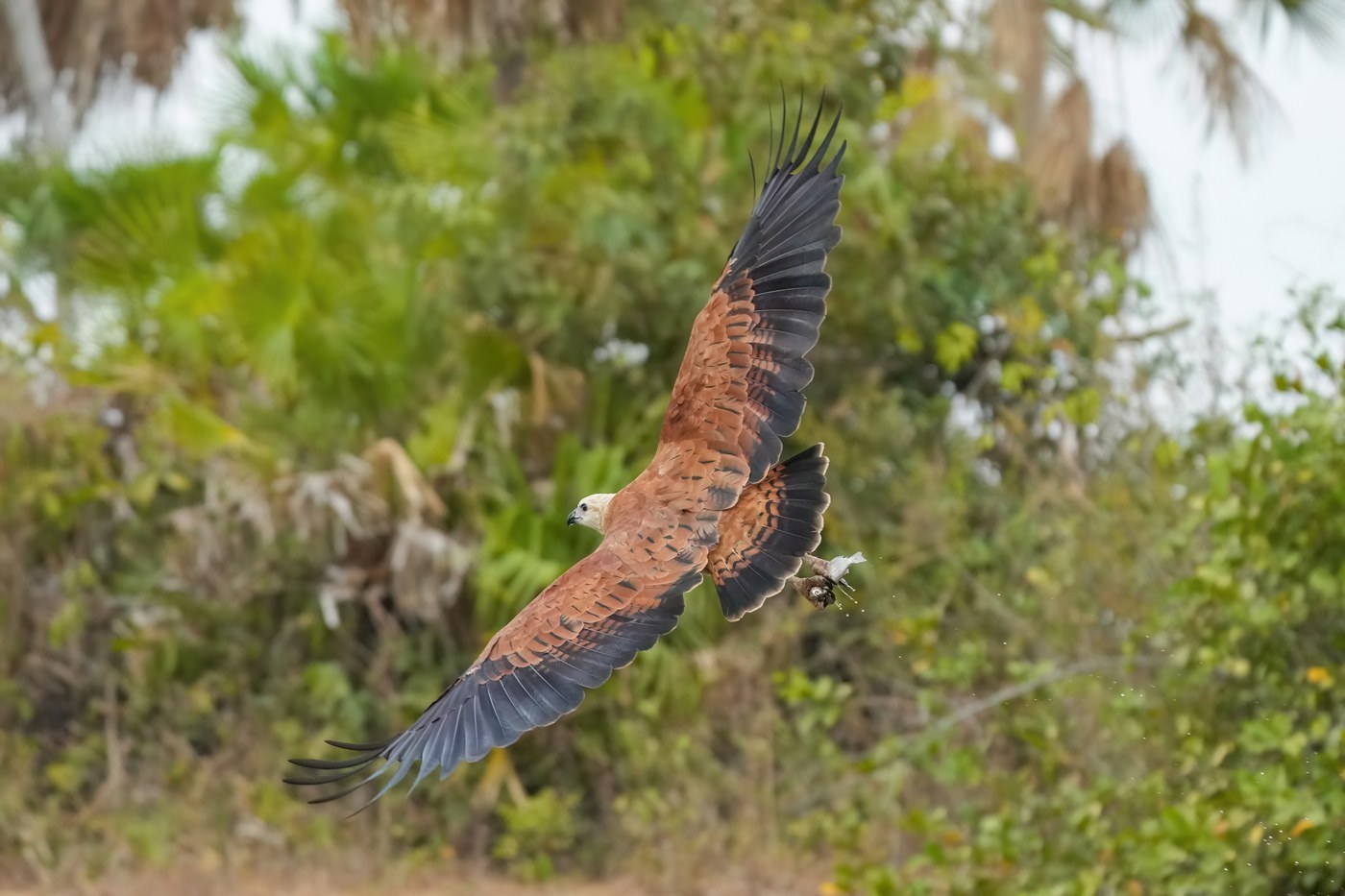
What Black-collared Hawk's Feathers Look Like
Black-collared Hawk is a fish-eating raptor of Neotropical wetlands with a warm, distinctive plumage. The bulk of the body — chest, back, wings, and belly — is a rich rufous-chestnut, giving the bird an overall warm, rusty appearance unlike the darker or more mottled tones of many other raptors. The head is pale, whitish to buffy-cream, contrasting against the rufous body. The species' namesake feature is a narrow black band or "collar" across the upper breast/lower neck, sitting between the pale head and the rufous body — a discrete black feather from this collar region, found alongside pale head feathers and rufous body feathers, is highly diagnostic. Flight feathers show black tips against the rufous wing base, and the tail is rufous with a dark subterminal band. Feathers are moderately large, fitting a mid-to-large raptor — body feathers 4-6 cm, primaries 20-28 cm.
Step-by-Step: Is This Feather From a Black-collared Hawk?
- Check for rich rufous-chestnut body feathers. A consistently warm rufous tone across chest, back, and wing covert feathers is the starting point for this species.
- Look for a pale, whitish-buff head feather. A cream or pale buffy feather from the crown/face, distinctly paler than the body, supports the identification.
- Search for a black collar-band feather. A narrow black feather from the upper breast/neck region, positioned between the pale head and rufous body, is the single most diagnostic feature.
- Assess tail pattern. A rufous tail feather with a dark subterminal (near-the-tip) band fits this species.
- Factor in wetland habitat context. A rufous raptor feather found near rivers, lakes, or marshes in Central/South America supports this fish-eating specialist over drier-country raptors.
Similar Species & How to Tell Them Apart
Savanna Hawk, sharing similar open wetland habitat in parts of its range, is also rufous-bodied but lacks the sharp black collar band and pale head — Savanna Hawk's head is a duller grayish-brown blending more gradually into the body rather than showing the crisp pale-head/black-collar/rufous-body three-part pattern. Rufous Crab Hawk, a mangrove specialist with some range overlap, shows a more uniformly rufous body without the distinct pale head and black collar, and its habitat is more specifically tied to coastal mangroves rather than freshwater wetlands. Roadside Hawk, much smaller and more widespread, shows gray-brown upperparts with barred underparts rather than a solid rufous body. The pale-head-plus-black-collar-plus-rufous-body combination is essentially unique to Black-collared Hawk among Neotropical raptors, making it one of the more confidently identifiable raptor feather sets when the collar feather is present.
Where & When You'll Find Them
Black-collared Hawk is a wetland specialist found along rivers, lakes, marshes, and flooded forest edges from southern Mexico through Central America and across much of tropical South America east of the Andes, where it perches conspicuously near water to hunt fish and other aquatic prey. It is largely non-migratory, though some local movements track water levels and prey availability seasonally (e.g., following seasonal flooding in the Pantanal and Amazon basin). Feathers can be found year-round near its preferred wetland habitats, with the best odds near open perches overlooking water — favored hunting posts where the bird spends long periods and where preening-related feather loss accumulates.
Frequently asked questions
What is the single most diagnostic feather for this species?
A narrow black feather from the collar region between the pale head and rufous body — this three-part pattern is essentially unique among Neotropical raptors.
How do I tell it apart from Savanna Hawk?
Savanna Hawk lacks the sharp black collar and pale head, showing a duller grayish-brown head blending gradually into the rufous body instead.
What habitat is most associated with this species?
Wetlands — rivers, lakes, marshes, and flooded forest edges — reflecting its specialization on fish and aquatic prey.
Is this species migratory?
Largely non-migratory, though it may make local movements tracking seasonal flooding and prey availability.
Where would I most likely find a feather from this species?
Near open perches overlooking water, such as snags or low branches at river and lake edges, where the bird spends long periods hunting.