
How to Identify Bank Myna Feathers
How to identify Bank Myna feathers by their soft blue-grey body tone, dark cap, and the telltale white base on the primary flight feathers.
Read the full Bank Myna encyclopedia entry →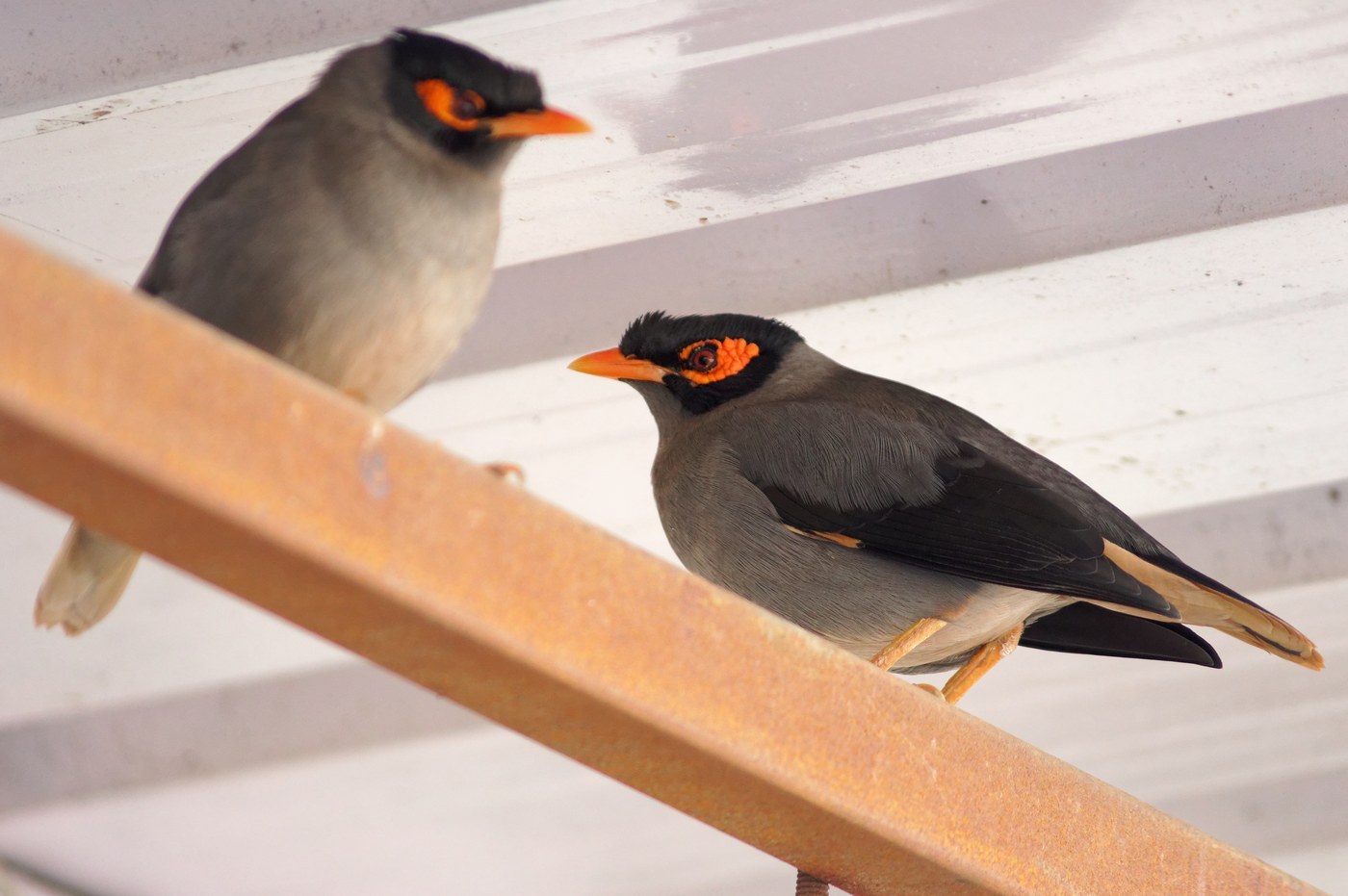
What Bank Myna Feathers Look Like
The Bank Myna is a common South Asian starling relative, and its feathers show a soft, understated color palette punctuated by one strong field mark. Body feathers are an overall soft blue-grey, slightly paler on the belly and slightly darker on the back, without any streaking or barring. The crown and forehead show darker, almost blackish feathers forming a subtle cap, less glossy and less extensive than the solid black head of some other mynas. In flight, this species shows a conspicuous white patch at the base of the primaries, so an isolated primary feather often shows a clean white base transitioning to grey-brown toward the tip - a genuinely useful diagnostic if you find a flight feather. The tail is short and squared, uniformly grey-brown without a pale tip.
Step-by-Step: Is This Feather From a Bank Myna?
- Check for a white base on a primary feather. A flight feather that's white near the base and grey-brown toward the tip is one of the most reliable single clues.
- Look at the overall body tone. Soft blue-grey without streaking fits this species better than the browner tones of many other starlings and mynas.
- Examine the crown feathers. A darker, blackish cap that isn't fully glossy black suggests Bank Myna rather than the more solidly black-headed Common Myna.
- Measure the feather. Flight feathers around 8-10 cm fit a myna-sized bird, smaller than a pigeon but larger than a sparrow.
- Consider the setting. A matching feather found near riverbanks, farmland, or urban areas across the Indian subcontinent supports this identification, as the species is strongly tied to these habitats.
Similar Species & How to Tell Them Apart
- Common Myna: Shows a bolder white wing patch visible mainly on the outer flight feathers, plus warmer brown body tones rather than Bank Myna's cooler grey.
- Jungle Myna: Has generally darker, more uniform grey plumage without the same crisp white primary base.
- Common Starling: Shows a speckled, iridescent plumage rather than plain grey, easily separated at a glance.
- Rosy Starling: Shows a strong pink-and-black pattern in breeding plumage, quite different from Bank Myna's uniform soft grey.
Where & When You'll Find Them
Bank Mynas are closely associated with rivers, agricultural land, and towns across the Indian subcontinent, often nesting colonially in burrows dug into riverbanks and building cliffs - the origin of the species' name. Feathers are commonly found near these nesting burrow colonies as well as around farmland and urban feeding areas where the birds forage in flocks. Breeding activity, and the feather wear and molt that follows it, generally peaks in the warmer months before the monsoon in much of its range, making this the most productive season for finding fresh feathers near colony sites.
Frequently asked questions
What is the most reliable clue on a flight feather?
A primary feather that is white near the base and grey-brown toward the tip is a strong, reliable Bank Myna signature.
How does this differ from a Common Myna feather?
Common Myna shows a bolder white wing patch and warmer brown body tones, while Bank Myna is cooler blue-grey overall with a less extensive white patch.
Is the cap fully glossy black?
No - the crown feathers are dark, almost blackish, but less uniformly glossy than the solid black head of some related mynas.
Where would I find this feather?
Near riverbanks and building cliffs where the species nests colonially in burrows, as well as farmland and urban areas across the Indian subcontinent.
When is the best time to find fresh feathers?
In the warmer months before the monsoon, when breeding activity and the feather wear it causes peak near colony sites.