
How to Identify Band-tailed Pigeon Feathers
How to identify Band-tailed Pigeon feathers by the pale grey band near the tail tip, iridescent bronze-green nape patch bordered by white, and overall blue-grey body tone.
Read the full Band-tailed Pigeon encyclopedia entry →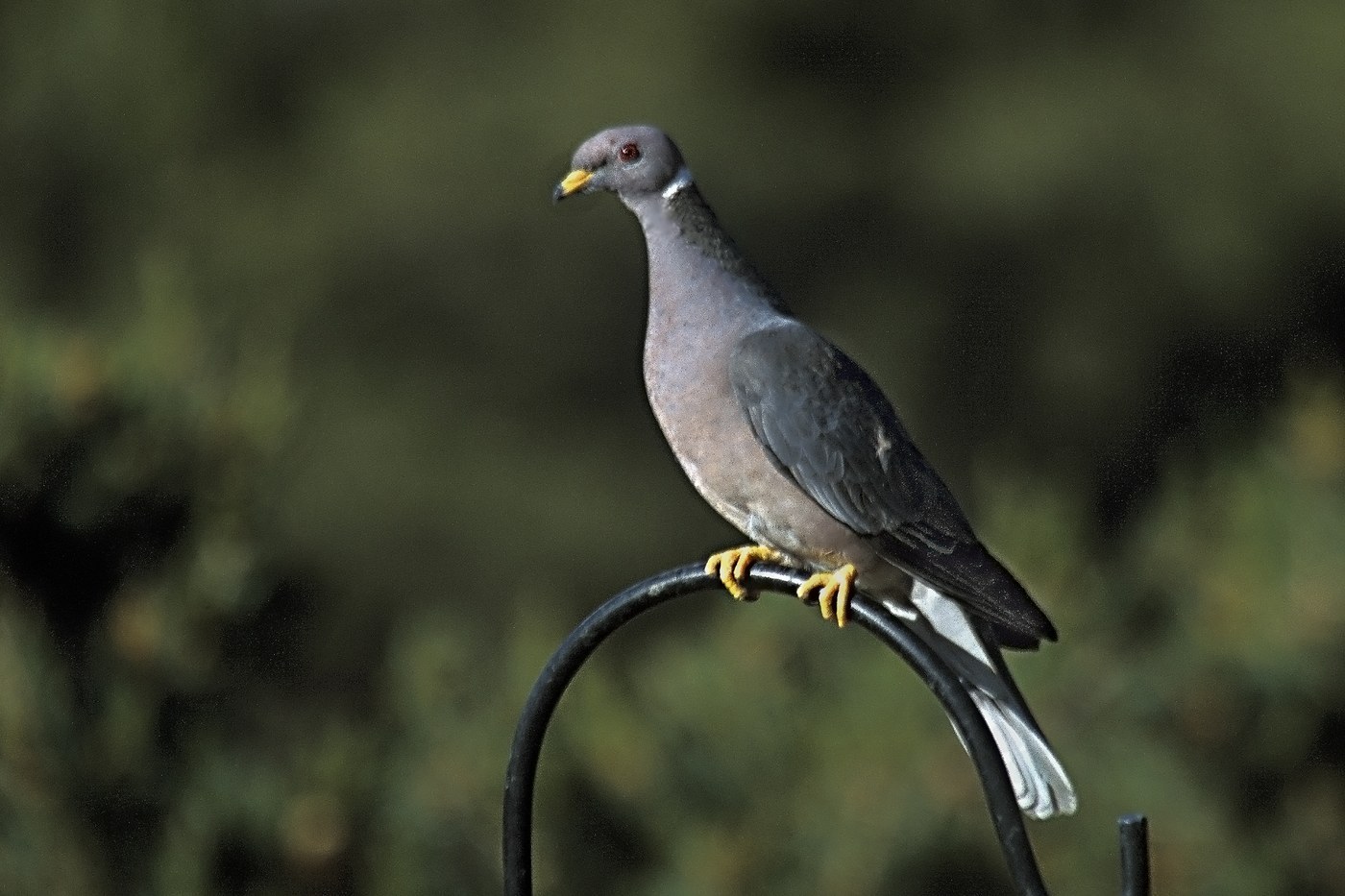
What Band-tailed Pigeon Feathers Look Like
The Band-tailed Pigeon is a large, forest-dwelling pigeon of western North America, and its feathers show a subtle but distinctive set of clues once you know where to look. Body feathers are an overall soft blue-grey, with a purplish-pink wash across the breast that fades toward grey on the belly. The nape shows a small patch of iridescent bronze-green feathers, bordered below by a thin white crescent band - together these two features on a neck feather are highly diagnostic. The tail is the species' namesake feature: dark grey at the base with a pale grey to whitish band near the tip, clearly visible when the tail is fanned or when an individual tail feather is examined. Flight feathers are plain blue-grey without strong patterning.
Step-by-Step: Is This Feather From a Band-tailed Pigeon?
- Look at the tail feather tip. A pale grey or whitish band crossing an otherwise dark tail feather is the single best diagnostic feature for this species.
- Check the nape for iridescence. A small patch of bronze-green sheen bordered by a thin white line, if present, confirms a neck feather from this species.
- Confirm overall grey-blue tone. Body feathers without warm brown or rufous tones fit this species over most rock pigeon variants.
- Measure feather size. This is a large pigeon, so primaries around 15-18 cm fit better than a smaller dove.
- Consider the habitat. A matching feather found in coniferous or oak forest in the western U.S., Mexico, or Central America supports this identification.
Similar Species & How to Tell Them Apart
- Rock Pigeon (feral pigeon): Extremely variable in color, but typically lacks the clean pale tail band and the specific bronze-green nape patch bordered by white.
- White-crowned Pigeon: Found in a different range (Caribbean/Florida), with a solid white crown cap rather than the Band-tailed's grey head, and lacks the pale tail band.
- Mourning Dove: Much smaller with a pointed rather than square-ish tail, and lacks any iridescent nape patch.
- Red-billed Pigeon: Overlaps in parts of range but shows a darker, more uniformly maroon-grey body without the pale tail band.
Where & When You'll Find Them
Band-tailed Pigeons inhabit coniferous and mixed oak forests along the Pacific coast and interior mountains from British Columbia south through Mexico and into Central America, often gathering in flocks at feeders, mineral springs, and fruiting trees. Feathers are most often found beneath roost trees and around feeding sites such as oak groves during acorn season. Molt typically follows the summer breeding season, so late summer through fall is the most productive window for finding fresh feathers, while wintering flocks in some regions also concentrate feather finds around communal roost sites.
Frequently asked questions
What is the single best clue for this species?
A dark grey tail feather crossed by a pale grey or whitish band near the tip is the species' namesake feature and its most reliable diagnostic.
What does the nape feather look like?
A small patch of iridescent bronze-green feathers bordered below by a thin white crescent band, distinct from any other North American pigeon.
How is this different from a feral Rock Pigeon feather?
Rock Pigeons are highly variable but lack the clean pale tail band and the specific bronze-green, white-bordered nape patch of Band-tailed Pigeon.
How big are Band-tailed Pigeon feathers?
This is a large pigeon, with primaries around 15-18 cm, bigger than a Mourning Dove's flight feathers.
When are feathers most likely to be found?
Late summer through fall after the breeding molt, especially beneath roost trees and around oak groves during acorn season.