
How to Identify Bachman's Sparrow Feathers
How to identify Bachman's Sparrow feathers by their plain unstreaked buffy-grey breast, rufous-and-grey back, and long rounded rufous-brown tail.
Read the full Bachman's Sparrow encyclopedia entry →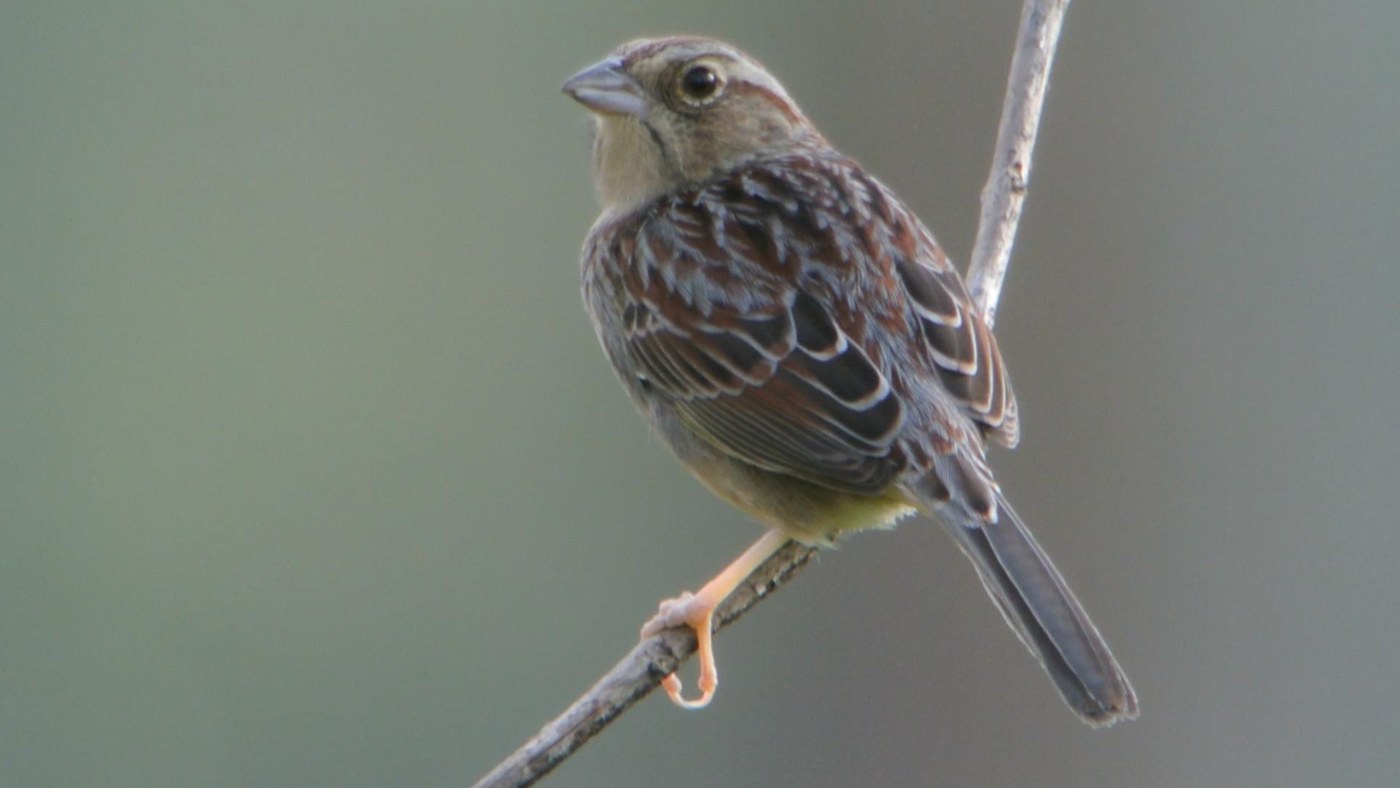
What Bachman's Sparrow Feathers Look Like
Bachman's Sparrow is a subtly patterned bird of the southeastern U.S. pine understory, and its feathers reward a careful look rather than flashy colors. Upperpart feathers are warm rufous-chestnut edged with grey, giving the back a streaked, two-toned look when several feathers are compared side by side. The wing coverts show rufous fringes over dark centers, creating a warm-toned wing panel rather than the crisp wingbars of many other sparrows. Underparts are the real diagnostic zone: breast and belly feathers are plain buffy-grey with no streaking, unusual among American sparrows, most of which show at least some breast streaking. The tail is notably long and rounded, with rufous-brown feathers that lack strong barring or white corners.
Step-by-Step: Is This Feather From a Bachman's Sparrow?
- Check the breast feather for streaking. A plain, unstreaked buffy-grey breast feather is one of the most useful clues, since it rules out most confusion species.
- Look for rufous-and-grey back feathers. Warm chestnut tones combined with grey edging on the back and scapulars fit this species well.
- Measure the tail feathers. Long, rounded rectrices in warm brown tones, lacking white tips, match this species' distinctive tail shape.
- Confirm small overall size. Flight feathers around 5-7 cm fit a sparrow-sized bird, ruling out larger species sharing pine woods habitat.
- Weigh the habitat. A matching feather found in mature, open pine woods with a grassy understory in the Southeast strongly favors this species over more generalist sparrows.
Similar Species & How to Tell Them Apart
- Field Sparrow: Shows fine breast streaking and less bold rufous back tones than Bachman's.
- Chipping Sparrow: Has a rufous cap and grey unstreaked underparts too, but its back feathers are more finely streaked black-and-buff rather than broadly rufous-and-grey.
- Grasshopper Sparrow: Also plain-breasted, but its back feathers are more contrastingly patterned with black, chestnut, and buff in a flatter, scaled pattern, and its tail is notably short and spiky rather than long and rounded.
- Song Sparrow: Heavily streaked breast feathers immediately separate it from the unstreaked Bachman's.
Where & When You'll Find Them
Bachman's Sparrow favors open, mature pine forest with a grassy or shrubby understory across the southeastern United States, particularly longleaf pine habitat maintained by periodic fire. Feathers are most likely found on the ground near singing perches and low shrub cover used for nesting, generally from spring through summer when the birds are most active and vocal. Post-breeding molt in late summer is the peak period for finding fresh body feathers, while worn, faded feathers accumulate through the breeding season as birds wear down plumage moving through dense grass and palmetto understory.
Frequently asked questions
What is the key clue on the breast feathers?
A plain, unstreaked buffy-grey breast feather is diagnostic, since most similar sparrows show at least some streaking below.
How is the back pattern distinctive?
Back feathers combine warm rufous-chestnut centers with grey edging, giving a two-toned streaked look distinct from more uniformly patterned sparrows.
Could this be a Chipping Sparrow feather instead?
Chipping Sparrow has finer black-and-buff streaking on the back rather than the broader rufous-and-grey pattern of Bachman's Sparrow.
How long is the tail?
The tail is notably long and rounded for a sparrow, with plain rufous-brown feathers lacking white corners or bold barring.
Where and when should I look for feathers?
Mature, open pine forest with a grassy understory in the southeastern U.S., especially from spring through summer and during late-summer post-breeding molt.