
How to Identify Azure-winged Magpie Feathers
How to recognize Azure-winged Magpie feathers by their black cap, soft pinkish-grey body, and long sky-blue wing and tail feathers with pale tips.
Read the full Azure-winged Magpie encyclopedia entry →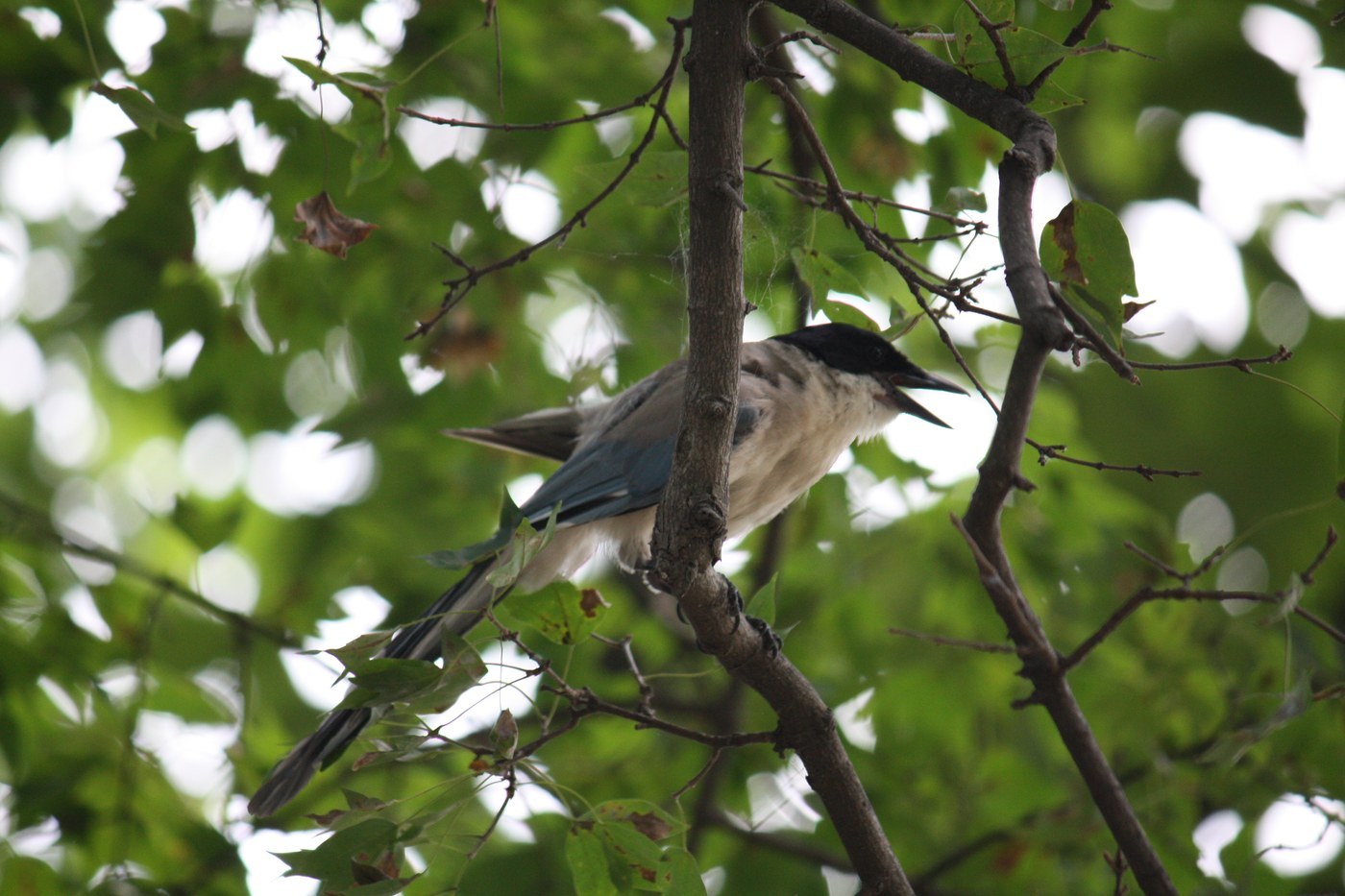
What Azure-winged Magpie Feathers Look Like
This elegant corvid pairs soft, muted body tones with vivid blue accents, making its feathers fairly easy to sort once you know what to look for. The crown, face, and throat are covered in glossy black feathers that form a neat cap, sharply set off from the rest of the bird. The back and underparts are a soft pinkish-grey to buffy fawn, quite plain and unmarked. The wings and the long, graduated tail, however, are a bright sky-blue to azure, giving the species its name - these blue feathers often show a faint pale or whitish tip on the outer tail feathers. Tail feathers are notably long for the bird's size, commonly 15-20 cm in the central pair, tapering and rounded at the tip, while flight feathers show blue on the outer web and a duller grey-blue on the inner web.
Step-by-Step: Is This Feather From an Azure-winged Magpie?
- Sort by color zone. Black points to the cap; soft grey-fawn points to the body; bright blue points to wing or tail - this species keeps these zones cleanly separate.
- Check tail length and shape. Long, graduated, blue tail feathers with pale tips are one of the most recognizable single clues.
- Look for a whitish tail tip. Outer tail feathers often show a small pale terminal spot, useful for distinguishing individual tail feathers from wing feathers.
- Measure overall size. Feathers fit a lightweight, crow-relative body smaller than a true magpie - flight feathers typically 9-12 cm.
- Consider the black-cap boundary. A crisp black-to-grey transition on a head feather is diagnostic and not shared with most other blue-winged birds in its range.
Similar Species & How to Tell Them Apart
- Eurasian Jay: Shows blue only in a small barred wing patch, with the rest of the body warm pinkish-brown and a streaked black crown rather than a solid black cap.
- Eurasian Magpie: Much larger, with bold black-and-white body feathers and only a small green-blue iridescent sheen in the wings and tail, not the Azure-winged Magpie's overall pale body.
- Iberian Magpie (in Iberia): Nearly identical in plumage since it was once considered the same species, so range is the main separator rather than the feather itself.
- Bluebirds and other small blue passerines: Much smaller feathers overall and lack the distinct black cap and pale grey-fawn body combination.
Where & When You'll Find Them
Azure-winged Magpies live in open woodland, pine groves, and parkland across East Asia (with a disjunct population in Iberia), typically foraging in noisy, sociable flocks. Feathers commonly turn up beneath communal roost trees and around nest groves during the spring breeding season, when adults are actively provisioning young and wear on flight feathers increases. Post-breeding molt in summer is the most reliable window for finding freshly dropped body and tail feathers, while the pale-tipped blue tail feathers in particular tend to be conspicuous against leaf litter or grass.
Frequently asked questions
What is the easiest single clue for this species?
A long, graduated, sky-blue tail feather with a small pale tip is one of the most recognizable features, paired with a black cap and soft grey-fawn body elsewhere.
How is this different from a Eurasian Jay feather?
Eurasian Jay shows blue only in a small barred wing patch and has a warm pinkish-brown body, while Azure-winged Magpie has extensive blue across the whole wing and tail with a plainer grey-fawn body.
How long are the tail feathers?
Central tail feathers commonly run 15-20 cm, long and tapering for the bird's overall lightweight size.
Do Iberian and East Asian populations look different?
No - Iberian Magpie feathers are nearly identical, so location is the main way to distinguish them rather than the feather pattern itself.
When are feathers most likely to be found?
Beneath communal roosts and nest groves in spring, with post-breeding molt in summer being the most productive window for fresh feathers.