
How to Identify Australian White Ibis Feathers
A guide to recognizing Australian White Ibis feathers from their black-tipped white flight feathers and wispy ornamental back plumes, and telling them apart from egrets and spoonbills.
Read the full Australian White Ibis encyclopedia entry →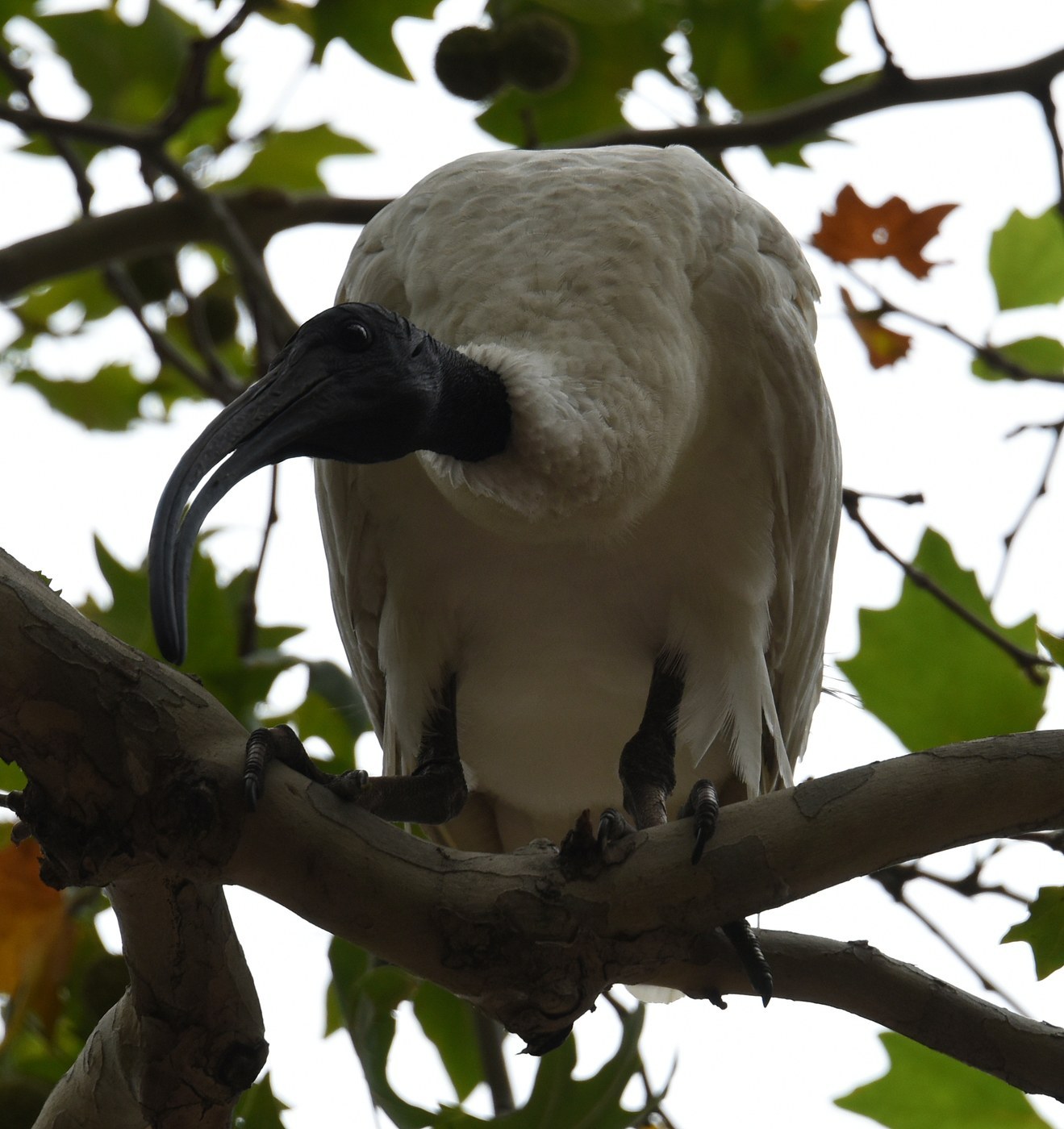
What Australian White Ibis Feathers Look Like
The Australian White Ibis is unmistakable in life - a mostly white wading bird with a bare black head and long downcurved bill - and its feathers carry that same high-contrast theme. Body (contour) feathers are clean white, sometimes with a faint yellowish wash near the base. Flight feathers - primaries and secondaries - are white with solid black tips, so a partial flight feather can look confusingly all-black or all-white depending which end you find. The real giveaway is the ornamental tertial plumes: elongated, loose-barbed, drooping black-tipped feathers that grow from the lower back and cascade over the tail, especially well developed in breeding adults - these look almost lacy compared to normal contour feathers.
Step-by-Step: Is This Feather From an Australian White Ibis?
- Check for a black tip on white. A feather that's white for most of its length with a crisp black terminal band is a strong ibis flight-feather signature.
- Look for loose, drooping structure. If the feather has an unusually soft, frayed, plume-like look rather than a firm vane, it's likely one of the ornamental back plumes.
- Measure it. Primaries run about 20-28 cm; the decorative back plumes can be similar length but much lighter and wispier.
- Rule out a bare-skin match. Since the head and neck are bare skin (not feathered) in this species, any feather you find is from the body, wings, or tail - never the head.
- Consider the setting. Feathers found around urban parks, rubbish bins, and wetland edges in eastern Australian cities are very likely ibis, given how commonly this species scavenges there.
Similar Species & How to Tell Them Apart
- Straw-necked Ibis: Has a glossy black back and wings rather than white, so a mostly white feather points away from this species toward White Ibis.
- Cattle Egret / other white egrets: Lack any black wingtip and lack the wispy ornamental plumes; egret feathers are uniformly white and finer overall.
- Royal Spoonbill: Also white with black in the wings, but spoonbill flight feathers lack the crisp solid black tip pattern, and its ornamental plumes are finer, straighter head plumes rather than back plumes.
- Silver Gull: Smaller feathers with grey rather than black in the wing, and no ornamental plume type at all.
Where & When You'll Find Them
Australian White Ibis are now as much an urban bird as a wetland one across eastern and northern Australia, frequenting parks, tips, and picnic areas as readily as natural swamps and river flats. Because they breed colonially, often alongside egrets and cormorants, large numbers of feathers - including the showy ornamental plumes - accumulate beneath breeding colonies in spring and summer. Outside the breeding season, routine molt and everyday preening losses mean single white and black-tipped feathers can be found year-round anywhere ibis forage or loaf.
Frequently asked questions
Why does my white feather have a black tip?
Australian White Ibis flight feathers are white with solid black tips, so a black-tipped white feather found near water or parks in eastern Australia is a strong match.
What are the wispy, lacy black-tipped feathers?
These are the ibis's ornamental tertial plumes, elongated loose-barbed feathers that drape over the lower back and tail, especially in breeding adults.
Is a feather from the ibis's head black?
No - the head and neck are bare black skin, not feathers, so any feather you find comes from the body, wings, or tail.
How is this different from an egret feather?
Egret feathers are uniformly white with no black wingtip and lack the ibis's wispy ornamental back plumes.
When are ibis feathers most common?
Look near breeding colonies in spring and summer for the heaviest concentrations, though single feathers turn up year-round around urban parks and wetlands.