
How to Identify Asian Koel Feathers
A guide to distinguishing the glossy all-black male feathers and spotted brown-and-white female feathers of the Asian Koel, a common Asian brood-parasitic cuckoo.
Read the full Asian Koel encyclopedia entry →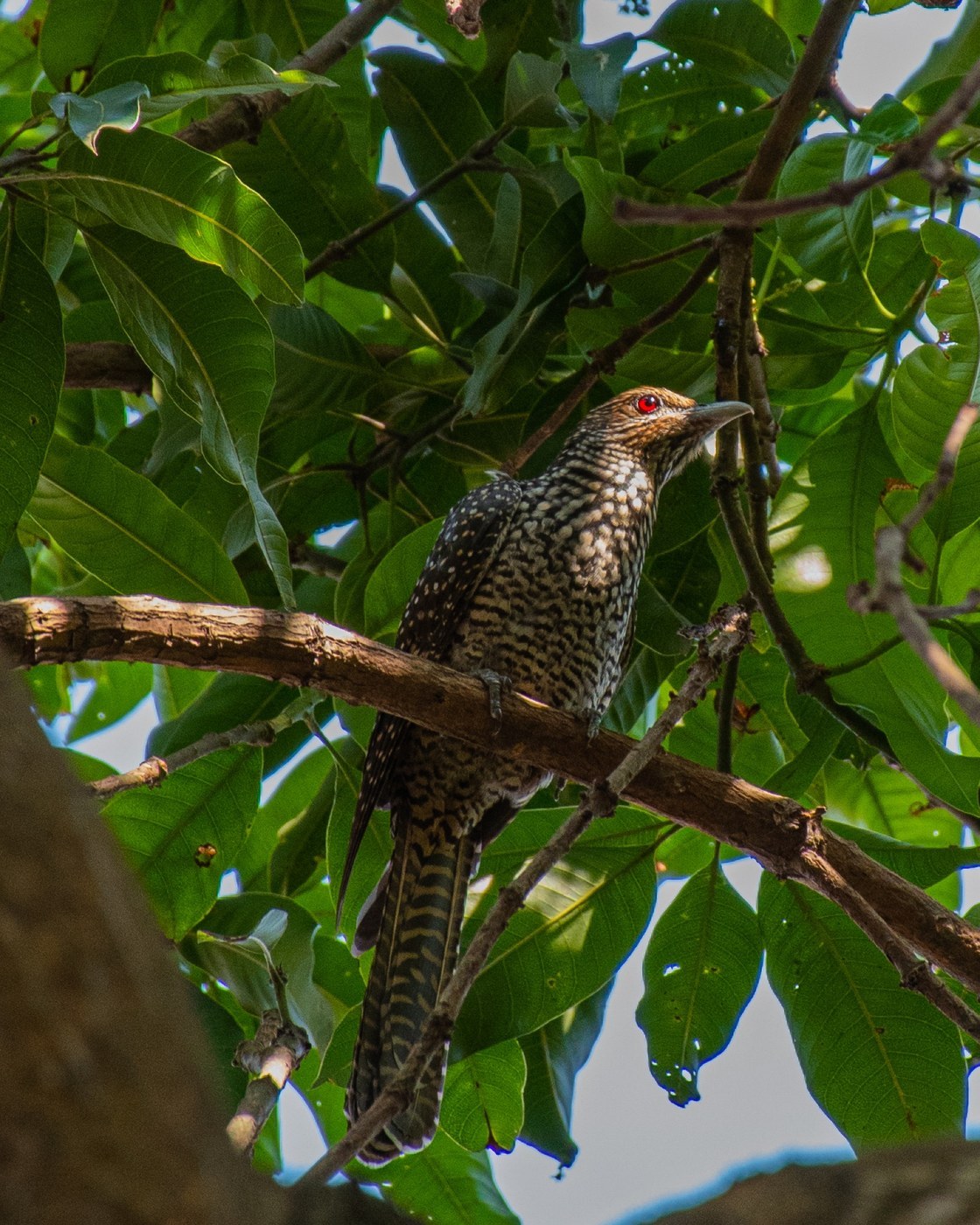
What Asian Koel Feathers Look Like
The Asian Koel shows one of the most dramatic differences between male and female feathers of any common Asian bird. Males are glossy all-black, with body and flight feathers showing an iridescent blue-green sheen in good light, similar in overall color to a crow but with a softer, more rounded feather texture and a long, graduated black tail. Females look completely different: heavily spotted and barred in brown and white/buff, with a streaked crown, white-spotted wing covert and flight feathers, and a barred brown-and-buff tail. Because the sexes look so different, it helps to think of koel feathers as two separate identification problems depending on which sex you've found.
Step-by-Step: Is This Feather From an Asian Koel?
- For glossy black feathers: Check for a soft, rounded texture rather than the stiffer, more sharply pointed feathers of crows, and look for a blue-green (not purple) iridescent sheen.
- For spotted brown feathers: Look for bold white spotting on the wing coverts arranged in fairly regular rows, combined with fine barring on the tail feathers.
- Note feather size. Koels are crow-sized birds, so expect feathers noticeably larger than typical songbirds but similar in scale to a small crow or large cuckoo.
- Consider red eye color context (not feather-based, but useful if you saw the bird) alongside the plumage clues.
- Think about habitat. Found in gardens, fig trees, and forest edge near crow populations, since koels are brood parasites of crows.
Similar Species & How to Tell Them Apart
- Crows and House Crow (for glossy black male feathers): Crow feathers are stiffer and more sharply pointed with a purplish rather than blue-green sheen, and crow tails are shorter and less strongly graduated.
- Greater Racket-tailed Drongo: Also glossy black, but shows elongated wire-like tail streamers absent in koels, and a more strongly forked tail overall.
- Common Hawk-Cuckoo (for spotted female feathers): Similar brown-and-white spotted pattern, but generally shows more barring than spotting and a proportionally shorter tail; overall pattern in koel females tends to be bolder and more heavily spotted on the wings.
Where & When You'll Find Them
Asian Koels are widespread across South and Southeast Asia, thriving in urban gardens, parks, and forest edges wherever fig trees and host crow populations are present, since koels lay their eggs in crow nests. Molt generally follows the breeding/monsoon season, and because koels are famously vocal but secretive in fig and banyan tree canopies, feathers are most often found beneath fruiting fig trees and near crow nesting areas where koels spend much of their time during the breeding season.
Frequently asked questions
Why do male and female Asian Koel feathers look so different?
The species shows strong sexual dimorphism - males are glossy all-black while females are heavily spotted brown-and-white, so each sex needs separate identification cues.
How do I tell a male koel feather from a crow feather?
Koel feathers have a softer, more rounded texture and a blue-green iridescent sheen, versus the stiffer, more pointed feathers and purplish sheen of crows.
What does a female Asian Koel feather look like?
Heavily spotted and barred in brown and white/buff, with bold white spotting on the wing coverts and fine barring on the tail.
Why are Asian Koel feathers often found near fig trees?
Koels feed heavily on figs and spend much of their time in fruiting fig and banyan trees, especially during the breeding season.
Why would koel feathers be found near crow nests?
Asian Koels are brood parasites that lay their eggs in crow nests, so adults spend time near host crow territories during breeding season.