
How to Identify American Wigeon Feathers
A guide to the green eye-patch head feathers, cream crown stripe, and black-bordered white wing patch that identify American Wigeon feathers.
Read the full American Wigeon encyclopedia entry →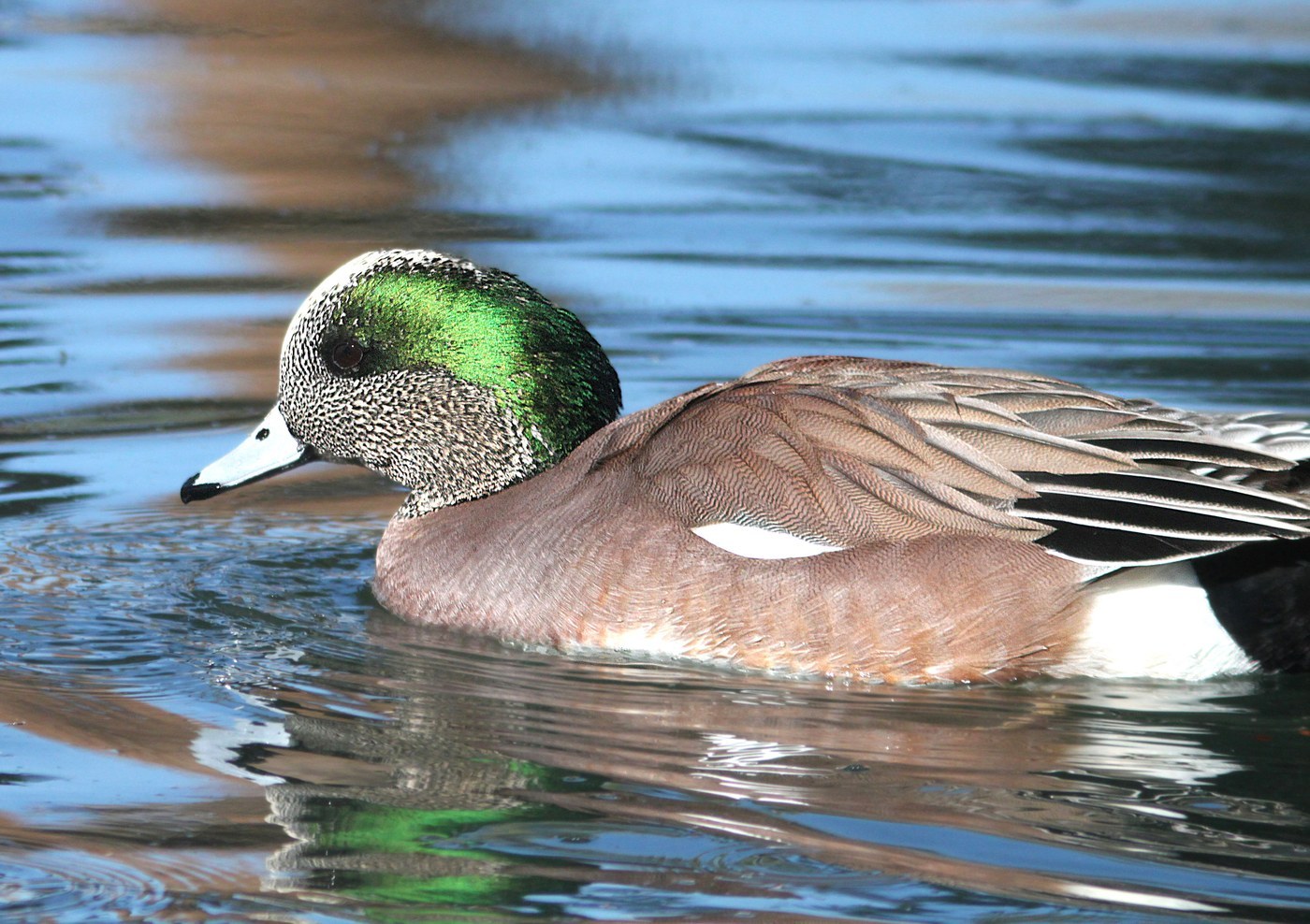
What American Wigeon's Feathers Look Like
Male American Wigeon feathers show a distinctive head pattern: a cream-to-white stripe runs along the crown from forehead to nape, bordered by a patch of iridescent green feathers sweeping back from the eye — a combination unique among North American dabbling ducks. Body feathers are a warm pinkish-brown to cinnamon on the breast and flanks, with a clean white belly. The wing shows a bold pattern: a large white patch on the upperwing coverts, bordered by black, with a smaller iridescent green speculum patch on the secondaries edged in black. Female wigeon lack the green head patch and cream crown stripe, showing instead a plain grayish head with subtle darker mottling and an overall softer brown body tone, though the white belly and hints of the black-bordered wing pattern remain useful clues.
Step-by-Step: Is This Feather From an American Wigeon?
- Check for a green head feather patch with a cream crown stripe. This combination, if present, confirms a male American Wigeon.
- Look at the wing covert feathers for a bold white patch bordered in black. This pattern is distinctive among dabbling ducks.
- Inspect for a green speculum feather edged in black. A small iridescent green patch bordered by black on the secondaries supports this identification.
- Note body feather tone. Warm pinkish-cinnamon breast/flank feathers with a clean white belly fit this species.
- Consider a plain gray head as a female. Grayish, subtly mottled head feathers without green or cream markings likely indicate a female wigeon.
Similar Species & How to Tell Them Apart
The Eurasian Wigeon, a rare visitor to North America, has a male head pattern with a rufous (not gray) head and a cream/buff forehead patch rather than a full cream stripe down the crown — any head feather that's rufous rather than gray with a green eye patch suggests this rarer relative. The Gadwall, another dabbling duck, has an overall grayer body and a smaller white speculum patch without the American Wigeon's larger white wing covert patch, and Gadwall males lack any green head coloring. Female dabbling ducks in general look similar, but the American Wigeon's plain gray head against a warmer brown body, combined with a clean white belly, is a helpful combination for narrowing identification even without the male's bold colors.
Where & When You'll Find Them
American Wigeons breed on prairie potholes and wetlands across the northern U.S., Canada, and Alaska, then winter widely across the southern and coastal United States, Mexico, and Central America, often grazing on grass and aquatic vegetation in flocks alongside other waterfowl in flooded fields, ponds, and estuaries. Feathers are most easily found near wintering flocks on lakes, marshes, and coastal bays from fall through early spring, while the main flight-feather molt occurs on or near the breeding grounds in mid-to-late summer, when adults become flightless for a few weeks while replacing all their flight feathers at once.
Frequently asked questions
What's the clearest sign of a male American Wigeon feather?
A green iridescent head-feather patch paired with a cream stripe running down the crown is essentially unique to male wigeon among common dabbling ducks.
How do I tell this from a Eurasian Wigeon feather?
Eurasian Wigeon males have a rufous head rather than gray, with only a small cream forehead patch instead of a full cream crown stripe.
Are female wigeon feathers identifiable?
They're less distinctive than the male's, but a plain grayish head combined with a warmer cinnamon-brown body and clean white belly is a useful, though less certain, combination.
When are wigeon feathers most commonly found?
From fall through early spring near wintering flocks on lakes, marshes, and coastal bays, since the main molt happens earlier on the breeding grounds far to the north.