
How to Identify Albert's Lyrebird Feathers
How to identify Albert's Lyrebird feathers by their warm chestnut-brown tones and comparatively plain long tail, distinguishing them from the far more ornate Superb Lyrebird.
Read the full Albert's Lyrebird encyclopedia entry →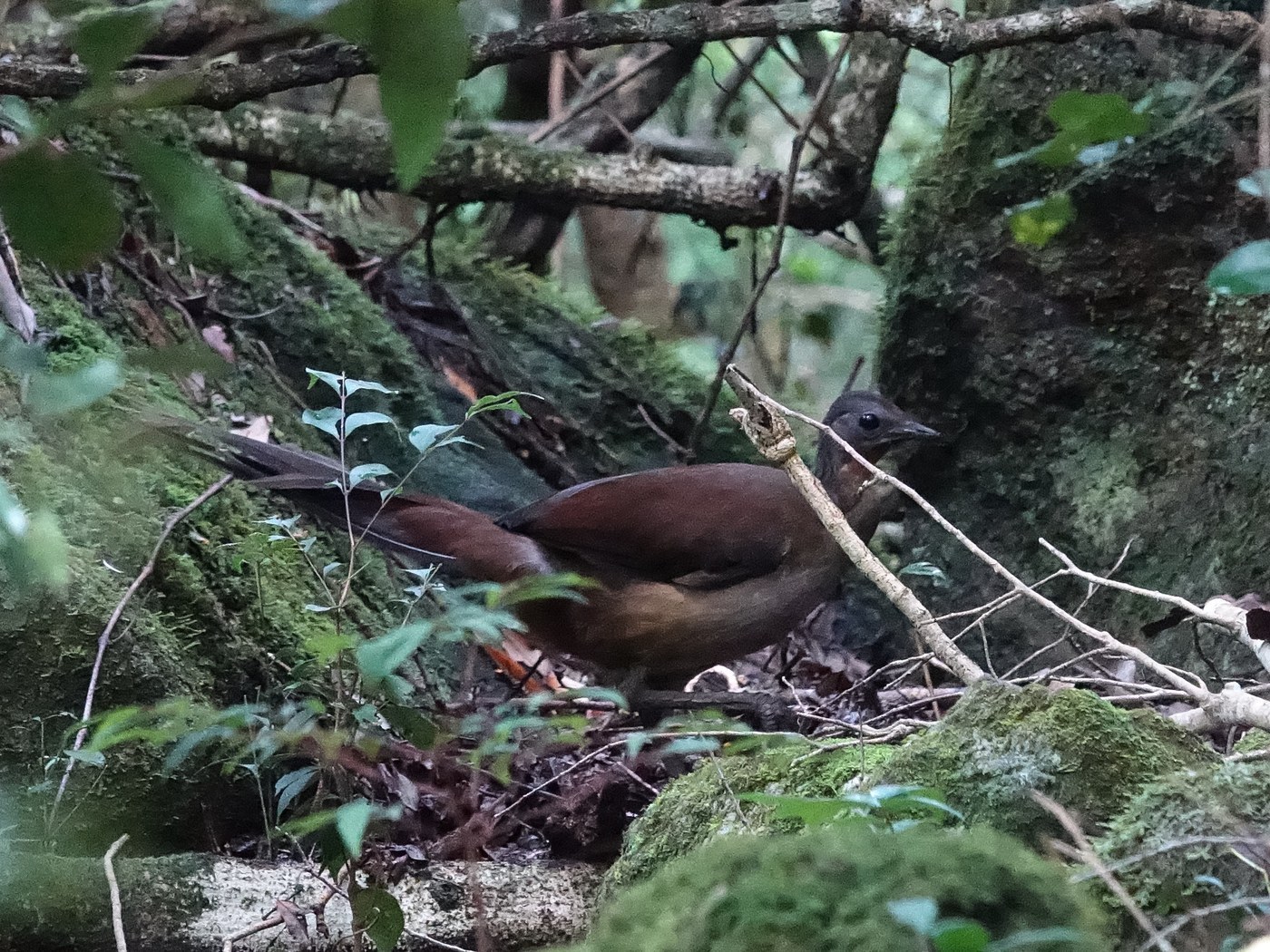
What Albert's Lyrebird's Feathers Look Like
Albert's Lyrebird is a large, ground-dwelling songbird restricted to a small pocket of subtropical rainforest, and its feathers are notably rich in color but simpler in structure than its more famous relative. Body feathers are dense, soft, and warm chestnut-rufous in tone, giving the bird an overall reddish-brown appearance. Flight feathers are dark brown with rufous fringing. The tail is long — individual feathers can exceed 30 cm — but unlike the Superb Lyrebird, Albert's Lyrebird's tail feathers are comparatively plain and uniform reddish-brown, lacking the elaborate silvery lace-like barring and filamentous plumes that make its relative's tail so ornate. Fine, hair-like filamentous feathers are present but much subtler than in the Superb Lyrebird.
Step-by-Step: Is This Feather From a Albert's Lyrebird?
- Measure the feather. A long feather, potentially 25-30+ cm, immediately suggests a large ground bird capable of growing an elaborate tail.
- Check for plainness in the tail feather. A long feather that is fairly uniform chestnut-brown, without bold black-and-white lace patterning, points toward Albert's Lyrebird rather than its more ornately patterned relative.
- Check body feather color. Warm chestnut-rufous, dense, and soft — consistent with a large forest-floor bird.
- Look for subtle filamentous structure. Fine, wire-like feather elements may be present but should be far less pronounced than in Superb Lyrebird.
- Consider the location. A large, plain reddish-brown feather found in dense rainforest understory in the small border region of Queensland and New South Wales is a strong contextual match.
Similar Species & How to Tell Them Apart
- Superb Lyrebird: Overlaps in a small area of range, but its long outer tail feathers are far more elaborate — broad, with a striking silvery-white lace pattern crossed by dark bars, plus fine wire-like medians, none of which appear on Albert's Lyrebird's plainer, more uniformly colored tail.
- Bowerbirds and other large rainforest ground birds: Lack tail feathers anywhere near the length of a lyrebird's, making size alone a quick way to rule these out.
Where & When You'll Find Them
Albert's Lyrebird has one of the most restricted ranges of any Australian songbird, confined to a small area of subtropical rainforest along the Queensland-New South Wales border. It forages on the forest floor, scratching through leaf litter and turning over debris in search of invertebrates, and males perform elaborate ground displays at traditional display mounds, stamping down a cleared platform of vegetation that they return to year after year. Because of this, feathers are most likely to be found on the forest floor near these display sites, particularly in gullies with dense understory cover. The species is non-migratory, and molt occurs gradually rather than in one concentrated period, though males often show the most feather wear on their tail just before the breeding display season.
Frequently asked questions
What's the quickest way to tell this apart from Superb Lyrebird?
Look at the tail feather pattern — Albert's Lyrebird's tail is comparatively plain chestnut-brown, while Superb Lyrebird's outer tail feathers show a bold silvery lace pattern with dark barring that Albert's lacks.
Why is this species' feather so rarely encountered outside its range?
Albert's Lyrebird has an extremely restricted distribution limited to a small rainforest pocket on the Queensland-New South Wales border, so feathers from this species are essentially never found outside that specific region.
Do female Albert's Lyrebirds have the same long tail feathers?
No, the dramatically elongated tail is a male trait used in courtship display; females have shorter, more ordinary tail feathers similar in color but much less extreme in length.
Where exactly should I look for feathers from this species?
Focus on the leaf-littered forest floor near traditional display mounds, which males use repeatedly across breeding seasons and where shed feathers tend to accumulate.