
How to Identify African Fish Eagle Feathers
How to identify African Fish Eagle feathers by their pure white, unbarred tail and rich chestnut body plumage, and how to avoid confusing them with Bald Eagle feathers.
Read the full African Fish Eagle encyclopedia entry →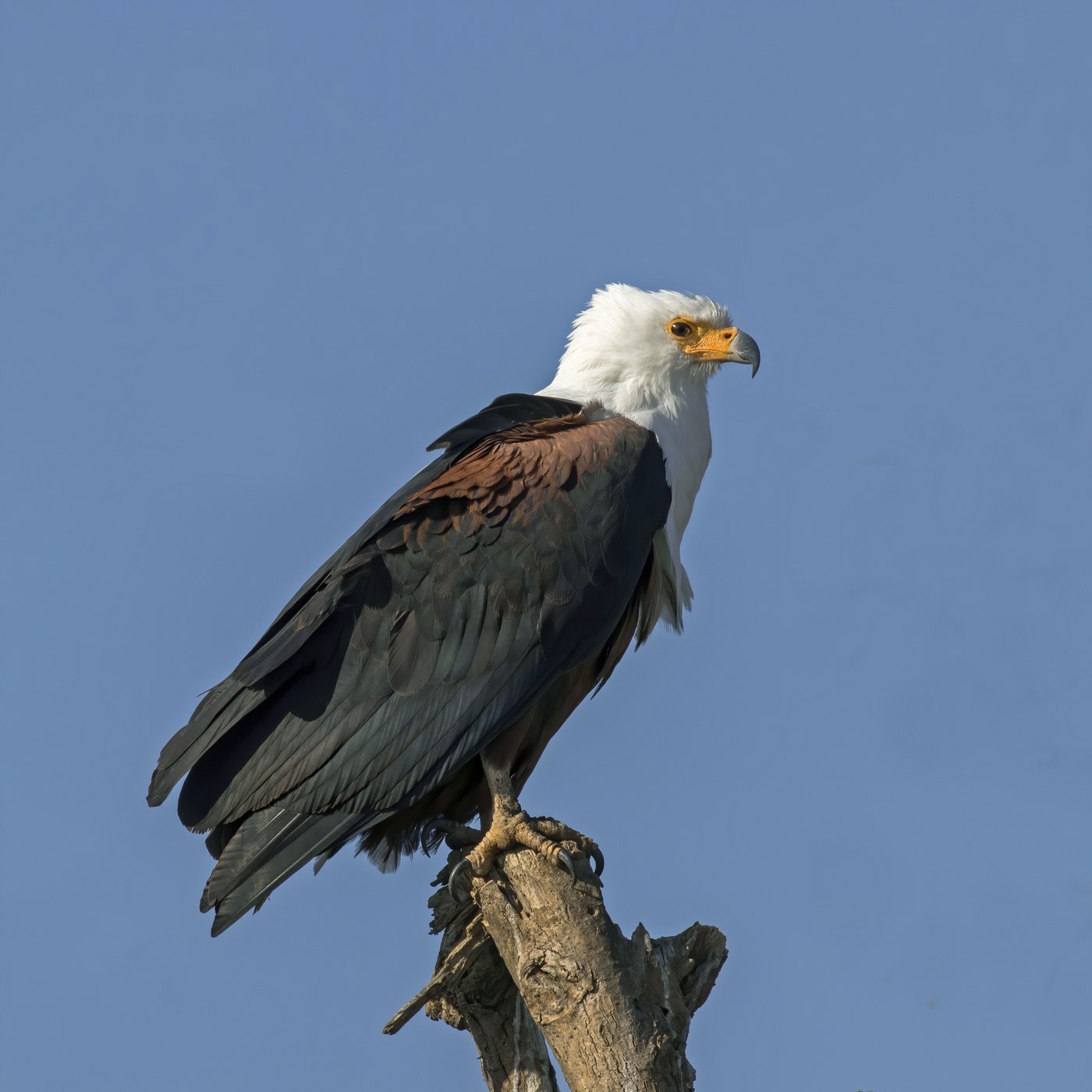
What African Fish Eagle's Feathers Look Like
African Fish Eagle is a large, striking raptor of African waterways, and its feathers show a clean three-color plan. The head, neck, and chest are covered in white, loosely-textured, almost lance-shaped feathers, while the back, wing coverts, and belly are a rich chestnut-brown to rufous — a warmer, more reddish tone than the dark brown of many other large eagles. The tail is especially diagnostic: adult tail feathers are entirely pure white with no barring or dark tip, unusual among African raptors. Flight feathers (primaries and secondaries) are black and broad, often 30-40 cm on large adults, contrasting sharply with the chestnut coverts above them.
Step-by-Step: Is This Feather From a African Fish Eagle?
- Check for an all-white tail feather. A large, unbarred, entirely white tail feather from a big raptor is one of the most distinctive single clues available in African raptor identification.
- Look at body color. Rich chestnut-brown (not blackish-brown) body and covert feathers are a strong supporting clue once paired with the white tail or head feathers.
- Feel the head feather texture. White head/neck feathers are loose and somewhat lance-shaped, different from the tighter contour feathers on the chest.
- Measure flight feathers. Black primaries over 25-30 cm point to a large eagle rather than a smaller hawk or kite.
- Consider the setting. A feather found near a lake, river, or wetland edge in sub-Saharan Africa fits this species' strong association with water.
Similar Species & How to Tell Them Apart
- Bald Eagle: Shares the white head and white tail pattern, but its body and wing covert feathers are dark blackish-brown, not chestnut. Since the two species don't share a range (Africa vs. North America), location alone usually settles the question, but body color is the key feather-level difference if that's ever in doubt.
- Palm-nut Vulture: Also shows white body plumage, but its flight feathers and tail are patterned in black and white rather than solid white, and it has no chestnut coloring at all.
- White-bellied Sea Eagle: Has a white belly but gray, not chestnut, upperparts, and its tail is white with a variable dark base rather than uniformly pure white.
Where & When You'll Find Them
African Fish Eagle is a resident species found across lakes, rivers, and wetlands throughout sub-Saharan Africa, from major lakes like Victoria and Malawi to smaller rivers and coastal lagoons. Pairs are territorial and often use the same waterside perches for years, so feathers frequently accumulate below favored roosting or feeding trees along shorelines. Molt is gradual and occurs across the year rather than in a tight seasonal window, though feather wear and replacement often increase somewhat after the breeding season.
Frequently asked questions
What's the single best feather to find for a confident ID?
A large, pure white tail feather with absolutely no barring or dark tip, especially if paired with a chestnut-brown body feather, is about as diagnostic as a single feather gets for this species.
How do I avoid confusing this with a Bald Eagle feather?
Check the body/covert feather color — African Fish Eagle is warm chestnut-brown, while Bald Eagle is dark blackish-brown. Range also makes confusion unlikely unless you're dealing with a captive or zoo bird.
Do immature African Fish Eagles have the same white tail?
No, immatures are mottled brown overall and only acquire the clean white head and tail as they mature over several years, so a mottled brown-and-white feather could be from a younger bird.
Where along a lake shore are feathers most likely to be found?
Look beneath tall trees or snags right at the water's edge — these eagles favor exposed waterside perches for hunting and resting, and that's where molted feathers tend to collect.