
How to Identify Western Jackdaw Feathers
How the pale silvery-gray nape patch against an otherwise glossy black body identifies a Western Jackdaw feather among Eurasian corvids.
Read the full Western Jackdaw encyclopedia entry →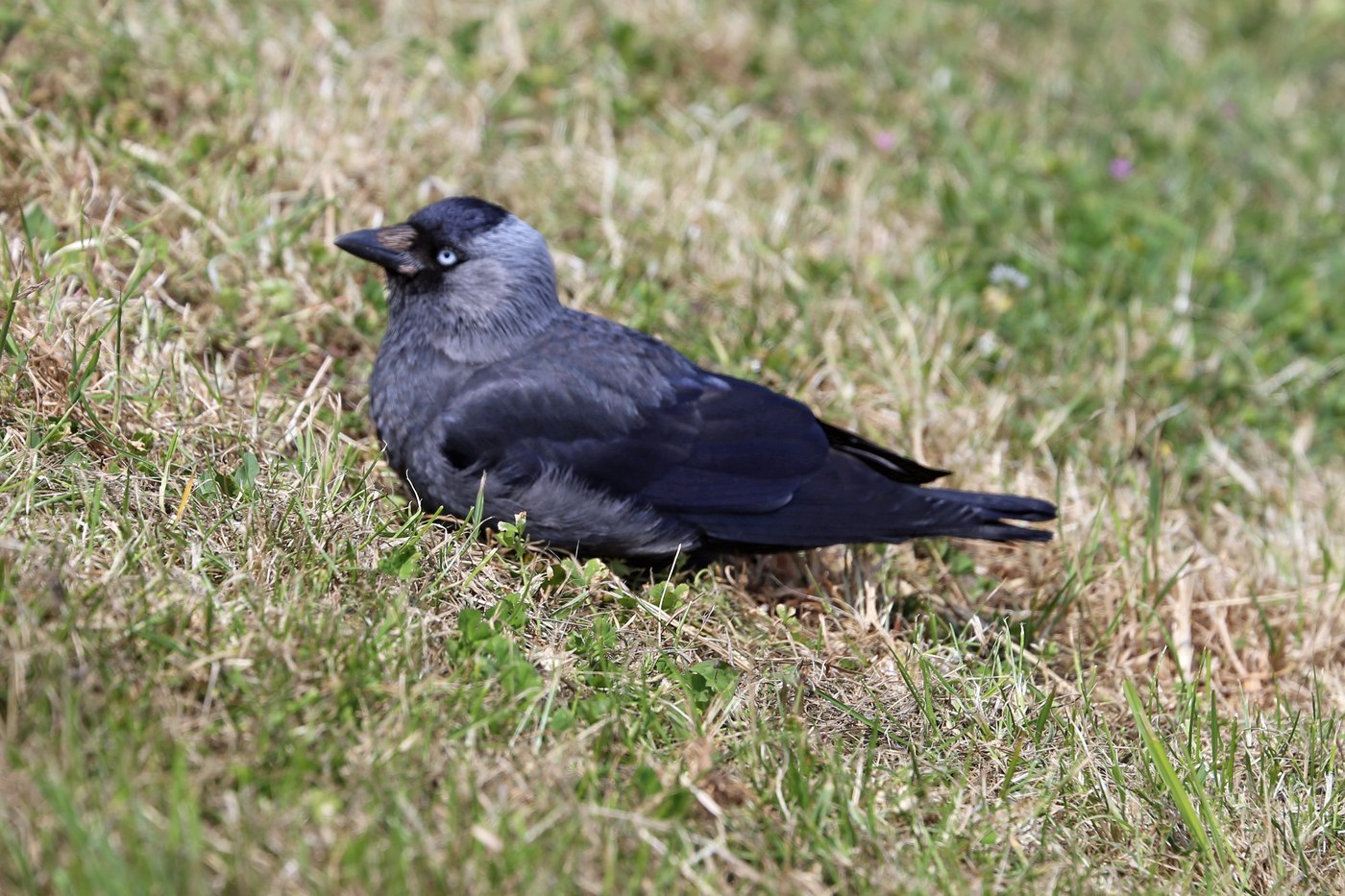
What Western Jackdaw Feathers Look Like
Western Jackdaw is a small, sociable Eurasian corvid, and its most useful feather feature is a pale "hood" pattern that no similarly sized black bird in its range shares.
- Crown/face feathers: deep glossy black, covering the forehead and top of the head.
- Nape/hindneck/ear covert feathers: distinctly pale silvery-gray, forming a contrasting collar or hood-like patch against the black cap and body — this is the single best diagnostic feature for the species.
- Body feathers: glossy black overall, with a subtle blue-purple sheen visible on the wings and tail in good light.
- Wing/tail feathers: black with iridescent blue-green or purple gloss, smaller and more compact than those of larger crows.
- Size: notably small for a corvid — feathers run smaller than Carrion Crow or Rook, closer in scale to a large pigeon.
- Texture: contour feathers are relatively short and dense compared to the coarser, larger feathers of bigger crow relatives.
Step-by-Step: Is This Feather From a Western Jackdaw?
- Look for a pale gray patch on the nape or ear region. Feathers that are silvery-gray, distinct from an otherwise all-black plumage, are close to unique among similarly sized black corvids.
- Compare feather size to that of larger crows. Notably smaller, more compact feathers support Jackdaw over Carrion Crow or Rook.
- Check for blue-purple gloss on wing/tail feathers, which is typical of jackdaw plumage in good light.
- Rule out all-black feathers with no pale patch anywhere, which would point instead to Carrion Crow.
- Consider habitat. Feathers found around towns, cliffs, farmland, or old buildings across Europe and western Asia fit this cavity-nesting species' typical haunts.
Similar Species & How to Tell Them Apart
- Carrion Crow: uniformly all-black with no pale nape patch anywhere, and its feathers are noticeably larger than Jackdaw's.
- Rook: also glossy black with purple-blue sheen, but shows bare grayish-white facial skin (not a feathered pale patch) and larger, shaggier thigh feathering; overall body and feather size is larger than Jackdaw.
- Red-billed/Alpine Chough: glossy black as well, but found in different habitat (mountains/cliffs) and lacks the pale nape patch, plus has a notably different bill and leg color (not visible on a feather but relevant to overall identification).
- Immature crows of various species: can show some duller plumage but never develop Jackdaw's distinctive contrasting pale hood pattern.
Where & When You'll Find Them
Western Jackdaws are widespread across Europe and western Asia, nesting colonially in cavities in cliffs, old trees, and buildings, and are commonly seen in towns, farmland, and parkland. As a largely resident species in much of its range, feathers can be found near nesting and roosting sites throughout the year, with a noticeable increase after the post-breeding molt in late summer when adults replace their plumage.
Frequently asked questions
What's the clearest single feature for identifying this species?
A pale silvery-gray feather from the nape, hindneck, or ear region, contrasting sharply with an otherwise all-black plumage, is close to unique among similarly sized Eurasian corvids.
How does size help separate this from Carrion Crow or Rook?
Western Jackdaw feathers are noticeably smaller and more compact than those of Carrion Crow or Rook, which are considerably larger birds.
Does Rook also show a pale patch?
Rook shows bare grayish-white facial skin rather than a feathered pale patch, and its overall feather size is larger than Jackdaw's, so the two aren't easily confused once compared directly.
What gloss color should I expect on wing feathers?
A subtle blue-purple iridescent sheen is typical on Jackdaw wing and tail feathers in good light, similar to but on a smaller scale than related crow species.
When are these feathers most likely to be found?
Year-round near nesting and roosting sites such as towns, cliffs, and farmland, with an increase in late summer after the post-breeding molt.
Western Jackdaw identified by the community
Recent Western Jackdaw feathers identified with Feather Identifier.
