
How to Identify Tufted Titmouse Feathers
How to recognize the soft gray body feathers and rusty flank patch of a Tufted Titmouse and separate them from chickadees and other small songbirds.
Read the full Tufted Titmouse encyclopedia entry →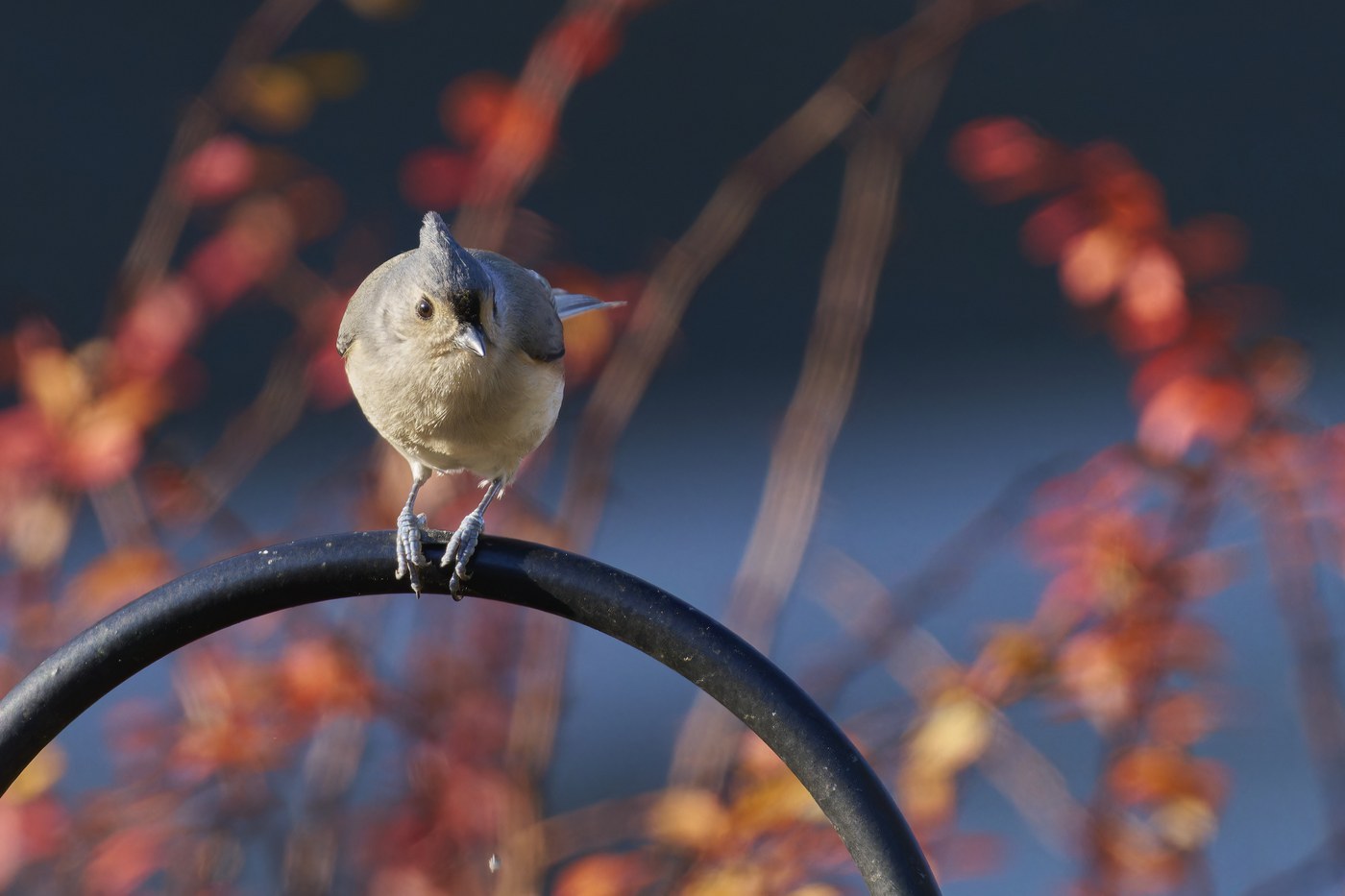
What Tufted Titmouse's Feathers Look Like
Tufted Titmouse is a small, crested woodland songbird, and its feathers reflect its plain-but-elegant look rather than any bold pattern.
- Body/contour feathers: soft, unmarked gray above and whitish below, with no streaking, barring, or spotting anywhere on the body — a smooth, uniform look is the norm.
- Flank feathers: a small but distinctive patch of rusty-orange (peach) feathers along the sides, tucked under the wings — this warm flank wash is one of the best single clues to the species.
- Crest feathers: longer, more pointed gray feathers from the crown that the bird can raise into a peak; an isolated crest feather looks like an elongated version of the back feathers, gray with a slightly darker shaft.
- Wing and tail feathers: plain gray, only slightly darker than the back, with pale gray edging and no wing bars or white flashes.
- Size: contour feathers run about 2.5-4 cm, flight feathers 4-6 cm — small and lightweight, consistent with a bird only slightly larger than a chickadee.
- Texture: feathers are soft and downy at the base, typical of a non-migratory bird that relies on fluffed plumage for winter insulation.
Step-by-Step: Is This Feather From a Tufted Titmouse?
- Check the color first. Plain gray above and whitish below with zero streaking rules out most patterned songbirds right away.
- Look for rusty flanks. A feather with a peachy-orange wash, especially from the side of the body, is a strong titmouse signature — few small eastern songbirds show this exact warm rust tone.
- Measure the feather. Body feathers in the 2.5-4 cm range and flight feathers under 6 cm fit this species; anything notably larger points elsewhere.
- Rule out black. Titmice have no black cap, bib, or wing markings at all — if the feather shows any black, you're likely looking at a chickadee instead.
- Consider where it was found. Feathers under mixed hardwood or mixed pine-hardwood forest, especially near suet feeders or nest boxes, fit this cavity-nesting species well.
Similar Species & How to Tell Them Apart
- Carolina Chickadee / Black-capped Chickadee: both show a black cap and black throat bib, features titmouse feathers never have; chickadee body feathers also lack the rusty flank wash.
- Tufted Titmouse vs. Juniper/Oak Titmouse (western species, no range overlap): those species are duller overall gray-brown with no rusty flanks at all, useful if a feather's origin is uncertain.
- White-breasted Nuthatch: has a much longer, straighter, more pointed flight feather shape and lacks the peachy flank color.
- Carolina Wren: shows warm rufous-brown overall with fine barring on wings and tail, unlike titmouse's plain gray back.
Where & When You'll Find Them
Tufted Titmice are non-migratory residents of deciduous and mixed forests, woodland edges, parks, and backyards across the eastern and central United States. Because they don't migrate, feathers can turn up in their territory year-round, but the heaviest feather drop follows the post-breeding molt in late summer (July-September), when adults replace worn breeding plumage before winter. Look near nest cavities, brush piles, and feeding stations in mature woodlots.
Frequently asked questions
What's the single best clue that a feather is from a Tufted Titmouse?
A soft gray body feather paired with a peachy-rust patch from the flanks — that warm rust wash is distinctive among small eastern gray songbirds.
Could this actually be a chickadee feather?
Only if it shows black — chickadees have a black cap and bib that titmouse feathers never show; titmouse plumage is entirely black-free.
Why does the feather look so soft and fluffy at the base?
Titmice are non-migratory and rely on dense, downy plumage for insulation through cold winters, so their feathers have extra fluffy afterfeather down.
Does the feather have any wing bars or white patches?
No — Tufted Titmouse wings and tail are plain gray with no bars, spots, or white flashes, which helps rule out many patterned songbirds.