
How to Identify Superb Lyrebird Feathers
How to identify the extraordinary lyre-shaped tail feathers of the male Superb Lyrebird — the single most unmistakable feather find in Australian forests.
Read the full Superb Lyrebird encyclopedia entry →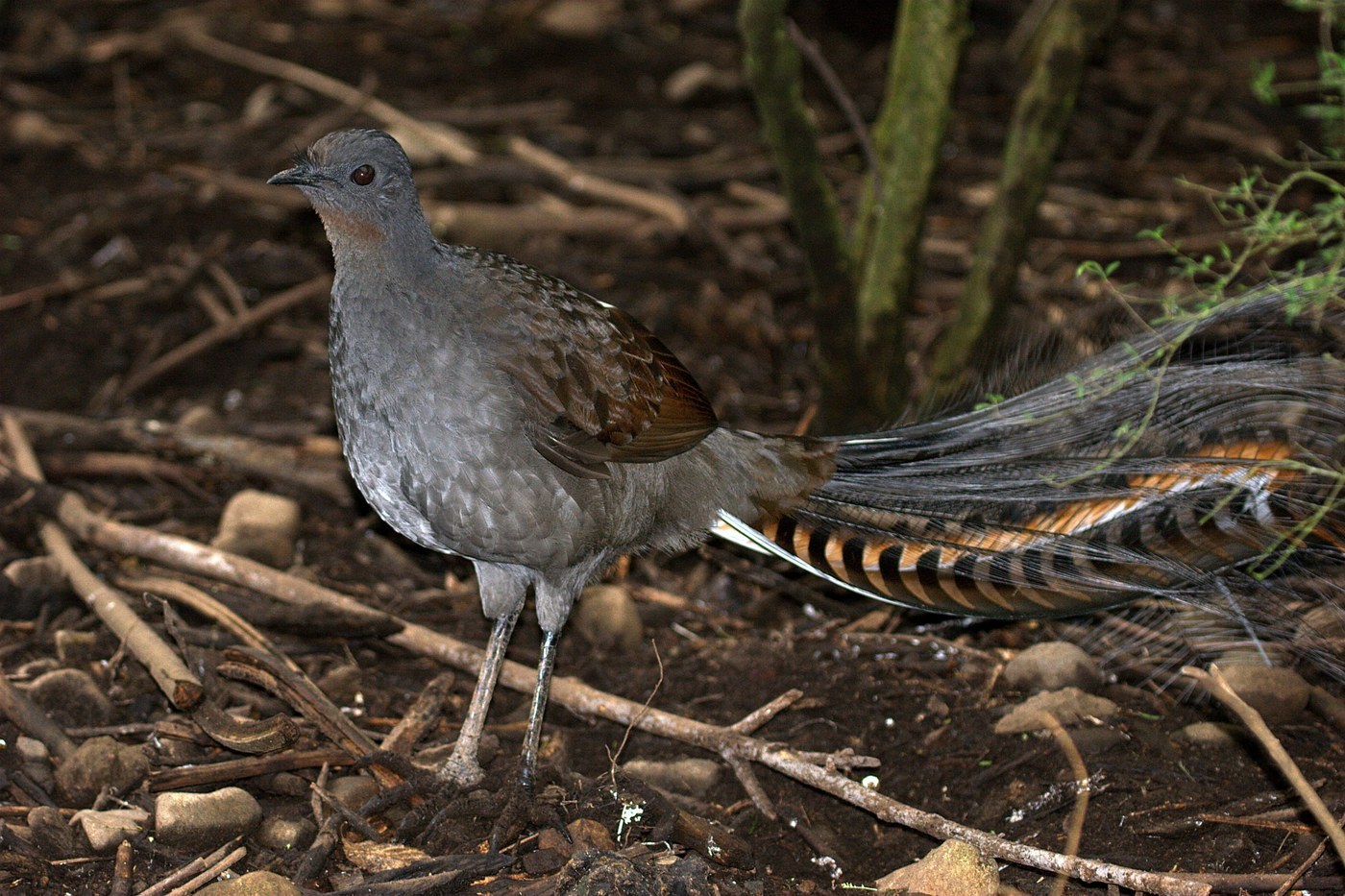
What Superb Lyrebird Feathers Look Like
The Superb Lyrebird is famous for the male's astonishing tail, and if you find one of its specialized tail feathers, identification is close to certain — nothing else looks like it.
- Outer tail feathers (the "lyrates"): broad, curved, silvery-brown feathers marked with bold, evenly spaced dark chestnut crescent-shaped bands — this banding pattern is completely unlike any other bird's tail feather.
- "Wire" feathers: two thin, stiff, almost bare-shafted feathers with just sparse barbs near the tip, quite unlike a typical feather's full vane.
- Filmy/lace feathers: delicate, translucent, lacy-looking feathers that make up the bulk of the ornamental tail — soft and fine compared to the bold lyrate feathers.
- Body/contour feathers: plain, rich brown to greyish-brown, dense and soft — typical of a large, ground-foraging bird, and unremarkable compared to the tail.
- Overall size: tail feathers can be quite long and substantial, reflecting the male's spectacular display tail.
Step-by-Step: Is This Feather From a Superb Lyrebird?
- Check first for crescent banding. A broad, curved feather with dark chestnut crescent markings on a silvery-brown ground is essentially unmistakable — no other Australian bird produces this pattern.
- Look for wire-like feathers. A thin, largely bare shaft with sparse barbs near the tip, found in the same area, supports a lyrebird tail origin.
- Check for lacy, translucent feathers as a companion find alongside the bolder tail feathers.
- For plain brown body feathers alone, rely on size and habitat rather than pattern, since these are less distinctive on their own.
- Factor in habitat. Lyrebirds forage by scratching through leaf litter in wet eucalypt forest and rainforest gullies — a strong contextual clue for any find.
Similar Species & How to Tell Them Apart
- No true look-alike exists for the lyrate tail feathers — the crescent-banded pattern is unique among all birds.
- Plain brown body/contour feathers could superficially resemble those of other large ground-dwelling birds, but the combination of large size, dense soft structure, and finding them in lyrebird habitat (rather than open ground) points strongly to this species.
- Australian Brushturkey: another large ground bird from similar forest habitats, but its feathers are coarser and lack any resemblance to the ornate lyrebird tail structure.
Where & When You'll Find Them
Superb Lyrebirds live in wet eucalypt forest and rainforest gullies of southeastern Australia, where males build display mounds and perform elaborate vocal and visual shows through the austral winter breeding season. Because the ornamental tail feathers are molted and regrown on an annual cycle tied to this display season, the most spectacular lyrate and wire feathers are most commonly found on the forest floor near display mounds during and shortly after the austral autumn-to-winter breeding display period.
Frequently asked questions
What is the single most unmistakable feather to find from this species?
A broad, curved lyrate tail feather with bold dark chestnut crescent bands on a silvery-brown ground — a pattern unique to this species.
What are the thin 'wire' feathers I might find alongside it?
Two specialized tail feathers with mostly bare shafts and only sparse barbs near the tip, part of the male's ornamental tail structure.
When are lyrebird tail feathers most likely to be found?
During and shortly after the austral autumn-to-winter breeding display season, near male display mounds in forest gullies.
Are plain brown body feathers useful for identification?
Less so on their own — they're fairly unremarkable, so habitat and size matter more unless found alongside a diagnostic tail feather.