
How to Identify Superb Fairywren Feathers
A guide to the vivid iridescent blue feathers of the male Superb Fairywren and the plainer brown female plumage, with tips for separating it from other fairywrens.
Read the full Superb Fairywren encyclopedia entry →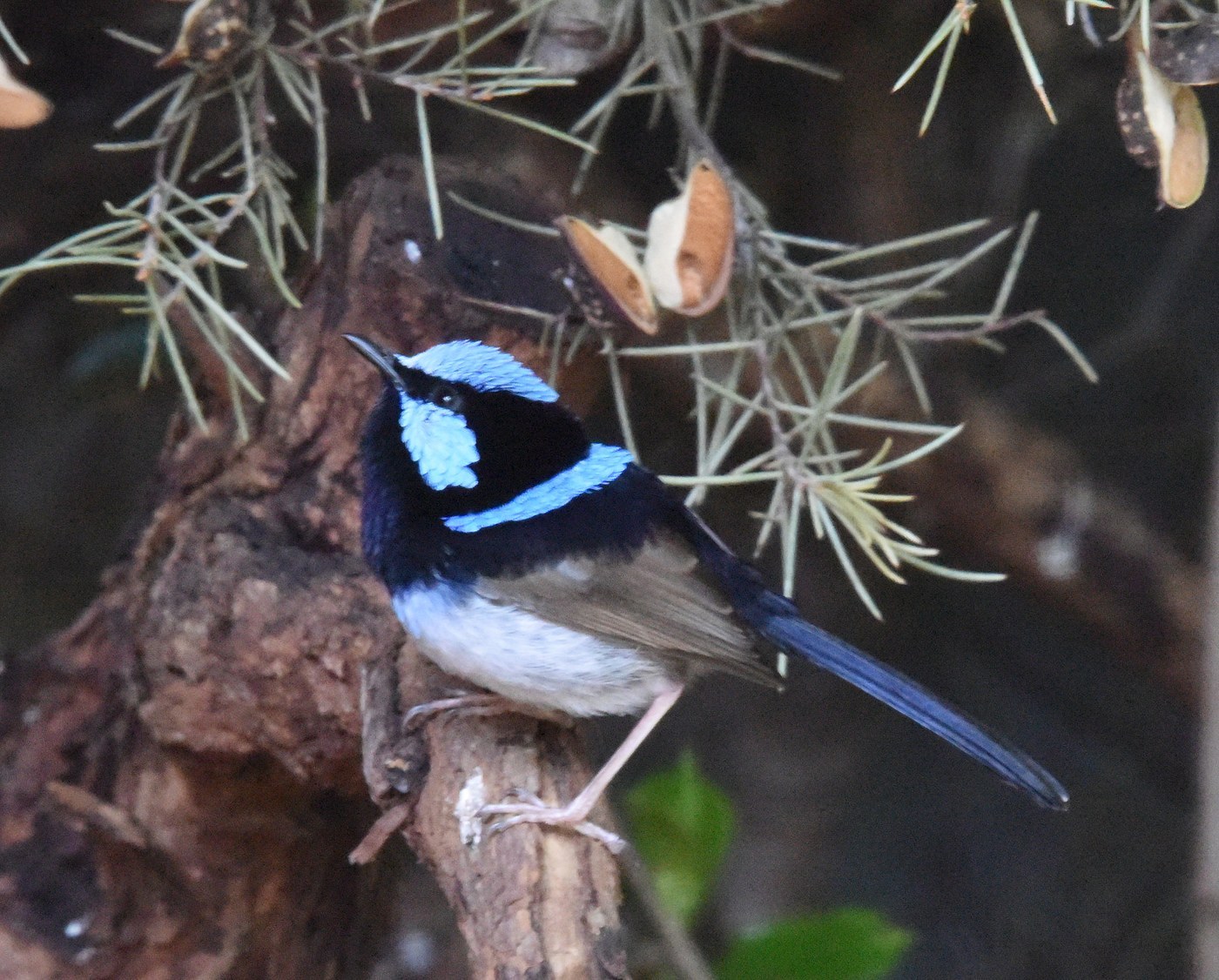
What Superb Fairywren Feathers Look Like
The Superb Fairywren is a tiny, well-loved Australian garden bird, and its feathers vary dramatically between the dazzling breeding male and the far plainer female.
- Male crown and cheek feathers (breeding): vivid, iridescent cobalt-blue, with the ear coverts showing an especially bright, almost silvery-blue sheen.
- Male face/throat/upper back feathers: solid black, sharply contrasting with the blue crown and cheek patches.
- Male tail feathers: long, blackish-blue, often held cocked upward on the living bird — even a detached tail feather is notably long relative to the bird's tiny body.
- Female/eclipse male feathers: soft grey-brown overall, with a plainer, less iridescent blue-grey tail, lacking any black or bright blue.
- Overall size: extremely small feathers, consistent with a bird only about 14 cm long including its long tail.
Step-by-Step: Is This Feather From a Superb Fairywren?
- Check for iridescent cobalt blue. A tiny, shimmering blue feather is a strong lead for a breeding male's crown or cheek.
- Look for black contrast. Blue feathers paired with solid black face/throat feathers support the ID over other blue-colored small birds.
- Assess tail feather length versus body size. A surprisingly long, slim blackish-blue tail feather relative to a tiny body fits a fairywren.
- For plain brown feathers, check for a blue-grey (not deep blue) tail feather, consistent with a female or non-breeding male.
- Factor on habitat and range. Common in gardens, parks, and woodland understory across southeastern Australia — feathers turn up readily in suburban gardens with dense shrubbery.
Similar Species & How to Tell Them Apart
- Splendid Fairywren: male is entirely blue with no black back contrast, unlike Superb Fairywren's blue-and-black combination.
- Variegated Fairywren: male shows a chestnut shoulder patch on the wing, absent in Superb Fairywren.
- Female fairywrens generally: very similar brown plumage across species, often requiring range and companion males for confident identification — a lone female-type feather is hard to pin to species with certainty.
Where & When You'll Find Them
Superb Fairywrens are common in gardens, parks, heathland, and woodland understory across southeastern Australia, living in small social groups. Males molt out of their bright blue breeding plumage into a duller brown "eclipse" plumage after the breeding season, then molt back into blue before the next breeding cycle — so both bright blue and plain brown male-type feathers can be found depending on the time of year, with post-breeding months typically yielding more of the transitional brown feathers.
Frequently asked questions
What's the fastest way to confirm a male Superb Fairywren feather?
Look for tiny, iridescent cobalt-blue crown or cheek feathers paired with solid black face/throat feathers.
Why might I find a plain brown feather from a male of this species?
Males molt into a duller brown 'eclipse' plumage after breeding, so brown feathers aren't necessarily from females.
How do I tell this apart from a Splendid Fairywren feather?
Splendid Fairywren males are entirely blue with no black back contrast, while Superb Fairywren shows a clear blue-and-black combination.
Is it possible to identify a lone female-type feather to species?
It's difficult — female fairywren plumage looks similar across several species, so range and any accompanying male feathers help narrow it down.