
How to Identify Sunbittern Feathers
A guide to the unmistakable sunburst wing pattern of the Sunbittern, a unique Neotropical bird, and how its cryptic body plumage differs from its dramatic flight feathers.
Read the full Sunbittern encyclopedia entry →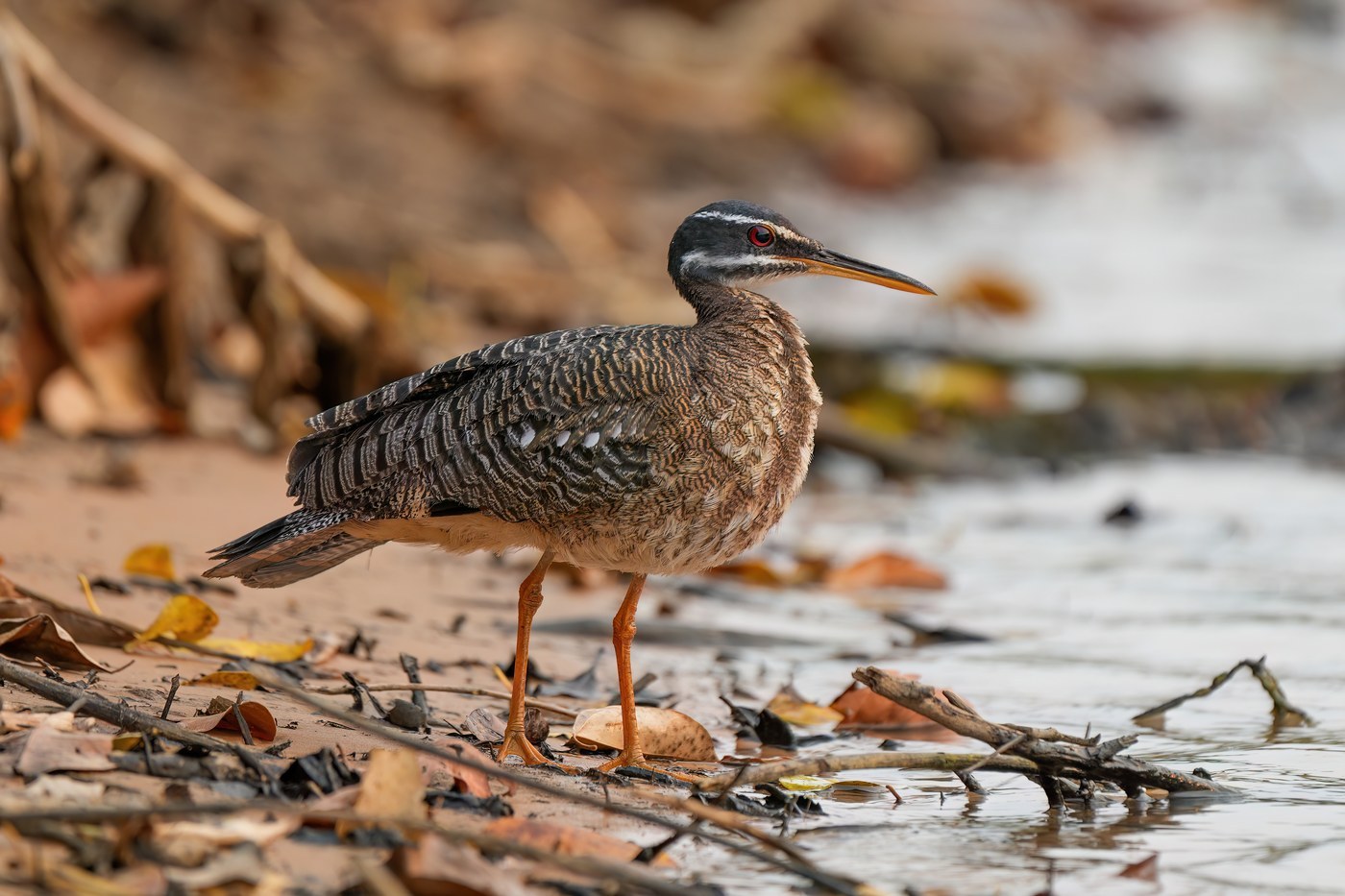
What Sunbittern Feathers Look Like
The Sunbittern is a one-of-a-kind Central and South American bird with no close relatives, and its feathers show one of the most striking patterns you can find on the forest floor.
- Body feathers: finely vermiculated grey-brown and black, creating a subtle, bark-like camouflage pattern that blends into shaded stream banks.
- Flight feathers (open wing): an enormous, unmistakable pattern of concentric orange/chestnut, black, and buff-white bands, forming a "sunburst" or eyespot design that is only fully visible when the wing is spread — a large flight feather showing bold rufous-orange and black banding is very likely from this species.
- Tail feathers: barred black and rufous-chestnut, with a clean white terminal band near the tip.
- Head feathers: dark with fine white streaking around the face.
- Legs and bill: not feathered, but bright orange-yellow, useful if found alongside feathers.
Step-by-Step: Is This Feather From a Sunbittern?
- Check for the sunburst banding. A large flight feather with bold concentric orange/chestnut, black, and buff bands is close to diagnostic — no other bird in the same habitat shows this pattern.
- Examine tail feathers for a white tip. Black-and-chestnut barring ending in a crisp white band supports the ID.
- Look at body feathers for fine vermiculation. A subtly patterned grey-brown-black feather (rather than solid color or heavy streaking) fits the cryptic body plumage.
- Rule out simple brown streaked feathers. Plain streaked brown feathers without any orange/black banding likely belong to a bittern instead.
- Confirm habitat. Sunbitterns favor shaded streams and rivers in tropical forest — a strong contextual clue given the bird's specialized habitat.
Similar Species & How to Tell Them Apart
- American/Least Bittern: streaked brown overall but lacks the sunburst wing pattern entirely — bittern feathers are streaky and cryptic without bold orange/black banding.
- Herons in general: differ substantially in feather shape and structure, and none show the concentric sunburst flight-feather pattern unique to the Sunbittern.
- Nothing else closely resembles the spread-wing pattern — if you find a feather with true concentric orange-and-black banding, Sunbittern is by far the most likely source in Neotropical stream habitat.
Where & When You'll Find Them
Sunbitterns are solitary, quiet birds found along shaded streams and rivers in wet tropical forest from Central America through the Amazon basin. They forage slowly along stream edges, spreading their wings in a striking threat/courtship display that reveals the sunburst pattern. There isn't a sharply defined seasonal molt documented for this species across its range, so feathers can be found near forest streams throughout the year, with body feathers more commonly encountered than the larger, more dramatic flight feathers.
Frequently asked questions
What is the single most reliable way to identify a Sunbittern feather?
A large flight feather showing bold concentric bands of orange/chestnut, black, and buff — a pattern unique to this species in its habitat.
Why do body feathers look so different from wing feathers?
Body feathers are finely patterned grey-brown-black for camouflage on the forest floor, while the spread wing reveals a dramatic sunburst pattern used in display.
Could a bittern feather be confused with this species?
Unlikely — bitterns show plain streaky brown feathers without any orange-and-black sunburst banding.
Is there a specific season to look for Sunbittern feathers?
No strongly defined season is documented; feathers can be found near shaded tropical streams throughout the year.