
How to Identify Sun Parakeet Feathers
How to identify the golden-yellow flock feathers of the wild Sun Parakeet of South American savanna, and what its molt pattern tells you about where to look.
Read the full Sun Parakeet encyclopedia entry →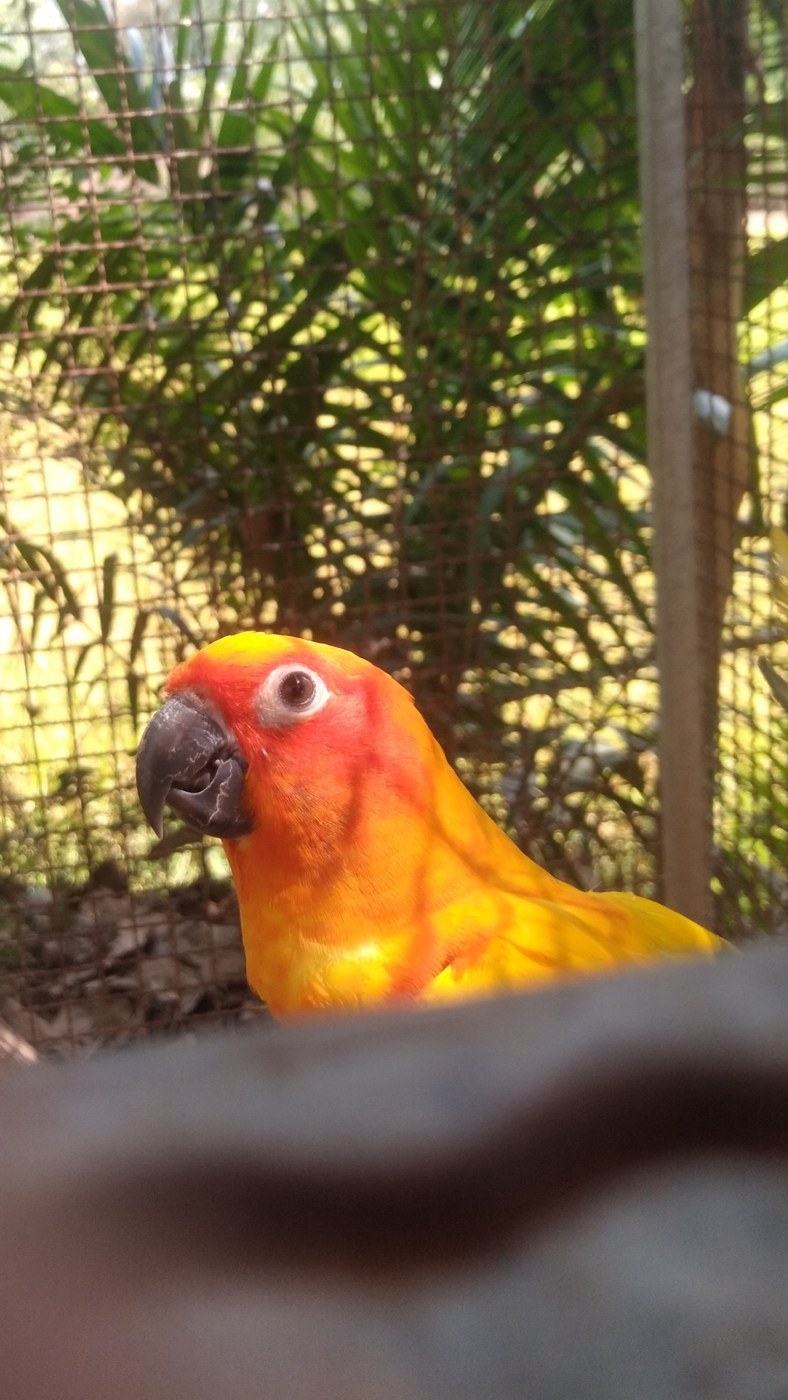
What Sun Parakeet Feathers Look Like
The Sun Parakeet is the same brilliantly colored bird also known in aviculture as the Sun Conure, but in the wild it lives in noisy, nomadic flocks across a small area of northeastern South America — a very different context from the household pet setting.
- Body feathers: intense golden-yellow to orange, most saturated on adults, with the head and face often the deepest orange.
- Wing feathers: green with blue-tipped flight feathers, contrasting against the yellow-orange body plumage.
- Tail feathers: green tipped with blue, long and tapering.
- Juvenile/immature feathers: predominantly green with limited yellow, gradually gaining the adult's golden tone over time.
- Flock wear patterns: because wild birds are active fliers in tight flocks through thorny savanna scrub, wild-collected feathers may show more wear/fraying at the tips than feathers from a sheltered captive bird.
Step-by-Step: Is This Feather From a Sun Parakeet?
- Confirm the yellow-orange-and-green-blue combination. As with the same species kept as pets, look for vivid yellow-orange body feathers alongside green wing feathers tipped in blue.
- Check for wear consistent with wild activity. Frayed or worn tips can hint at a wild, free-flying bird rather than a sheltered captive one, though this is not conclusive on its own.
- Factor in strict range. True wild Sun Parakeets are restricted to a fairly small area of Guyana, Venezuela, and northern Brazil — a feather found well outside this zone in an area without known feral flocks is far more likely to trace back to an escaped or released pet.
- Rule out extensive green retention, which would point instead to Jenday Conure or a related Aratinga species with a similar but distinct pattern.
- Note flock context. Wild Sun Parakeets travel in vocal, tight-knit flocks, so multiple similar feathers found together in savanna habitat support a wild-flock origin.
Similar Species & How to Tell Them Apart
- Jenday Conure: retains substantially more green on the body, with orange-red limited mainly to the face and head.
- Sulphur-breasted Parakeet and other Aratinga relatives: generally green-dominant with only yellow patches, lacking the largely yellow-orange body of adult Sun Parakeet.
- Escaped/feral pet birds of the same species: essentially identical in appearance to wild birds; only range and flock behavior context can help distinguish origin.
Where & When You'll Find Them
Wild Sun Parakeets are found in a limited range of dry savanna, palm groves, and forest edge in Guyana, Venezuela, and northern Brazil, where they are nomadic, following seasonal food sources in vocal flocks. The species has been reduced in the wild by trapping for the pet trade, so wild populations are patchier than the bird's popularity in captivity might suggest. Molt follows the regional breeding season, and feathers are most likely to be found in savanna and palm-grove habitat within this core range after the local breeding period.
Frequently asked questions
How is a wild Sun Parakeet feather different from a pet Sun Conure's feather?
They come from the same species and look identical; only context — strict wild range versus proximity to homes/aviaries — helps suggest wild versus captive origin.
What is the core wild range for this species?
A limited area of dry savanna and palm groves in Guyana, Venezuela, and northern Brazil.
What clue suggests a feather came from a genuinely wild flock?
Finding it within the core South American savanna range, especially alongside multiple similar feathers consistent with flock activity, and showing wear typical of free-flying birds.