
How to Identify Stock Dove Feathers
How to distinguish the plain blue-grey feathers of a Stock Dove from the larger, white-marked Woodpigeon and variably-patterned feral pigeons.
Read the full Stock Dove encyclopedia entry →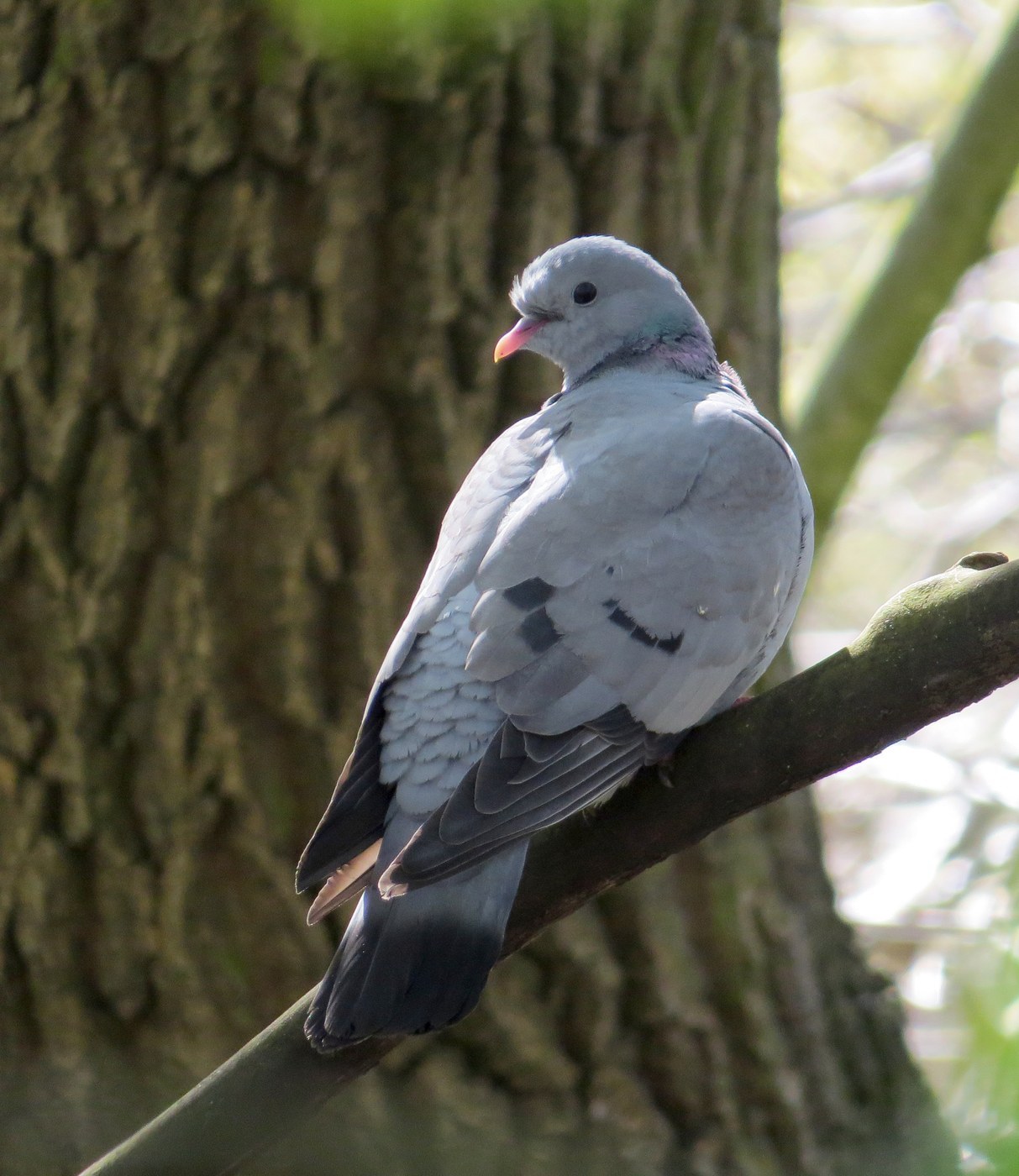
What Stock Dove Feathers Look Like
The Stock Dove is a compact, uniformly blue-grey pigeon of European farmland, and its feathers are best identified by what they lack as much as what they show.
- Body feathers: soft blue-grey overall, with a subtle pinkish wash on the breast.
- Neck feathers: a small but glossy patch of iridescent green and purple-pink on the sides of the neck — visible only at close range or in good light.
- Wing feathers: pale grey with two short, broken black bars on the closed wing (not full-length bars) — this is a key diagnostic against other pigeons.
- Flight feathers (primaries): dark grey with black tips, giving a subtly banded look when spread.
- Tail feathers: grey with a single black terminal band near the tip.
- No white appears anywhere on a genuine Stock Dove feather — no white rump, no white wing patch, no white neck crescent.
Step-by-Step: Is This Feather From a Stock Dove?
- Rule out white markings first. If the feather has any white patch, bar, or crescent, it is not a Stock Dove — move on to Woodpigeon or feral pigeon.
- Check the wing bars. Two short, somewhat smudgy black bars (not crisp, not full-width) on a grey wing covert feather point strongly to Stock Dove.
- Look at size. Stock Dove feathers run smaller than Woodpigeon feathers — primaries are shorter and the whole bird is slimmer.
- Inspect the neck area for a small iridescent green/pink sheen patch; this is present even on otherwise plain grey neck feathers.
- Note the tail tip. A single clean black band near the end of an otherwise grey tail feather is consistent with Stock Dove.
Similar Species & How to Tell Them Apart
- Woodpigeon: noticeably larger, with a white patch on the side of the neck and a bold white bar across the wing — both absent in Stock Dove.
- Rock Dove / feral pigeon: extremely variable plumage, but wild-type birds usually show two long, solid black wing bars (running the full width of the wing) and often a white or pale rump patch, unlike Stock Dove's short broken bars and grey rump.
- Turtle Dove: smaller and warmer brown with a scaly, checkered orange-and-black pattern on the back — quite different from Stock Dove's plain grey.
Where & When You'll Find Them
Stock Doves nest in tree hollows, old rabbit burrows, and building cavities across farmland, parkland, and open woodland throughout Europe and parts of western Asia. They molt gradually after the breeding season, from July through October, so most loose feathers appear near nest holes, dovecotes, and field edges in late summer and autumn.
Frequently asked questions
What is the single best clue to separate Stock Dove from Woodpigeon feathers?
The absence of white — Stock Dove has no white neck patch and no white wing bar, while Woodpigeon shows both prominently.
Do Stock Doves have any iridescent feathers?
Yes, a small glossy green-and-purple patch on the sides of the neck, though it's subtle compared to the flashier neck sheen of some other pigeons.
Are Stock Dove wing bars solid or broken?
They are short and somewhat broken/smudgy black bars, unlike the long solid double bars typical of wild-type feral pigeons.
When are Stock Dove feathers most commonly found?
Late summer through autumn (July-October), during and after the post-breeding molt, especially near tree cavities and farmland nest sites.