
How to Identify Sand Martin Feathers
A field guide to the small brown-and-white feathers of the Sand Martin (Bank Swallow), covering their pointed shape and how to separate them from other swallows.
Read the full Sand Martin encyclopedia entry →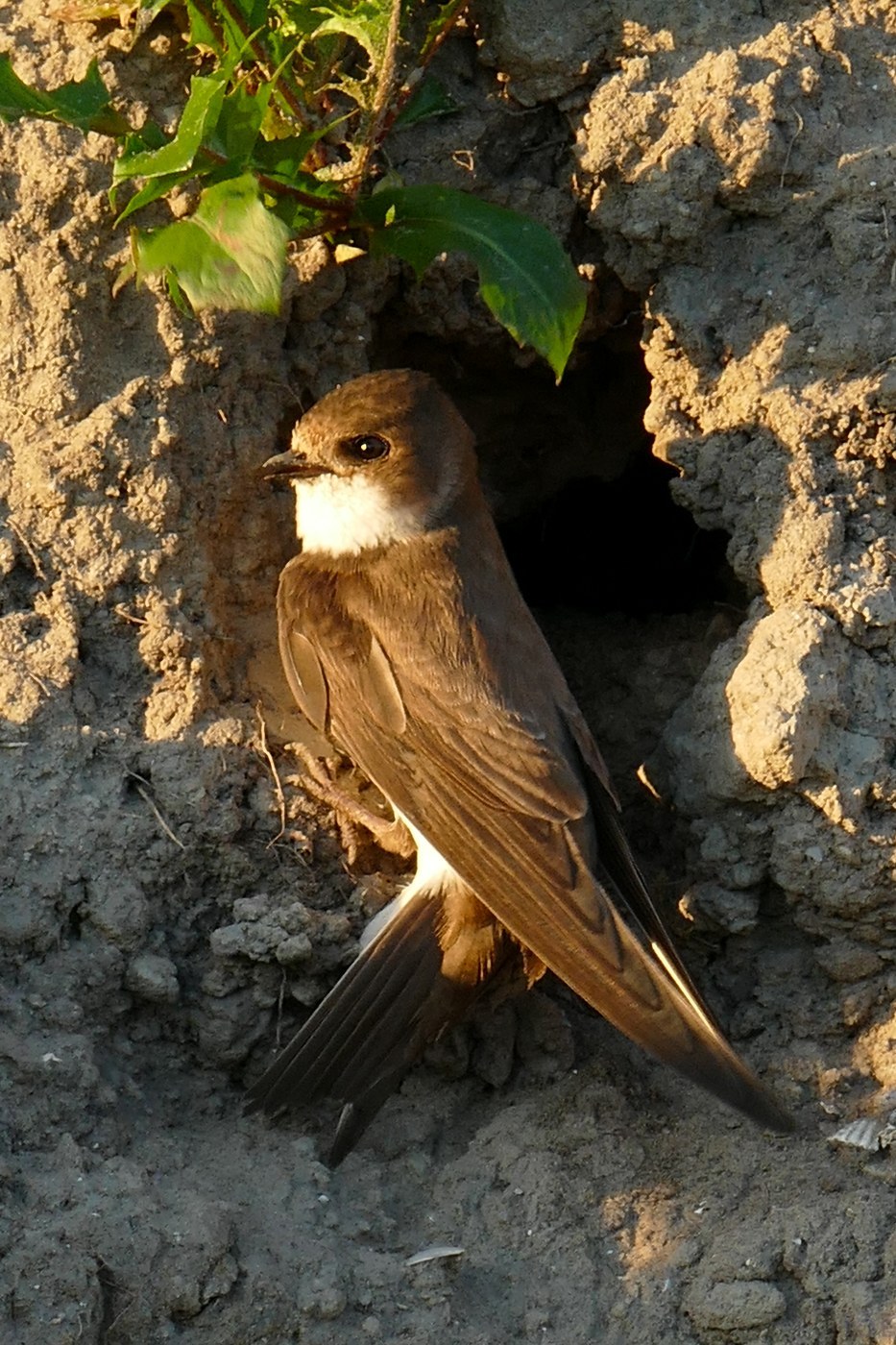
What Sand Martin's Feathers Look Like
Sand Martin (called Bank Swallow in North America) is one of the smallest swallows, so its feathers are correspondingly small and lightweight. Flight feathers (primaries and secondaries) are narrow, pointed, and slightly curved, typically 6-9 cm long, in a plain matte grayish-brown with no gloss and no white markings — a useful contrast with several other swallows that show white in the wing or tail. Tail feathers are also plain brown, shorter than the flight feathers, and only shallowly notched rather than deeply forked, reflecting the species' relatively short, square-ish tail in flight. Body and breast feathers show the diagnostic pattern: clean white feathers on the throat and belly sit next to a distinct band of solid brown feathers across the upper chest — if you find several small feathers together showing this crisp brown breast-band pattern against white, that's a strong sign. Back and crown feathers are uniformly brown with no streaking, spotting, or iridescence, unlike many other swallows.
Step-by-Step: Is This Feather From a Sand Martin?
- Check size first: flight feathers under 9 cm and a generally small, delicate feather point strongly to this species over larger swallows.
- Look for total lack of gloss: Sand Martin feathers are flat brown, never blue-black or greenish iridescent.
- Search for the breast-band clue: a solid brown feather clearly bordered by white on either side suggests it came from the chest-band area.
- Confirm no white in the wing or tail: unlike some relatives, this species has no white rump patch and no white tail spots.
- Note the shape: primaries are narrow and pointed, consistent with a fast, agile aerial feeder.
- Consider where it was found: feathers near a sandy riverbank, quarry face, or coastal bluff with visible nest holes are a strong location clue.
Similar Species & How to Tell Them Apart
Barn Swallow feathers are larger, glossy steel-blue on top, with rust-orange on the throat/forehead and long, deeply forked outer tail feathers with white spots — easy to rule out once you see any blue gloss or tail spots. Tree Swallow feathers are glossy blue-green above and pure white below with no brown breast band at all; a feather with any iridescent sheen is not a Sand Martin. Northern Rough-winged Swallow, a close look-alike in North America, is very similar in plain brown coloring but lacks the crisp white throat and distinct breast band — its underparts fade gradually from brownish to dull whitish rather than showing a sharp band, so a feather with a clean, well-defined brown chest band favors Sand Martin/Bank Swallow.
Where & When You'll Find Them
Sand Martins nest colonially in burrows dug into vertical sandy or silty banks — river cutbanks, coastal bluffs, quarries, and gravel pits — across much of North America, Europe, and Asia, then winter in Africa or South America/southern Asia depending on the population. Because they nest in tight colonies, feathers often accumulate in numbers right at the base of the bank below active burrow entrances, especially during the nesting season from late spring into mid-summer when adults are shuttling in and out and chicks are growing in their feathers. A second small pulse of loose feathers can appear in early fall staging areas, where large pre-migration flocks gather over rivers and wetlands before departing.
Frequently asked questions
Does Sand Martin have any iridescent or glossy feathers?
No — the entire upperside is flat, matte grayish-brown with no blue, green, or purple sheen, which separates it from Barn and Tree Swallow.
What is the best single clue on a body feather?
A solid brown feather with a sharply defined edge against white plumage, consistent with the bird's distinct brown breast band, is the most diagnostic single clue.
Are Sand Martin tail feathers deeply forked like a Barn Swallow's?
No, the tail is only shallowly notched, not long and deeply forked, and it never carries white spots.
Where should I look for feathers near a colony?
Check the base of sandy cutbanks or quarry faces below visible round burrow entrances, especially in late spring and summer.
How can I rule out Northern Rough-winged Swallow?
Look for a crisp, well-defined brown breast band bordered by clean white; Rough-winged Swallow's underparts blend more gradually without a sharp band.