
How to Identify Saker Falcon Feathers
How the pale, sparsely marked underparts and faint facial mustache distinguish a Saker Falcon feather from the bolder Peregrine.
Read the full Saker Falcon encyclopedia entry →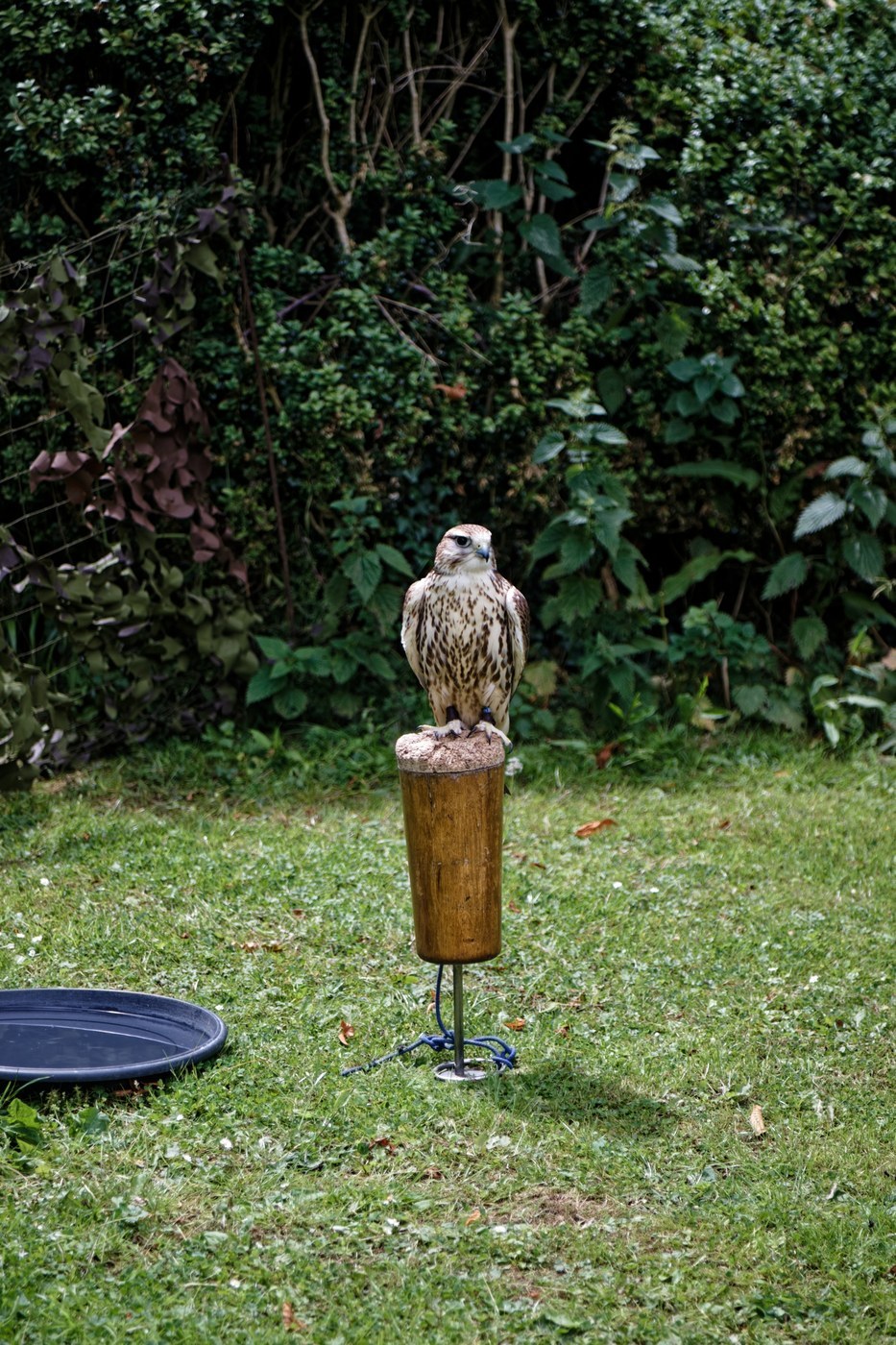
What Saker Falcon Feathers Look Like
The Saker Falcon is a large falcon of the steppes and open country of Central Asia and parts of Europe, with a notably variable plumage that ranges from pale to quite dark, but shares certain general feather traits across most individuals. Back and upperwing covert feathers are brown, typically fairly plain or only lightly barred, lacking the strong, even barring seen in some other large falcons. Underparts feathers are pale cream to whitish, marked with brown streaks or arrow-shaped spots rather than fine, even barring, giving a softer, less crisply patterned look than a Peregrine Falcon. The head shows only a faint, narrow mustache (malar) mark, much less bold than the thick black "helmet" stripe of a Peregrine, so an isolated cheek feather should look only lightly marked rather than boldly striped. The tail is brown with faint, often incomplete barring. Overall feather size is large, reflecting the bird's substantial build, with flight feathers reaching well over 30 cm in adults.
Step-by-Step: Is This Feather From a Saker Falcon?
- Check underparts pattern. Pale cream-to-white ground color with brown streaks or arrow-shaped spots (not fine, even bars) fits this species better than a Peregrine.
- Examine the facial/malar feather. A faint, narrow mustache mark rather than a bold black stripe supports Saker Falcon.
- Look at back and covert feathers. Fairly plain brown with only light barring, less strongly patterned than some large falcon relatives.
- Assess tail pattern. Faint or incomplete barring rather than crisp, regular bands.
- Check overall size. Large flight feathers, often 30+ cm, consistent with a big falcon.
- Match habitat and range. Feathers found in open steppe, semi-desert, or agricultural land across Central Asia into eastern Europe support this species.
Similar Species & How to Tell Them Apart
The Peregrine Falcon shows a much bolder black malar "helmet" stripe and crisp, fine, even barring across the underparts, a notably more contrasty pattern than Saker Falcon's softer streaking. The Gyrfalcon, found much further north in Arctic regions, occurs in white, gray, and dark color morphs and is generally bulkier, with different range entirely from Saker Falcon's steppe habitat. The Lanner Falcon, found across Africa and parts of southern Europe, shows a more rusty-rufous crown and a similarly faint mustache mark, making range the most useful separator from Saker Falcon where the two might otherwise overlap.
Where & When You'll Find Them
Saker Falcons breed across the steppes, semi-deserts, and open agricultural country of Central Asia into parts of eastern Europe, nesting on cliffs, in old stick nests of other large birds, or occasionally on structures, with populations showing a mix of resident and partially migratory behavior depending on region. Feathers are most likely to be found near nest cliffs and open hunting territory during the breeding season in spring, with the complete post-breeding molt through summer producing the bulk of feather drop before any seasonal movement south for winter.
Frequently asked questions
How does the underparts pattern differ from a Peregrine Falcon's?
Saker Falcon shows brown streaks or arrow-shaped spots on a pale cream ground, softer than the crisp, fine, even barring typical of Peregrine Falcon.
What does the facial feather look like?
A faint, narrow mustache mark, much less bold than the thick black helmet stripe of a Peregrine Falcon.
How large are the flight feathers?
Often over 30 cm in adults, reflecting this species' large, powerful build.
How do I distinguish this from a Gyrfalcon feather?
Gyrfalcon occurs in white, gray, and dark morphs and comes from Arctic regions far north of Saker Falcon's steppe and semi-desert range.
When is feather drop most likely?
During the breeding season in spring near nest cliffs, with the bulk of drop occurring through the complete post-breeding molt in summer.