
How to Identify Saffron Finch Feathers
How the bright saffron-yellow body feathers and orange-tinged crown patch identify a Saffron Finch feather.
Read the full Saffron Finch encyclopedia entry →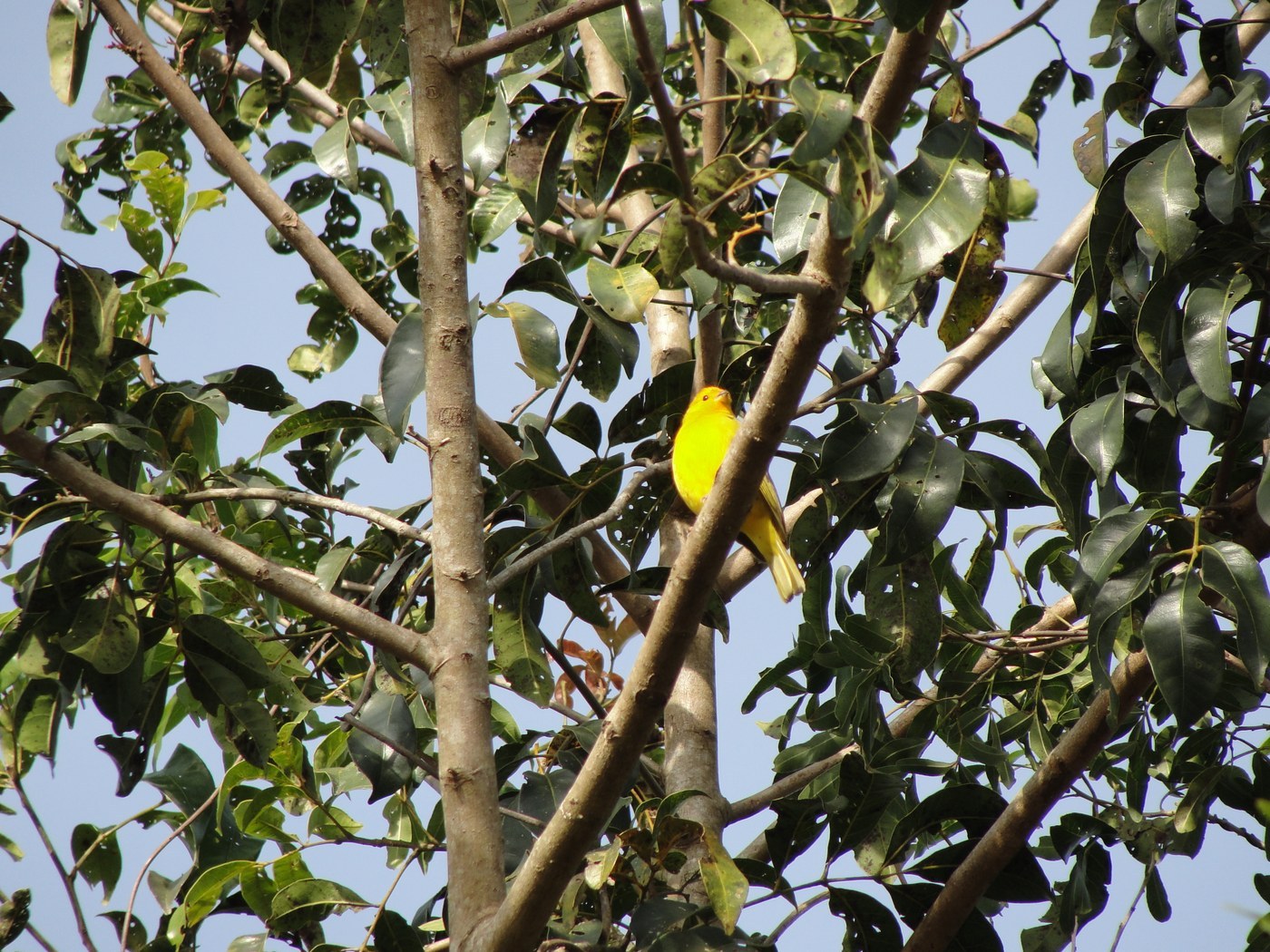
What Saffron Finch Feathers Look Like
The Saffron Finch is a bright, common South American finch-tanager also introduced to Hawaii and Puerto Rico, and adult male feathers are among the most vividly colored of any common backyard bird in its range. Body contour feathers on the breast, belly, and face are a bright saffron-yellow, giving the species its name. The crown and forehead often show a small orange-tinged patch, slightly deeper and warmer than the rest of the yellow body — a useful diagnostic detail if a crown feather is found. Back feathers are more olive-yellow, faintly streaked with darker olive-brown. Wing (flight) feathers are dark brownish-black with narrow yellow-olive edging, and the tail is similarly dark with yellowish-olive fringing. Females and immatures are notably duller, showing grayish-olive-yellow body feathers with light streaking rather than the male's saturated saffron tone, and generally lack the orange crown patch.
Step-by-Step: Is This Feather From a Saffron Finch?
- Check for bright saffron-yellow body feathers, especially from the breast or belly — the core clue for adult males.
- Look for a small orange-tinged feather possibly from the crown/forehead, deeper than the rest of the yellow.
- Examine back feathers for an olive-yellow tone with faint darker streaking, rather than a solid bright yellow.
- Consider duller, grayish-olive feathers as a possible female or immature bird, especially if streaked.
- Check wing and tail feathers for dark brownish-black bases with yellow-olive edging.
- Match habitat. Feathers found in open grassland, savanna, or urban parks in South America, or in Hawaii/Puerto Rico where introduced, support this species.
Similar Species & How to Tell Them Apart
The Grassland Yellow-Finch, sharing similar open habitat in South America, is paler yellow overall and lacks the deeper orange crown patch of male Saffron Finch, plus shows a more uniformly plain back. Other Sicalis finches in the genus tend to be smaller and less saturated in color, without the same combination of bright saffron body and orange crown patch. Female/immature Saffron Finches can resemble various dull streaky finches or sparrows where introduced, such as House Sparrows in Hawaii, but retain a subtle yellow-olive wash that plain brown sparrows lack.
Where & When You'll Find Them
Saffron Finches are common, largely non-migratory residents of open country, savanna, agricultural land, and urban parks and gardens across much of South America, and have also been introduced and become established in Hawaii and Puerto Rico. Since the species doesn't migrate, feathers can be found year-round near open, grassy habitat, with the heaviest feather drop following the breeding season, which in tropical parts of the range can occur across an extended period tied to local rainfall patterns rather than a single sharp season.
Frequently asked questions
What is the core diagnostic color for males?
Bright saffron-yellow body feathers, especially on the breast and belly, often paired with a deeper orange-tinged patch on the crown.
How do female feathers differ from male feathers?
Females and immatures are notably duller, showing grayish-olive-yellow feathers with light streaking rather than the male's saturated saffron tone.
How can I tell this apart from a Grassland Yellow-Finch feather?
Grassland Yellow-Finch is paler yellow overall and lacks the deeper orange crown patch found on male Saffron Finch.
Is this species found outside South America?
Yes, it has been introduced and become established in Hawaii and Puerto Rico, so feathers can turn up there as well.
When is feather drop heaviest?
Following the breeding season, though in tropical parts of the range this can extend over a longer period tied to local rainfall rather than one sharp season.