
How to Identify Ruff Feathers
How twin white uppertail patches and, in season, an elaborate ornamental neck-ruff feather identify this uniquely plumed Eurasian shorebird.
Read the full Ruff encyclopedia entry →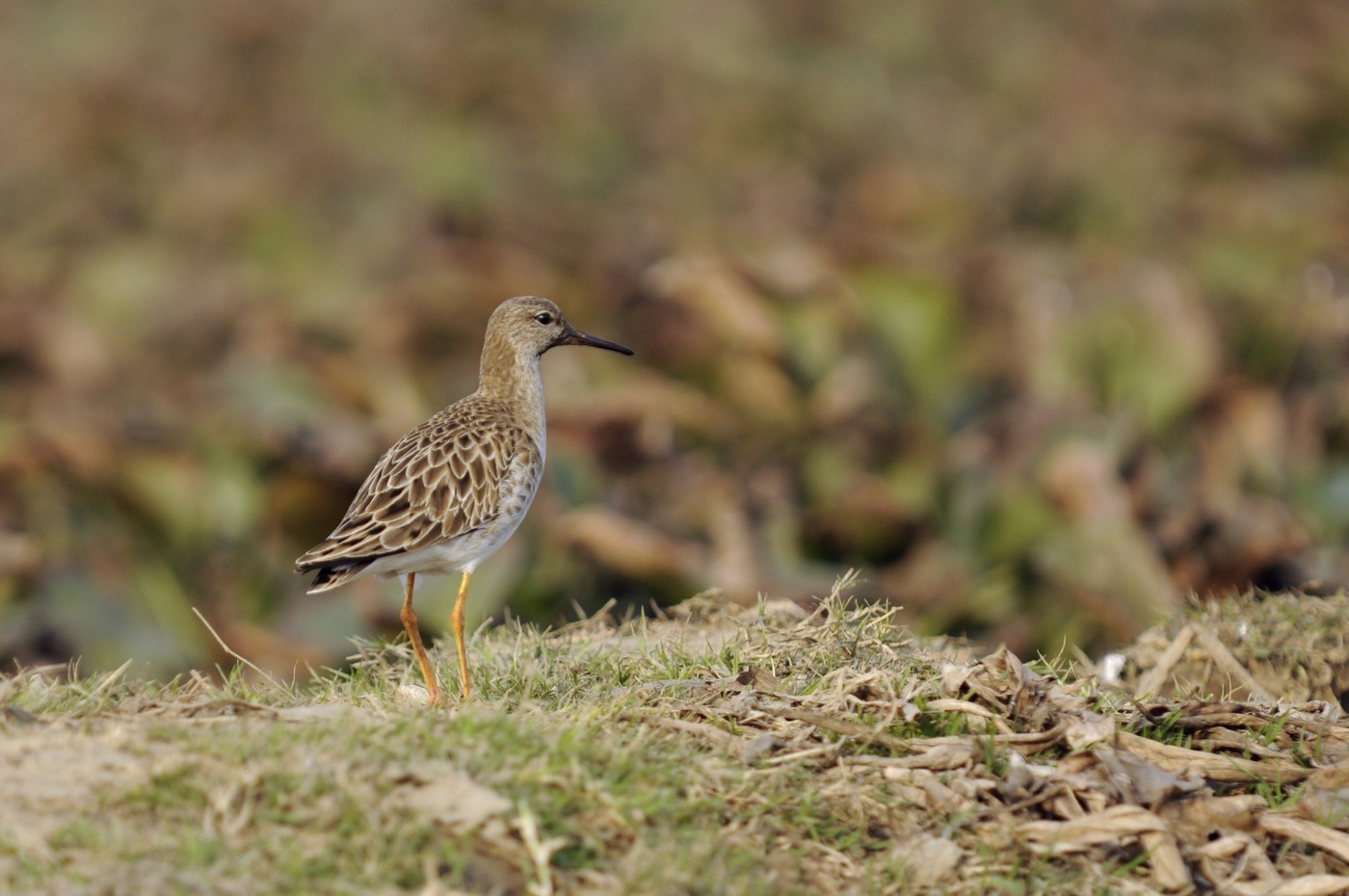
What Ruff Feathers Look Like
Ruff is famous for the male's elaborate breeding display feathers: an ornamental neck ruff and ear tufts, grown only in spring for lekking displays, which vary dramatically between individual males in color — black, white, chestnut, or barred combinations — and consist of long, lacy, erectile feathers unlike anything else on the bird. Outside this brief display plumage, both sexes (males and the notably smaller females, called Reeves) show mottled brown-grey upperparts with pale-fringed feather edges giving a scaly appearance, pale underparts, and medium orange-yellow legs. In flight, the best year-round clue is a pair of white oval patches on either side of the tail (formed by white uppertail covert feathers), flanking the darker central tail — a distinctive twin-patch pattern useful even outside the breeding season.
Step-by-Step: Is This Feather From a Ruff?
- Check for an elaborate, lacy ornamental neck feather in spring — long, loosely-webbed, and in an unusual color (black, chestnut, barred, or white) not typical of body feathers.
- Look for twin white oval patches from the uppertail covert area, flanking the tail — useful in any season.
- Examine back and covert feathers for pale scaly fringing on an otherwise mottled brown-grey background.
- Note leg color context if available — orange-yellow legs differ from the greenish legs of similarly sized sandpipers.
- Consider size variation — males are notably larger than females (Reeves), so a small mottled feather doesn't rule out this species.
Similar Species & How to Tell Them Apart
A female Ruff (Reeve) in plain plumage can resemble a Pectoral Sandpiper or a yellowlegs, but Ruff has a smaller head and bill relative to body and a pot-bellied shape, plus the twin white uppertail patches in flight, which those other species lack. Leg color also helps: Ruff's legs run orange-yellow rather than the brighter yellow of yellowlegs or the more olive-green tone of some sandpipers.
Where & When You'll Find Them
Ruffs breed on Arctic and subarctic tundra and wet meadows across Eurasia, where males gather at traditional lek grounds to display their ornamental plumage each spring — the best place and time to find a shed display feather, roughly April through June. They winter in wetlands across Africa, South Asia, and Australia, and occur as scarce but regular vagrants elsewhere. Outside the lek season, look for ordinary mottled body feathers with the telltale white tail-covert patches on mudflats and wetlands during migration.
Recognizing Non-Display Feathers
Since the elaborate ruff and ear-tuft feathers are molted out again once the display season ends, most feathers found at any other time of year will be the plainer mottled brown-grey type; in those cases, patience in checking both sides of the tail base for the paired white covert patches is usually more productive than hoping for another glimpse of the male's showier spring plumage.
Frequently asked questions
What does an ornamental Ruff display feather look like?
It's long, lacy, and loosely webbed rather than a typical compact contour feather, and can appear in black, white, chestnut, or barred color forms that vary between individual males.
How can I identify a Ruff outside the breeding season, when the fancy feathers are gone?
Look for the twin white oval patches formed by the uppertail covert feathers flanking the tail, which persist year-round even after the ornamental plumes are molted.
Why do Ruff feathers vary so much in color between individuals?
Male breeding plumage is famously variable, with each male showing a unique combination of ruff and ear-tuft colors used in competitive lek displays, unlike most shorebirds which show consistent plumage across individuals.
Where would I find a shed display feather?
At traditional lek display grounds on Arctic and subarctic tundra or wet meadows, primarily from April through June during the breeding display season.
How is a female Ruff (Reeve) feather told from a similar sandpiper's?
Check for the twin white uppertail patches and a proportionally small head/bill on a pot-bellied body shape, distinguishing it from yellowlegs or Pectoral Sandpiper.