
How to Identify Ruby-topaz Hummingbird Feathers
How a two-toned ruby crown and golden-topaz throat, paired with a chestnut tail, mark a Ruby-topaz Hummingbird feather in the Caribbean and South America.
Read the full Ruby-topaz Hummingbird encyclopedia entry →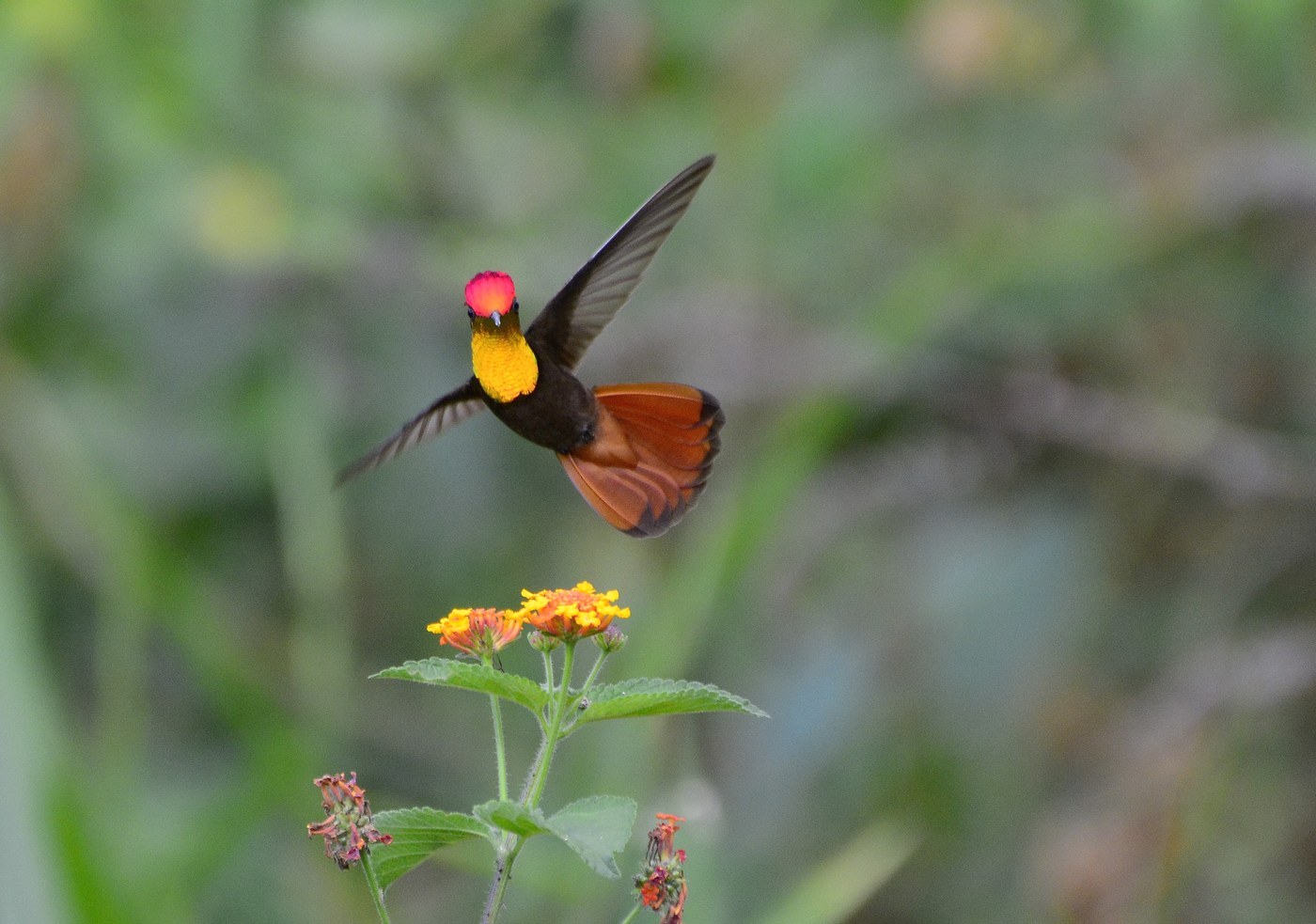
What Ruby-topaz Hummingbird Feathers Look Like
Males of this species show one of the more unusual gorget patterns among hummingbirds: a ruby-red iridescent crown paired with a golden-orange to topaz iridescent throat, creating a two-toned head that is unlike the single-color gorgets seen in most other hummingbirds. Both patches are structural-color feathers that flash brightly in direct light and can look dark or dull from other angles. The back and belly are darker, with a chestnut-maroon tail and back — a warm reddish-brown tone that is also distinctive, since most hummingbird tails run green or black rather than chestnut. Females are far plainer: bronze-green above, whitish-grey below, with rufous-edged tail feathers showing a dark band and white tips.
Step-by-Step: Is This Feather From a Ruby-topaz Hummingbird?
- Check for a two-color iridescent head pattern. A feather showing both ruby and golden-orange iridescence (rather than one solid gorget color) is a strong indicator.
- Look at tail and back feathers for chestnut-maroon tone. This reddish-brown coloring, rather than the more typical green or black hummingbird tail, is a useful clue.
- On plainer feathers, check for rufous edges on tail feathers with a dark band and white tip, consistent with a female.
- Confirm tiny overall size, typical of hummingbirds generally.
- Factor in range — northern South America, Trinidad, and the ABC islands are the expected areas.
Similar Species & How to Tell Them Apart
Black-throated Mango, found in overlapping range, has a black throat gorget rather than gold, immediately ruling it out if the throat feather shows gold/orange iridescence. Copper-rumped Hummingbird shows a coppery rump patch rather than a chestnut tail, and lacks the two-toned ruby/gold head. The Ruby-topaz's combination of a ruby crown plus golden throat is essentially unmatched among regularly occurring hummingbirds in its range, making a two-color gorget feather close to diagnostic on its own.
Where & When You'll Find Them
Ruby-topaz Hummingbirds inhabit dry scrub, gardens, and savanna habitats across northern South America, Trinidad, and the ABC islands (Aruba, Bonaire, Curaçao), and are not strongly migratory, though they do make local movements tracking flowering plants. Because breeding and molt timing are variable in these tropical and subtropical settings rather than locked to a single narrow season, feathers can be found near flowering shrubs and gardens across most of the year, with some increase in activity tied to local flowering peaks rather than a fixed calendar window.
Checking Feather Freshness
Because the male's gorget color depends on light striking the feather at a precise angle, a feather that has been on the ground for a while and picked up dust or moisture may show almost no color at all until cleaned gently and viewed under bright, direct light — worth trying before ruling out this species based on a seemingly dull, colorless find.
Frequently asked questions
What makes the Ruby-topaz gorget different from other hummingbirds?
It's two-toned — a ruby-red crown combined with a golden-orange to topaz throat — rather than the single-color gorget typical of most hummingbird species.
Why is the chestnut tail feather a useful clue?
Most hummingbird tails are green or black, so a warm chestnut-maroon tail feather is comparatively unusual and points toward this species within its range.
How do I identify a female's feather without the colorful gorget?
Look for bronze-green upperparts, whitish-grey underparts, and rufous-edged tail feathers with a dark band and white tips.
Does this species migrate long distances?
No, it's largely resident with local movements tracking flowering plants, rather than undertaking the long migrations seen in some North American hummingbirds.
Is there a specific season for finding these feathers?
Not a fixed one — tropical breeding and molt timing vary, so feathers can be found near flowering gardens and scrub through most of the year.