
How to Identify Ringed Kingfisher Feathers
How to identify the slate-blue and chestnut feathers of the Ringed Kingfisher, the largest kingfisher in the Americas.
Read the full Ringed Kingfisher encyclopedia entry →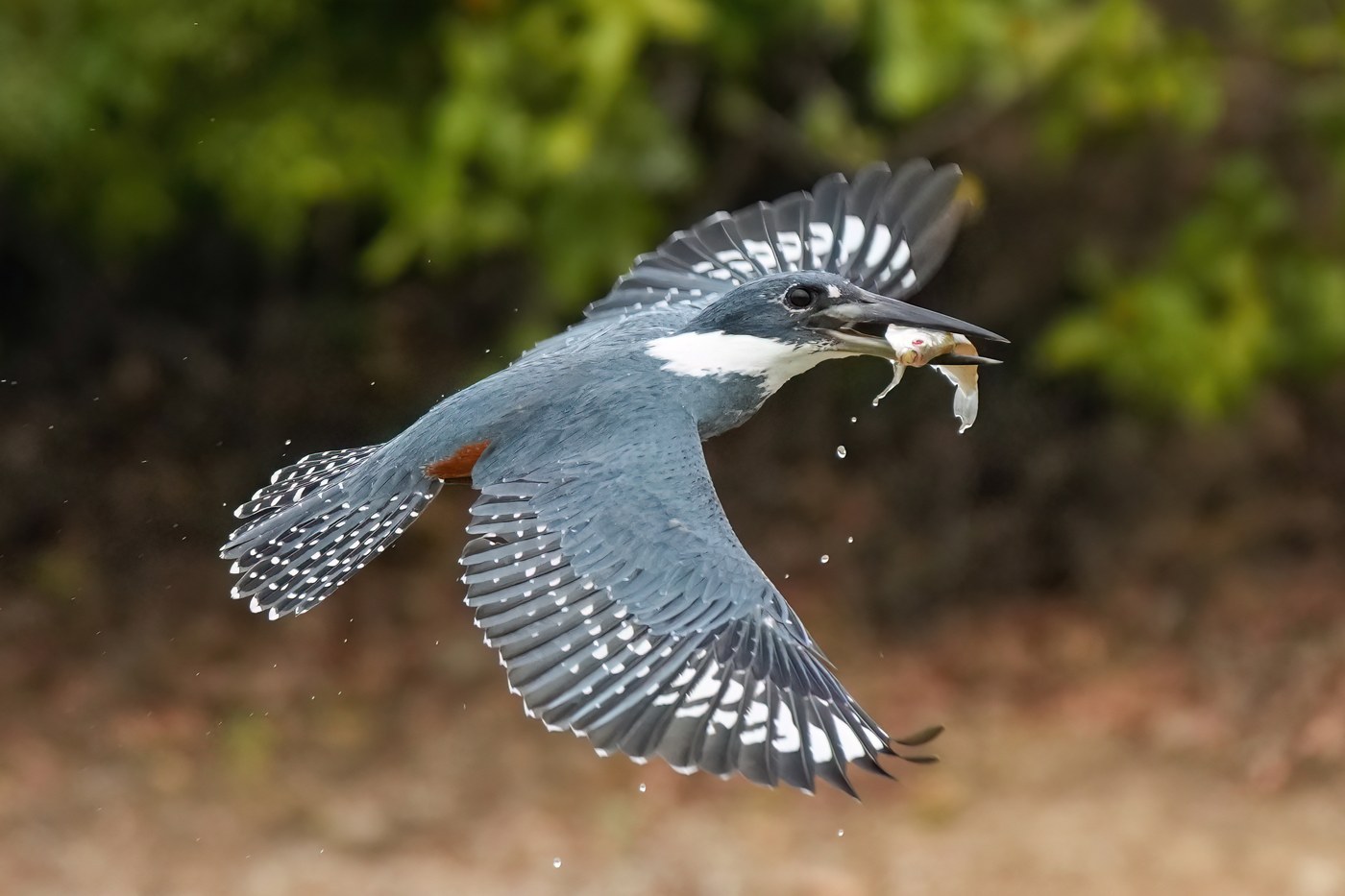
What Ringed Kingfisher Feathers Look Like
The Ringed Kingfisher (Megaceryle torquata) is the largest kingfisher in the Western Hemisphere, and its feathers reflect both its bold color scheme and its unusually large size for the family.
- Upperparts: slate blue-grey, dense, and slightly glossy, covering the crown, back, and wings — notably richer and bluer than many smaller kingfishers.
- Underparts (both sexes): rich chestnut-rufous across the breast and belly, a defining feature of this species; in females, a slate-blue breast band separates the chestnut belly from the throat, so a feather showing a sharp transition from blue to chestnut can indicate a female's breast-band area specifically.
- Crest feathers: long, shaggy feathers forming a ragged crest on the crown, distinct from the smoother feathers elsewhere on the body — kingfisher crest feathers look almost unkempt compared to sleek body feathers.
- Throat/collar feathers: white, forming a partial collar that contrasts against the blue head and chestnut breast.
- Wing and tail feathers: slate-blue with fine white spotting or barring visible on close inspection, especially on the primaries.
- Size: this is a large kingfisher (bigger than the Belted Kingfisher), so expect correspondingly large feathers — primaries can reach 12–15 cm, notably bigger than smaller tropical kingfishers sharing its range.
Step-by-Step: Is This Feather From a Ringed Kingfisher?
- Check for chestnut underparts. Rich rufous-chestnut coloring on a breast or belly feather, paired with slate-blue elsewhere, is the strongest single clue for this species among Americas kingfishers.
- Assess the blue tone. A deep, rich slate-blue rather than a paler or greener blue supports this species over some smaller relatives.
- Look for shaggy crest feathers. Long, slightly disheveled-looking feathers (as opposed to smooth body feathers) found near the head area suggest the crest.
- Measure overall size. Feathers noticeably larger than a typical songbird's, especially flight feathers over 10 cm, fit this being the largest kingfisher in the Americas.
- Note white collar or spotting. A white feather with a slightly rounded, contrasting quality found near blue and chestnut feathers likely belongs to the throat/collar area.
Similar Species & How to Tell Them Apart
- Belted Kingfisher: noticeably smaller, with blue-grey upperparts but a white (not chestnut) belly in males, and only a partial rusty band in females — much less chestnut overall than the Ringed Kingfisher.
- Amazon Kingfisher: smaller still, with a shorter crest and less extensive chestnut underparts confined mostly to males.
- Green Kingfisher: much smaller, with green (not slate-blue) upperparts, an easy size and color distinction.
- Green-and-rufous Kingfisher: also much smaller and shows green upperparts rather than the blue-grey of the Ringed Kingfisher.
Where & When You'll Find Them
Ringed Kingfishers inhabit rivers, lakes, mangroves, and coastal lagoons from southern Texas through Mexico, Central America, and much of South America, perching prominently on exposed branches or wires over water while hunting fish. Feathers are typically found along riverbanks and lakeshores near favored fishing perches, with molt occurring gradually through the year in tropical populations, though feather drop often increases seasonally alongside breeding activity, which varies by region but frequently follows local wet-season patterns tied to fish abundance.
Frequently asked questions
What color combination should I look for first?
Slate-blue upperparts paired with rich chestnut underparts is the core signature — that much chestnut on the belly rules out most other kingfishers in the same range.
How can I tell this apart from a Belted Kingfisher?
Belted Kingfisher shows a mostly white belly (with just a rusty band in females), while Ringed Kingfisher has extensive chestnut across the whole underside in both sexes, making it a much richer rufous overall.
Are the crest feathers different from body feathers?
Yes, crest feathers are longer and look shaggier or more disheveled compared to the sleek, dense feathers on the back and belly, which is typical of kingfishers generally.
Where along a river am I most likely to find these feathers?
Look near exposed perches like overhanging branches, wires, or snags over water, since Ringed Kingfishers favor visible hunting posts where they spend long periods preening and dropping feathers.