
How to Identify Ring-necked Dove Feathers
A guide to the soft, sandy-brown feathers of the Ring-necked Dove, a common African dove marked by a narrow black half-collar on the nape.
Read the full Ring-necked Dove encyclopedia entry →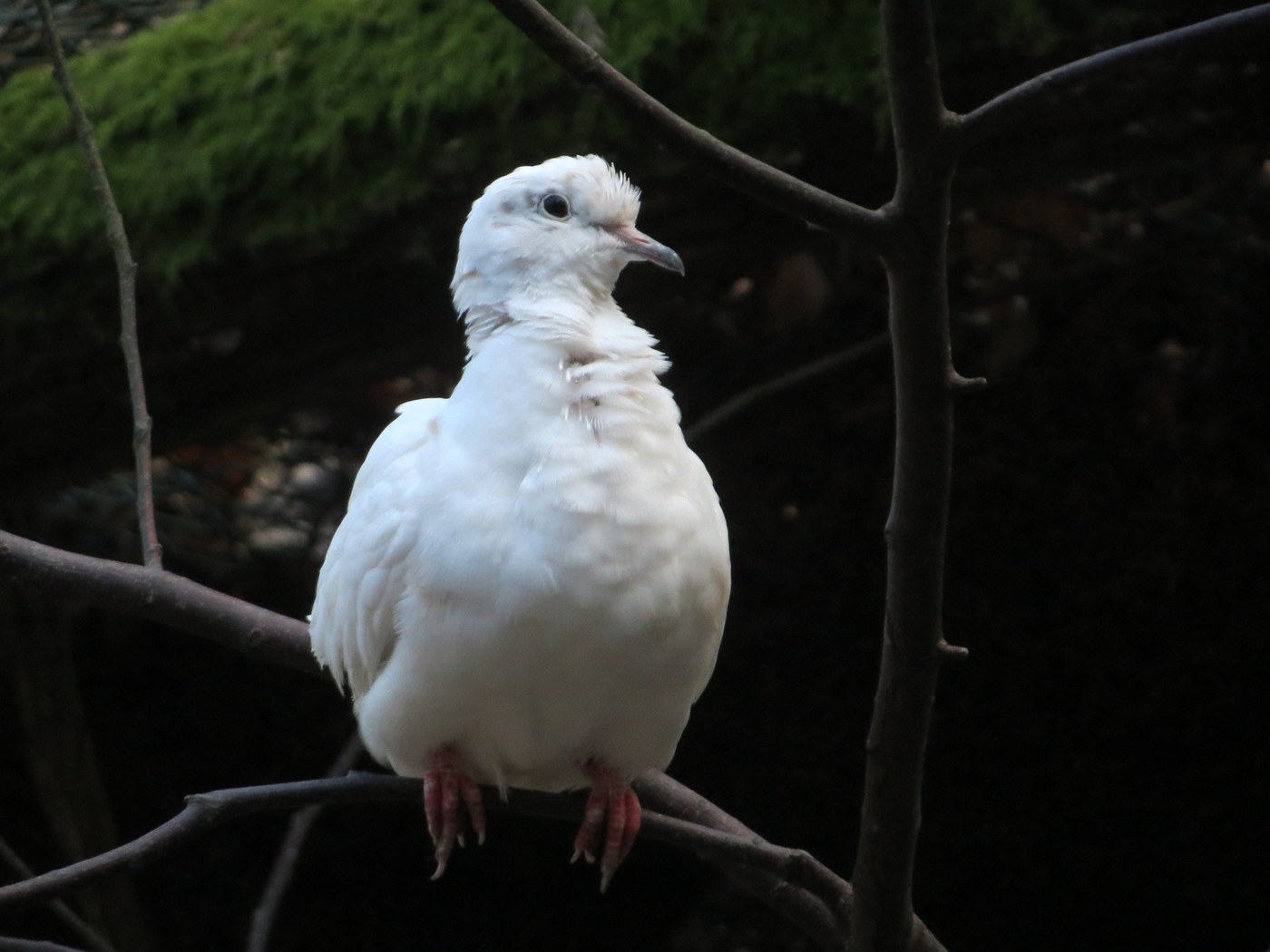
What Ring-necked Dove Feathers Look Like
The Ring-necked Dove (Streptopelia capicola), sometimes called the Cape Turtle Dove, is one of sub-Saharan Africa's most familiar birds, and its feathers reflect the soft, understated palette typical of doves.
- Body and back feathers: soft pale grey-brown to sandy tan, finely textured, with a smooth, unmarked look across most of the back and wings.
- Neck collar feathers: a distinctive narrow black half-collar edged with white sits on the back of the neck — small, crescent-shaped black feathers with pale tips are a strong specific clue if found together.
- Underparts: paler, almost pinkish-grey on the breast fading to whitish on the belly and undertail.
- Flight feathers: grey-brown, unbarred, and softly rounded at the tips, consistent with the quiet, direct flight typical of doves.
- Tail feathers: grey-brown centrally with white-tipped outer feathers, visible as a pale band along the edge of the tail — noticeable in flight and identifiable from a single outer tail feather.
- Texture: notably soft and loosely structured, a hallmark of dove and pigeon feathers generally, which detach easily (a defense mechanism against predators grabbing at the bird).
Step-by-Step: Is This Feather From a Ring-necked Dove?
- Check the base color. A soft sandy-brown to grey-brown tone with no strong patterning or bright color fits doves generally, and this species specifically within its African range.
- Look for the black-and-white collar feathers. Small, crescent-shaped black feathers edged in white found near the back of a dove-sized bird's neck are close to diagnostic for this species and its close relatives.
- Examine outer tail feathers. White tips on an otherwise grey-brown tail feather support a dove identification and, combined with size, this species.
- Feel for looseness. Dove and pigeon feathers pull out and detach unusually easily compared to songbird feathers — a soft, "loose" feel is a helpful supporting clue.
- Compare size. A medium dove-sized feather (flight feathers roughly 10–13 cm) fits this species rather than the larger feral pigeon or much smaller waxbills sharing the habitat.
Similar Species & How to Tell Them Apart
- African Mourning Dove: very similar sandy coloring and a similar black half-collar, but the collar tends to sit slightly differently and the overall plumage can show a touch more pink on the breast; range overlap makes this the closest confusion species.
- Red-eyed Dove: larger and darker overall, with a broader, more solidly black collar band rather than the crescent shape.
- Laughing Dove: lacks a neck collar entirely, instead showing a speckled black-and-rufous patch on the upper breast, a clearly different pattern from the collar feathers.
- Feral (Rock) Pigeon: notably larger and bulkier feathers overall, often with iridescent green-purple neck feathers rather than the plain grey-brown neck of the Ring-necked Dove.
Where & When You'll Find Them
Ring-necked Doves are widespread across savanna, woodland edge, farmland, and suburban gardens throughout sub-Saharan Africa, readily coexisting with people and often nesting in garden trees and hedges. Feathers turn up year-round given the species' extended breeding season in much of its range, with a noticeable uptick after breeding bouts (which can occur multiple times a year) as adults undergo wing and body molt and juveniles fledge and lose their first soft down and body feathers.
Frequently asked questions
What's the easiest single feature to confirm this species?
The small black, white-edged crescent feathers from the neck collar are the most distinctive single clue, since few other doves in the same range show that exact crescent pattern.
Why do dove feathers feel like they pull out so easily?
Doves and pigeons have unusually loosely anchored feathers as an anti-predator adaptation — a predator grabbing at the bird often ends up with a mouthful of feathers while the bird escapes, so easily-shed feathers are a family-wide trait, not unique to this species.
How do I rule out a feral pigeon?
Feral pigeon feathers run larger and often show iridescent green-purple neck sheen or bold wing bars, both absent in the smaller, plainer Ring-necked Dove.
Do juveniles have the same collar as adults?
Young Ring-necked Doves lack the full black-and-white collar until they mature, so a plain sandy-brown dove feather without collar markings could still be a juvenile of this species rather than a different bird entirely.