
How to Identify Regent Parrot Feathers
A guide to recognizing the golden-yellow and olive feathers of the Regent Parrot, an Australian grass parrot with a bright red wing patch.
Read the full Regent Parrot encyclopedia entry →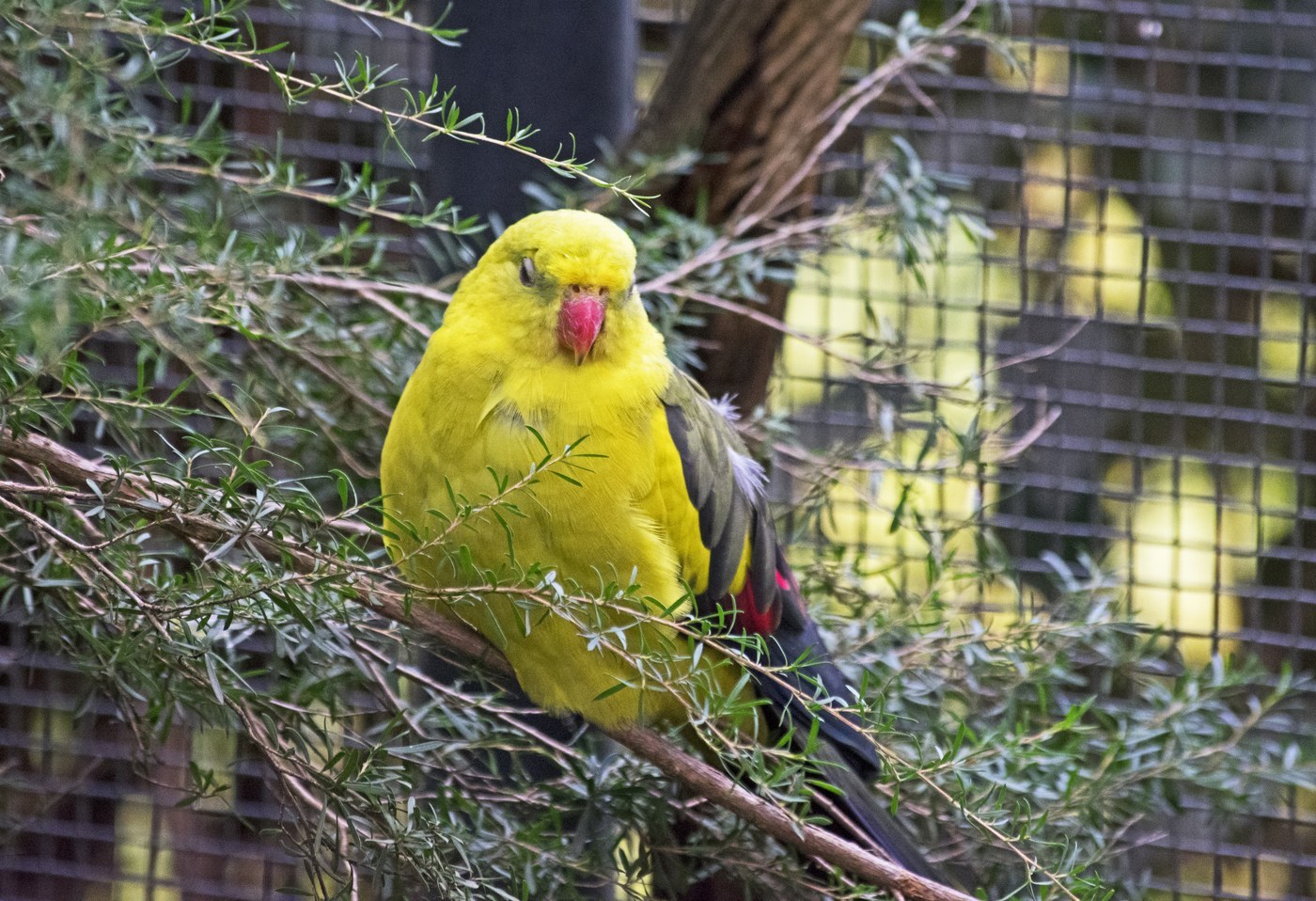
What Regent Parrot Feathers Look Like
The Regent Parrot (Polytelis anthopeplus) of southwestern and inland southeastern Australia shows one of the more dramatic sex differences among Australian parrots, and that shows up strongly in dropped feathers.
- Male body feathers: bright golden-yellow to yellow-olive, with a smooth, almost powdery sheen typical of parrot down and contour feathers.
- Female body feathers: duller olive-green, lacking the male's saturated yellow, which is the single biggest clue for telling the sexes apart from feathers alone.
- Wing patch feathers: a patch of vivid crimson-red covert feathers on the leading edge of the wing (lesser and median coverts) in both sexes, though richer in males — these are unmistakable and diagnostic if you find one.
- Flight feathers: primaries and secondaries are blue-black to dark slate, contrasting sharply with the yellow or olive body feathers, and are notably long and pointed, consistent with a strong, direct flier.
- Tail feathers: long and graduated, blue-green above with yellow-olive undersides, the central pair extending well past the rest.
- Size: primaries can run 15–20 cm; body contour feathers are medium-sized (3–6 cm) with a soft, rounded tip typical of parrots.
Step-by-Step: Is This Feather From a Regent Parrot?
- Check the color first. Yellow-olive body feathers combined with any red patch feathers found nearby is the strongest field clue — few Australian parrots combine these three colors.
- Look at the shaft. Parrot feathers typically have a pale, almost white-yellow shaft (rachis) that stands out against the colored vane.
- Feel the texture. Parrot contour feathers have a distinctive soft, slightly powdery feel from powder-down, unlike the sleeker feathers of songbirds.
- Measure the flight feathers. Primaries over 15 cm with a blue-black color and yellow-olive body feathers nearby point strongly to this species over smaller parrots.
- Note any red covert feathers. If you find small crimson feathers in the same location as yellow-olive ones, that combination is a near-lock for Regent Parrot.
Similar Species & How to Tell Them Apart
- Superb Parrot (Polytelis swainsonii): similarly built and closely related, but males show a green back and yellow face/throat rather than all-over golden yellow, and lack the Regent's red wing patch.
- Princess Parrot (Polytelis alexandrae): soft pastel blue-green and pink tones rather than yellow-olive, with a much longer, thinner central tail feather pair.
- Rock Parrot / Blue-winged Parrot: much smaller feathers overall, olive-green with blue on the wing rather than red, and lack the strong yellow tone.
- Regent Honeyeater: despite the shared "regent" name and some yellow in the wing, honeyeater feathers are smaller, more finely textured, and black-and-yellow rather than olive-and-red.
Where & When You'll Find Them
Regent Parrots live in two disjunct Australian populations: mallee woodlands and river red gum forests along the Murray River region (southeastern population) and wheatbelt woodlands of southwestern Western Australia. They favor eucalypt woodland edges near watercourses and farmland with scattered old trees for nesting hollows. Feathers are most likely to turn up beneath roost trees or nesting hollows from spring through late summer (their breeding season), and again during the post-breeding molt in late summer to autumn when adults replace worn flight feathers.
Frequently asked questions
Why do some Regent Parrot feathers look yellow and others look dull green?
That's sex, not species variation — males have brighter golden-yellow body plumage while females are duller olive-green, so a mix of both tones from one roost site is expected.
What's the fastest way to rule out a lorikeet?
Check the wing patch color: Regent Parrots have red covert feathers, while most lorikeets in the same range show blue, green, or orange patterning without that specific crimson block.
Are the red wing feathers always present?
They're present on both sexes but can be a small patch, so absence of red feathers doesn't rule out the species — focus on the yellow-olive body color and blue-black flight feathers first.
Where on the bird do the longest feathers come from?
The graduated central tail feathers are the longest, often noticeably longer than the outer tail feathers, which helps distinguish molted tail feathers from wing feathers of similar length.