
How to Identify Red Knot Feathers
A guide to identifying Red Knot feathers by their brick-red breeding plumage, scaled gray-black back pattern, and plain gray nonbreeding feathers, distinguishing them from Dunlin and dowitchers.
Read the full Red Knot encyclopedia entry →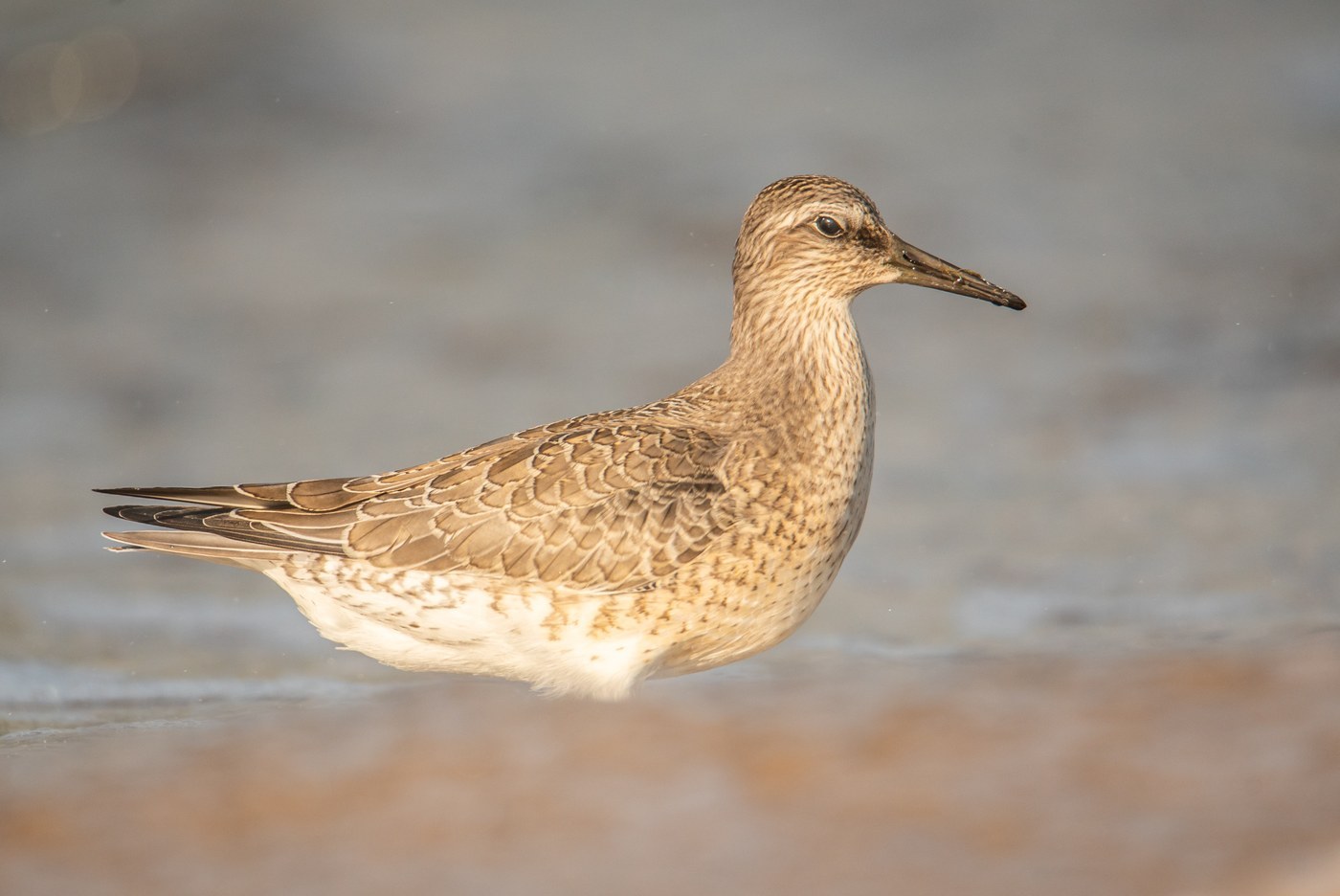
What Red Knot's Feathers Look Like
Red Knot is a robust, medium-sized shorebird whose feathers change dramatically between breeding and nonbreeding season, so both should be considered. In breeding plumage, face, throat, breast, and belly feathers are a rich brick-red to rufous-orange, extending further down the underparts than in most other shorebirds. Back and scapular feathers in breeding plumage show a bold scaled or mottled pattern of black, gray, and rufous, giving a coarse, patchy look rather than fine streaking.
In nonbreeding (winter) plumage, the transformation is dramatic: body feathers become a plain, smooth pale gray above and white below, with almost no pattern at all — genuinely understated compared to the bright breeding look. Flight feathers are moderately long and pointed, dark grayish-brown with narrow white edges forming a thin wing stripe, visible in flight as a faint pale line. The rump and tail base show fine gray barring on a white ground, and the bill, if any fragment is attached, is short, straight, and stout compared to many other sandpipers.
Step-by-Step: Is This Feather From a Red Knot?
- Check for brick-red underparts feathers. A rich rufous-orange breast or belly feather strongly supports breeding-plumage Red Knot.
- Look for scaled black-gray-rufous back feathers. A coarse, mottled (not finely streaked) pattern on scapulars fits breeding Red Knot.
- Assess plain gray nonbreeding feathers. Smooth pale gray above and white below, with minimal pattern, is consistent with winter-plumage Red Knot, though this look is less distinctive than the breeding plumage.
- Examine wing feathers for a thin white stripe. A narrow pale wing-stripe edge on otherwise dark flight feathers supports this species.
- Consider overall size and bill shape. A short, straight, sturdy bill fragment (if present) fits Red Knot rather than longer-billed shorebirds.
Similar Species & How to Tell Them Apart
- Dunlin — smaller, with a longer, distinctly drooped bill tip and, in breeding plumage, a solid black belly patch rather than the more extensively rufous underparts of Red Knot.
- Short-billed / Long-billed Dowitcher — much longer, straighter bill and finer barring on the tail, with breeding underparts showing more spotting than Red Knot's solid rufous wash.
- Curlew Sandpiper — breeding plumage also shows rufous underparts, but with a longer, more distinctly downcurved bill and a white (not gray-barred) rump, the clearest separation from Red Knot.
Where & When You'll Find Them
Red Knots breed on High Arctic tundra across northern Canada, Greenland, and Siberia, then undertake some of the longest migrations of any shorebird to winter on coastal mudflats and estuaries in the Americas, Europe, Africa, and Australasia. Feathers are most commonly found on major migration stopover mudflats in spring and fall, particularly at key staging sites where huge numbers gather to refuel (some populations famously timing their stopovers to horseshoe crab egg-laying events), and on wintering estuaries through the colder months, where nonbreeding gray-and-white feathers predominate.
Frequently asked questions
What's the clearest breeding-plumage clue for Red Knot?
A rich brick-red to rufous-orange breast or belly feather combined with a coarsely scaled black-gray-rufous back feather — together these are strong indicators of breeding Red Knot.
How do I tell this apart from Dunlin?
Check the bill shape and belly pattern — Dunlin has a longer, drooped bill and a solid black belly patch in breeding plumage, while Red Knot has a shorter, straighter bill and extensively rufous (not black) underparts.
Are nonbreeding Red Knot feathers hard to identify?
Yes, winter-plumage feathers are plain pale gray above and white below with little pattern, making them harder to distinguish from other gray-and-white shorebirds without considering size, bill shape, and location.
Does wing feather pattern help confirm this species?
A narrow white edge forming a thin wing stripe on otherwise dark flight feathers is a supporting clue, though not unique to Red Knot alone.
When and where are Red Knot feathers most likely to be found?
On major shorebird migration stopover mudflats in spring and fall, and on wintering estuaries and coastal mudflats through the colder months.