
How to Identify Rainbow Lorikeet Feathers
How to identify the thick, vividly multicolored feathers of the Rainbow Lorikeet by color-block region, and how to separate them from other colorful parrots.
Read the full Rainbow Lorikeet encyclopedia entry →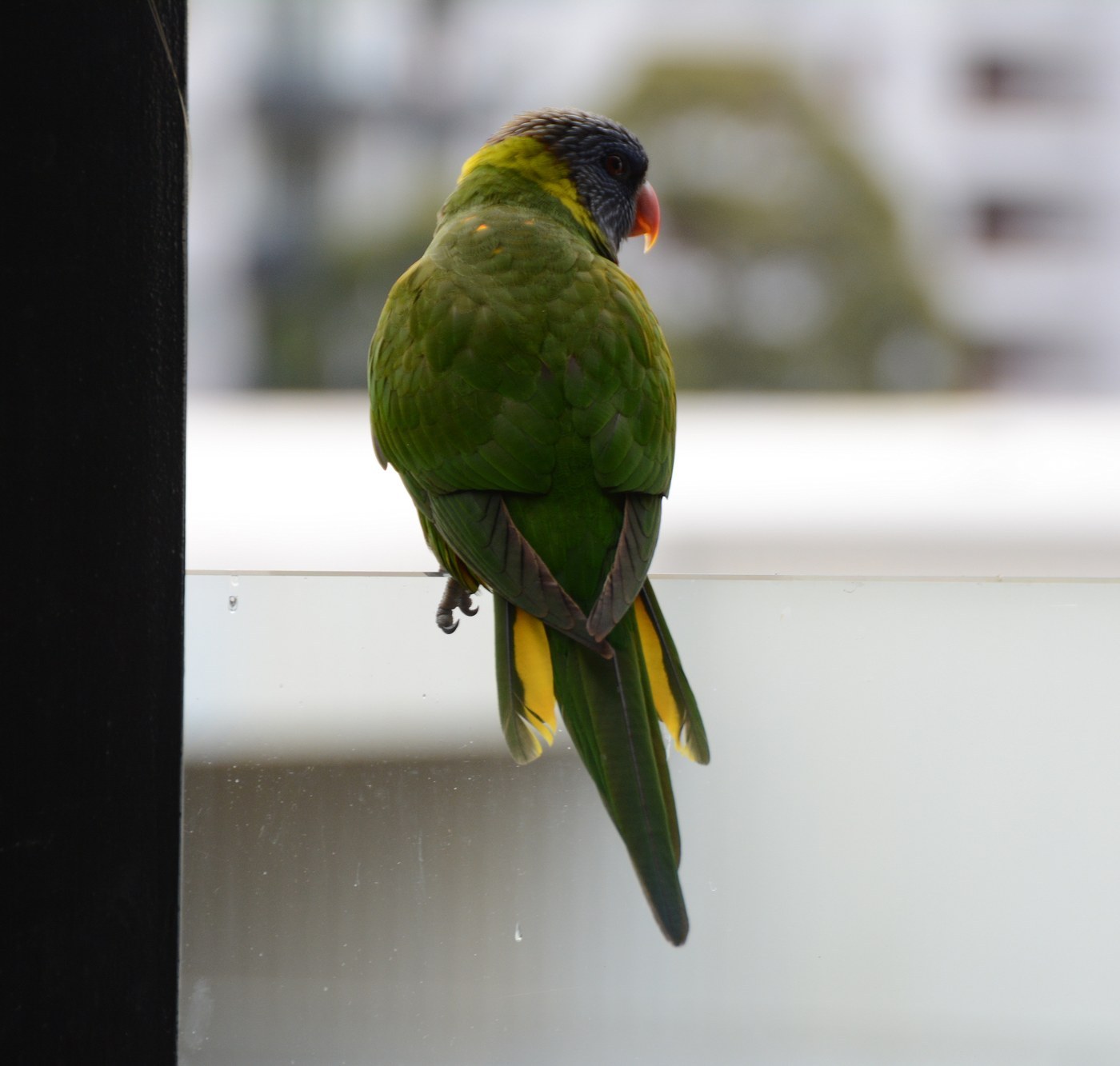
What Rainbow Lorikeet's Feathers Look Like
Rainbow Lorikeets are famous for an almost patchwork color scheme, with different body regions showing sharply different, saturated colors:
- Head feathers: deep blue to violet-blue, dense and slightly stiff, typical of parrot contour feathers.
- Back and wing feathers: bright green, broad and rounded (not tapered like a songbird feather), reflecting the parrot family's characteristic feather shape.
- Breast feathers: a bold orange-to-yellow band across the upper chest, often with fine darker barring visible up close.
- Belly feathers: deep blue-violet to blue-green, again sharply demarcated from the orange breast band above it.
- Flight feathers: green on the outer web with yellow or greenish-yellow flashes on the underside, visible when the wing is spread.
- Tail feathers: green above, often with a yellowish tinge below, moderately long and slightly tapered.
- Feather texture: notably thicker, stiffer, and more rounded at the tip than songbird feathers of similar size — a general parrot-family trait.
- Size: primaries roughly 10–14 cm; body feathers thick and rounded, 2–4 cm.
Step-by-Step: Is This Feather From a Rainbow Lorikeet?
- Check feather texture first. A thick, stiff, rounded-tip feather (rather than a thin, tapered songbird feather) points to a parrot, narrowing the field considerably.
- Identify which color block it came from. Blue suggests head or belly, green suggests back/wings/tail, and orange-yellow suggests the breast band — matching the region helps confirm species over other parrots.
- Look for sharp color transitions. Rainbow Lorikeet plumage changes color abruptly between regions rather than blending gradually, which is a useful diagnostic against species with more gradual color shifts.
- Check the underside of a flight feather. A yellowish-green wash on the underside of an otherwise green flight feather supports this identification.
- Consider size. Medium-sized, robust feathers (not tiny, not huge) fit a lorikeet-sized parrot rather than a larger cockatoo or a much smaller finch.
Similar Species & How to Tell Them Apart
- Scaly-breasted Lorikeet: Mostly green with a scaly yellow-green breast pattern, lacking the sharply blocked blue head and orange breast band of Rainbow Lorikeet.
- Rainbow Bee-eater: Also multicolored but with thin, tapered songbird-type feathers rather than thick parrot feathers, and shows chestnut/black tones the lorikeet lacks.
- Musk Lorikeet: Mostly green with a red forehead patch and blue crown patch, but without the lorikeet's bold blue head and orange chest band.
- Eclectus Parrot: Males are solid green, females solid red/purple — neither shows the lorikeet's blocky multi-color pattern across a single bird.
Where & When You'll Find Them
Rainbow Lorikeets are common in coastal and urban eastern and northern Australia, thriving in parks, gardens, and flowering trees where they feed on nectar and pollen, often in noisy, conspicuous flocks. As a largely non-migratory, resident species, feathers can be found year-round near flowering eucalypts and grevilleas, with the heaviest feather turnover typically following the main breeding season when adults undergo their annual molt.
Frequently asked questions
Why are lorikeet feathers thicker than most songbird feathers?
Parrots in general have denser, stiffer, more rounded feathers suited to their body shape and flight style, and this general parrot-family trait applies to Rainbow Lorikeet as well, helping distinguish its feathers from thinner songbird feathers even before considering color.
Is the blue on the head the same shade as the blue on the belly?
They're often similar but the head is usually a slightly deeper violet-blue while the belly can lean more blue-green, and having both a head feather and a belly feather together can help confirm the identification through this color relationship.
How do I rule out a Scaly-breasted Lorikeet instead?
Check for the sharp orange breast band and blue head — Scaly-breasted Lorikeet lacks both, showing an all-green head and a streaky yellow-green breast pattern instead of a solid orange block.
Do juvenile Rainbow Lorikeets have duller feathers?
Yes, juveniles show slightly muted versions of the adult color pattern with less sharply defined color blocks, gradually brightening as they mature into full adult plumage.