
How to Identify Pygmy Nuthatch Feathers
Tips for recognizing the tiny blue-gray and buffy feathers of the Pygmy Nuthatch and separating them from other small pine-forest songbirds.
Read the full Pygmy Nuthatch encyclopedia entry →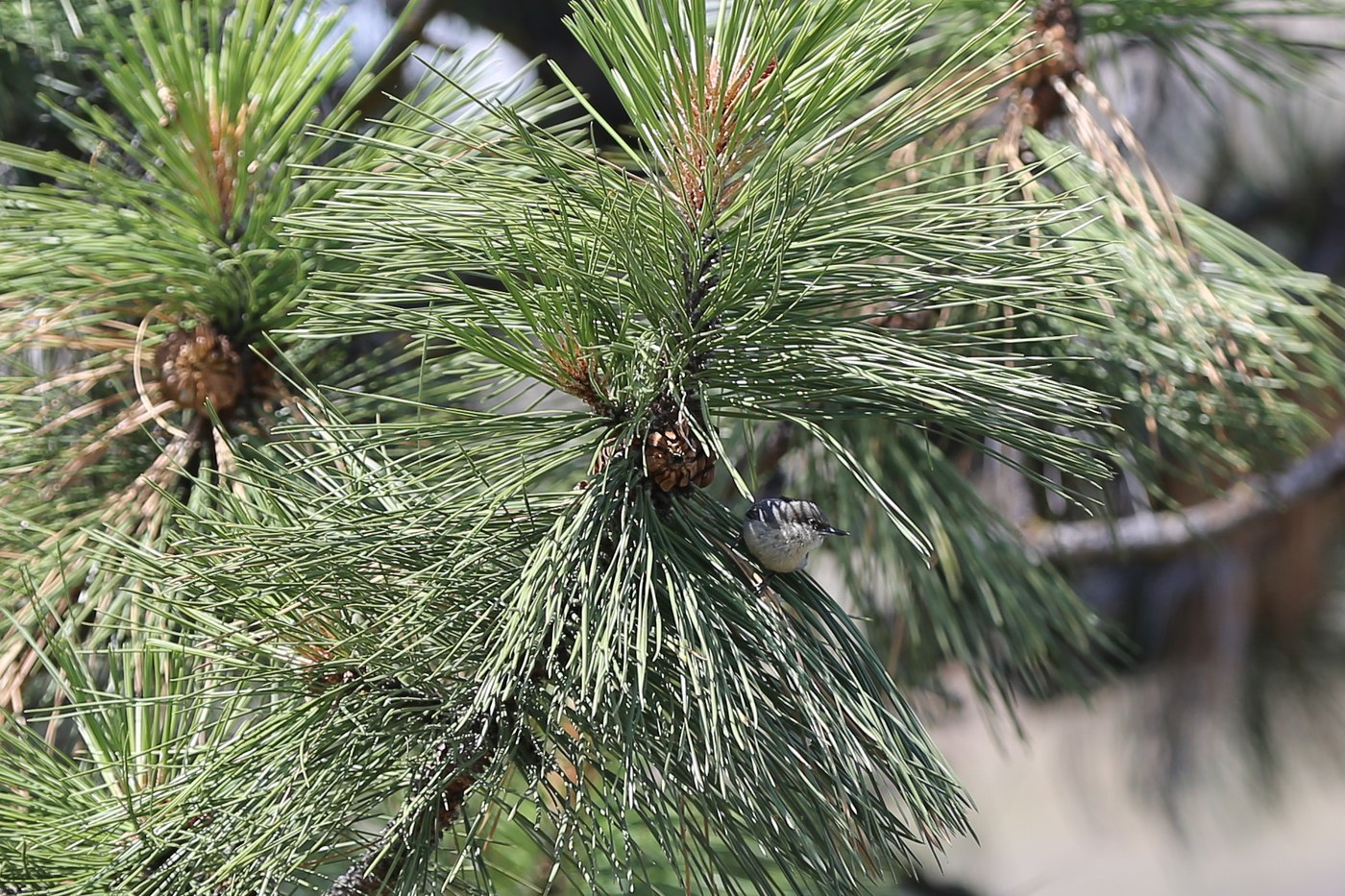
What Pygmy Nuthatch's Feathers Look Like
Pygmy Nuthatch is one of the smallest nuthatches, and its feathers are correspondingly diminutive and understated:
- Crown feathers: brownish-gray to grayish-brown cap, duller and less contrasting than the black cap of larger nuthatches — this softer cap color is a useful clue.
- Back and wing feathers: soft blue-gray, plain and unmarked, with no wing bars or bold patterning.
- Underparts feathers: pale buffy-white to creamy, sometimes with a faint warm wash on the flanks, contrasting gently with the blue-gray back.
- Nape feathers: often show a faint pale spot or patch at the back of the neck, a subtle but sometimes visible field mark.
- Tail feathers: short, blue-gray, square-ended, with limited white in the outer feathers compared to some relatives.
- Size: tiny — flight feathers usually under 5 cm, body feathers 1 cm or smaller, reflecting the bird's very small overall size (among the smallest North American nuthatches).
Step-by-Step: Is This Feather From a Pygmy Nuthatch?
- Check the size first. An extremely small, blue-gray contour feather (roughly fingernail-sized or smaller) is consistent with this diminutive species.
- Look at the cap color. A dull grayish-brown rather than glossy black crown feather points toward Pygmy Nuthatch rather than White-breasted or Red-breasted Nuthatch.
- Check for a pale nape spot. A small buffy or whitish patch on a feather from the back of the neck supports this identification.
- Confirm plainness. No wing bars, no bold streaking, no eye-line stripe — Pygmy Nuthatch plumage is understated compared to many songbirds this size.
- Consider the habitat context. A tiny blue-gray feather found under or near a mature pine tree is a strong contextual clue, since this species is a pine-forest specialist.
Similar Species & How to Tell Them Apart
- Red-breasted Nuthatch: Shows a bold black cap and black eye-stripe over a white brow, plus rusty-orange underparts — much more strongly patterned than Pygmy Nuthatch's soft gray-buff tones.
- White-breasted Nuthatch: Larger overall with a glossy black cap and crisp white face/underparts, producing noticeably larger and more contrasting feathers.
- Brown-headed Nuthatch: Very similar in size and behavior (an eastern counterpart), with a warmer brown cap rather than gray-brown; range is the best separator since the two rarely overlap.
- Chickadees: Similar small size but show a distinctly black cap and bib with white cheeks, a much bolder pattern than the subtle nuthatch coloring.
Where & When You'll Find Them
Pygmy Nuthatches are closely tied to open, mature ponderosa and other yellow pine forests across the western mountains, often foraging in tight, chattering flocks high in the canopy. Because they are non-migratory residents that roost communally (sometimes in large numbers in tree cavities) even in winter, feathers can be found year-round near pine groves, with a modest increase after the late-summer molt when adults refresh worn plumage before winter.
Frequently asked questions
Why is the cap gray-brown instead of black like other nuthatches?
Pygmy Nuthatch simply has a different plumage pattern from its black-capped relatives; the softer cap color is one of the most reliable ways to separate it from White-breasted and Red-breasted Nuthatches at a glance, feather or bird.
Is there any obvious wing pattern to look for?
No, Pygmy Nuthatch wings are largely plain blue-gray without bars or bold markings, which itself is a helpful clue since several similarly sized songbirds do show wing bars.
Do juveniles have different colored feathers?
Juveniles look very similar to adults, just slightly duller and softer in texture, since young nuthatches molt into a plumage close to the adult pattern relatively quickly.
Why does habitat matter so much for identifying this feather?
Because Pygmy Nuthatch is a pine-forest specialist rarely found far from mature pines, a tiny blue-gray feather found in that specific habitat context is much more likely to be this species than a similar-looking feather found in mixed or deciduous woodland.