
How to Identify Middle Spotted Woodpecker Feathers
A guide to the pied black-and-white feathers with a full red cap that distinguish the Middle Spotted Woodpecker from its larger and smaller relatives.
Read the full Middle Spotted Woodpecker encyclopedia entry →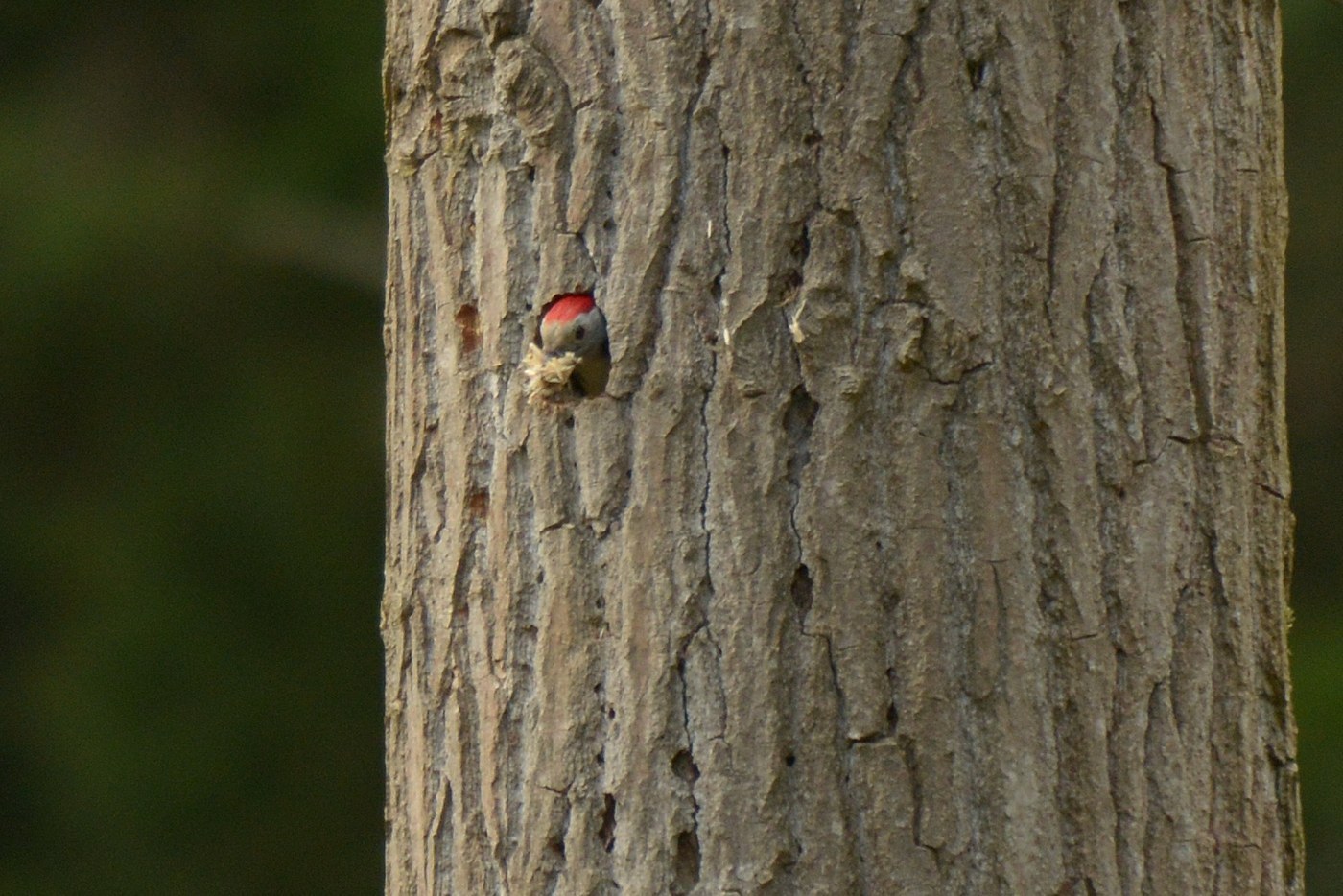
What Middle Spotted Woodpecker Feathers Look Like
Middle Spotted Woodpecker feathers show the pied black-and-white pattern typical of spotted woodpeckers, but with specific proportions worth checking closely. Crown feathers are a soft red or pinkish-red across the entire cap in both sexes — unlike species where only males show red, so a red crown feather doesn't by itself indicate sex. Back feathers are black boldly barred/spotted with white, forming a "ladder-backed" look when several feathers are aligned, similar to other pied woodpeckers but with somewhat less crisp contrast. Wing covert feathers show large, clean white spots on a black background, while flight feathers (primaries/secondaries) are black with rows of white spots along both edges. The key underparts feathers are whitish to pale buff, with fine dark streaking concentrated on the flanks rather than a solid red or pink patch under the tail — this streaked, unmarked-belly combination is one of the most useful diagnostic clues. The black malar (cheek) stripe feathers are notably incomplete, not connecting to the bill base or nape the way it does in some relatives.
Step-by-Step: Is This Feather From a Middle Spotted Woodpecker?
- Check the crown color first. A red-pink cap feather from a bird in this size/pattern class, present regardless of sex, is a strong starting clue.
- Inspect the vent/undertail area if you can identify it. Middle Spotted Woodpecker shows a paler, pinkish (not solid bright red) undertail patch compared to some relatives.
- Look at flank feathers for streaking. Fine dark streaks on white/buff flank feathers, without a solid colored belly patch, fits this species.
- Assess the malar stripe. If you can identify a cheek-region feather, an incomplete black stripe not reaching the bill or nape supports the ID.
- Compare size. Mid-sized among spotted woodpeckers — larger than Lesser Spotted, notably smaller than Great Spotted.
Similar Species & How to Tell Them Apart
- Great Spotted Woodpecker: Adults show a solid, more vivid, and more extensive red undertail patch and red only on the nape (in males) or none (in females) rather than a full red cap in both sexes; also has a bold, complete black malar stripe.
- Lesser Spotted Woodpecker: Notably smaller, with a barred (not solid black-and-white blocked) back pattern throughout, and males show red confined to the crown only in a smaller patch, on an overall much daintier feather set.
- Syrian Woodpecker: Very similar pied pattern; best separated by malar stripe extent (more complete in Syrian) and range, since feather-only separation is difficult.
Where & When You'll Find Them
Middle Spotted Woodpeckers favor mature deciduous forest, particularly old oak woodland, across much of central and eastern Europe extending into parts of western Asia, and are generally non-migratory residents tied closely to these mature forest stands. Feathers are most likely found on the ground beneath old oaks with rough bark, which the species favors for foraging. Molt follows the breeding season, typically completing through mid-to-late summer, so fresh feathers are most commonly found from July into September, though resident birds shed feathers from wear and territorial activity throughout the year in suitable oak-dominated forest.
Frequently asked questions
What's the key crown clue for Middle Spotted Woodpecker?
A red or pinkish-red cap across the entire crown in both males and females — unlike species where red is restricted to males or a smaller patch.
How does the undertail color help distinguish it from Great Spotted Woodpecker?
Middle Spotted Woodpecker shows a paler, pinkish undertail patch, while Great Spotted Woodpecker has a more vivid, extensive bright red patch.
What do the flank feathers look like?
Whitish to pale buff with fine dark streaking, rather than a solid colored belly patch.
Is the malar (cheek) stripe complete or broken?
Incomplete — it does not connect fully to the bill base or nape, unlike some closely related species.
Where should I look for these feathers?
Beneath mature oak trees in old deciduous forest across central and eastern Europe, where the species forages on rough bark.