
How to Identify Long-tailed Tit Feathers
A guide to spotting the pinkish-white body feathers and long black-and-white tail feathers of the tiny, sociable Long-tailed Tit.
Read the full Long-tailed Tit encyclopedia entry →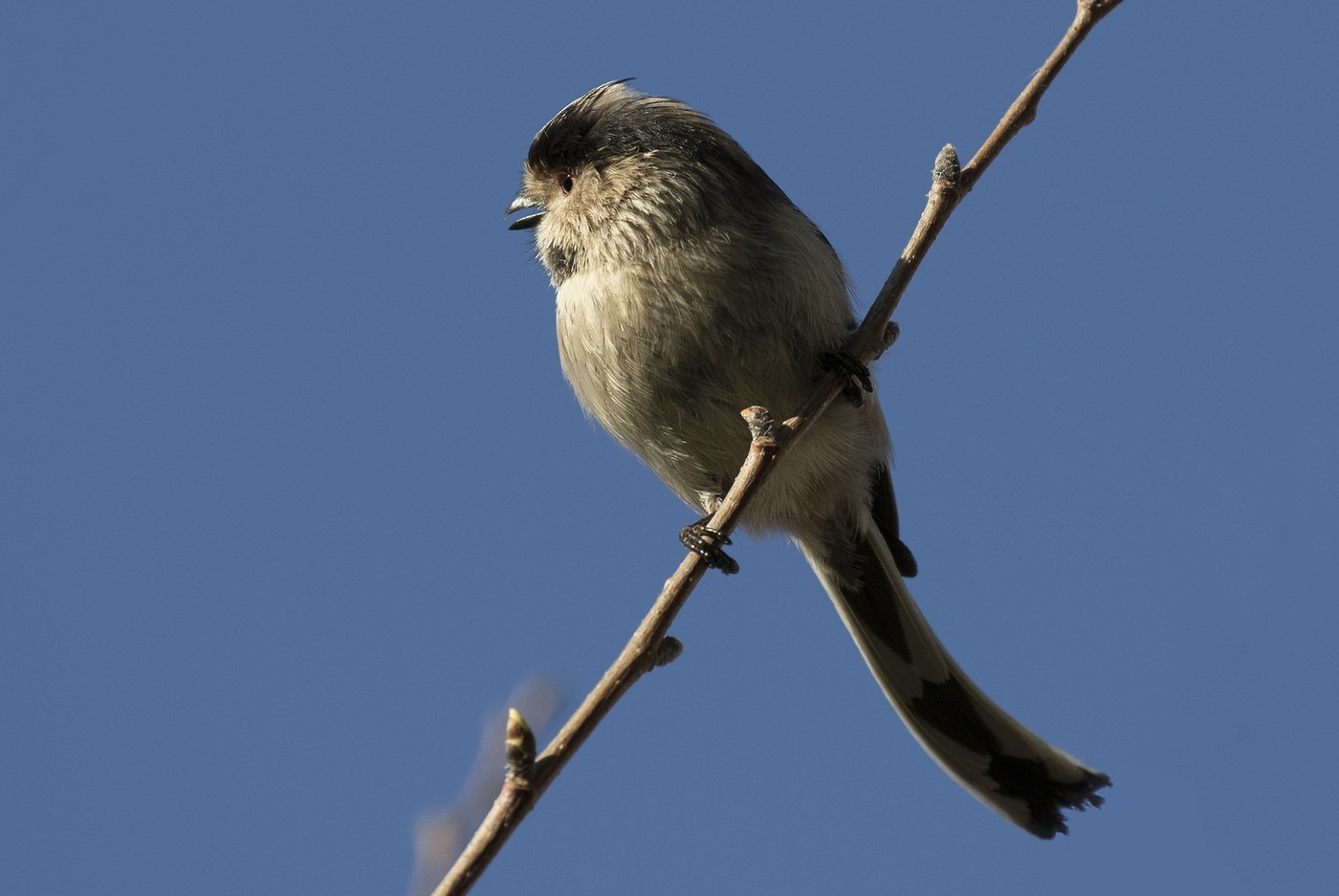
What Long-tailed Tit's Feathers Look Like
The Long-tailed Tit is a tiny songbird made distinctive mostly by its proportions: a small, round body attached to a tail that is often longer than the body itself. Body feathers are soft, fluffy, and small (rarely over 2 cm), colored in a mix of dull pinkish-white, black, and gray-brown depending on which part of the bird they came from — feathers from the flanks often show a warm dusky-pink wash, while feathers from the head are largely black and white in a bold pattern (a black band running back from the eye over an otherwise whitish head in the widespread European form). Wing feathers are dark blackish-brown with pale grayish or whitish edges, giving a subtly scalloped look. Tail feathers are the most identifiable: long and narrow relative to width, blackish overall, with the outer feathers on each side showing broad white edging or nearly all-white outer webs.
Step-by-Step: Is This Feather From a Long-tailed Tit?
- Check for extreme length-to-width ratio. Genuine tail feathers from this species are narrow and long relative to the bird's small size — a tail feather can be 7–9 cm long despite the bird itself being barely bigger than a fist.
- Look at the outer tail feathers for white edges. A blackish tail feather with a clean white outer edge or white tip is a strong match.
- Check body feathers for a pinkish tinge. Soft, fluffy flank feathers with a dusky pink-buff wash are characteristic; pure white or pure gray fluff points elsewhere.
- Inspect the texture. Long-tailed Tit body plumage is unusually soft and dense for insulation, since the birds huddle together in cold weather — feathers should feel notably downy at the base.
- Consider where you found it. Feathers scooped from a communal roost site (tight cluster of birds huddled on a branch) strongly support this species, since Long-tailed Tits famously roost shoulder-to-shoulder in winter.
Similar Species & How to Tell Them Apart
Other small tits (Blue Tit, Great Tit, Coal Tit) have short, stubby tails, so any confusion is unlikely once you compare tail length to overall feather size. The main look-alike risk is with treecreepers or wrens, which also have narrow tail feathers, but those species show plain brown, strongly barred, or stiff spiky-tipped tail feathers rather than the Long-tailed Tit's blackish feather with a clean white edge. Bearded Reedlings (sometimes called Bearded Tits) share a long tail too, but their tail feathers are warm tawny-brown rather than black-and-white, and their body feathers are a rich orange-buff, easily separating the two.
Where & When You'll Find Them
Long-tailed Tits favor deciduous woodland, hedgerows, scrub, and parks across Europe and temperate Asia, usually moving in active, chattering flocks that make feather-shedding sites easy to notice — look under shrubby thickets and along hedge lines. They molt once a year, in late summer after breeding, so worn or replaced body feathers turn up most often from midsummer into autumn. In winter, look near dense roosting sites, since birds preening in a huddle commonly drop loose down feathers even outside the main molt period.
Frequently asked questions
Why are Long-tailed Tit feathers so fluffy compared to other small birds?
Their dense, downy plumage is an adaptation for warmth, since the species is unusually small-bodied and loses heat quickly, and often huddles in groups overnight.
Is the black-and-white head pattern visible on a single feather?
Sometimes — feathers from the crown and eye-stripe area can show a sharp black band against a pale background, especially in birds of the nominate white-headed European form.
Could a long, narrow feather I found be from a treecreeper instead?
Check color: treecreeper tail feathers are stiff, spiky-tipped, and plain brown, while Long-tailed Tit tail feathers are blackish with a soft white edge and a more flexible tip.
Do juvenile Long-tailed Tits have different feathers than adults?
Juveniles show duller, browner tones and lack the pink flank wash of adults, so a very drab grayish-brown small feather could be from a young bird.
When is molt season for this species?
A single complete molt happens in late summer to early autumn after breeding finishes, making that the most likely window to find freshly dropped feathers.