
How to Identify Long-billed Curlew Feathers
A guide to identifying Long-billed Curlew feathers through their warm cinnamon-buff coloring, bright rufous underwing, and large size compared to Whimbrel and other North American shorebirds.
Read the full Long-billed Curlew encyclopedia entry →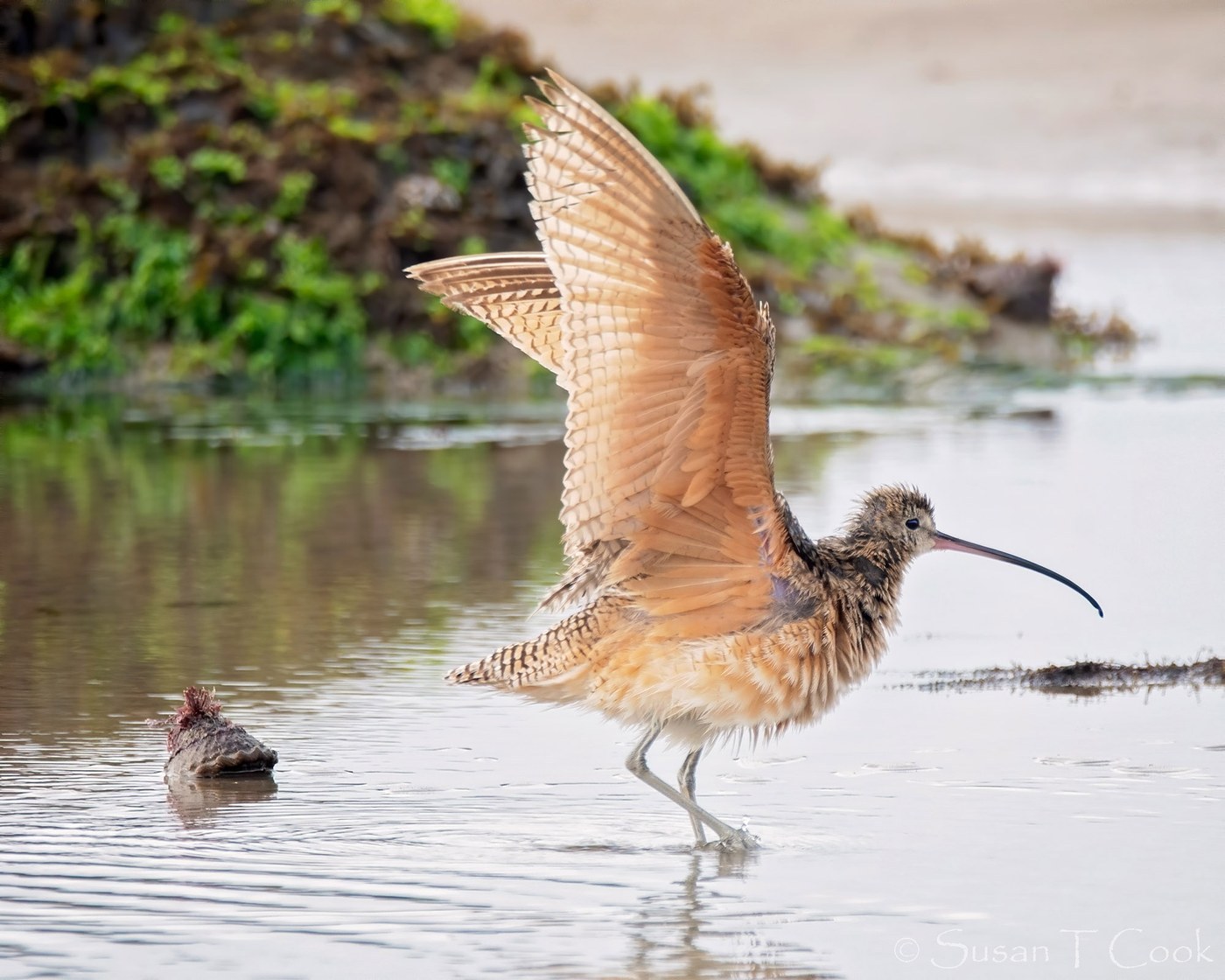
What Long-billed Curlew's Feathers Look Like
As the largest shorebird in North America, Long-billed Curlew's feathers are correspondingly large and richly colored. Body and upperpart (back and covert) feathers are a warm cinnamon-buff ground color, heavily marked with dark brown mottling, spotting, and barring, giving a warm, sandy-brown overall tone rather than a cool grey. Flight feathers (primaries) are substantial, typically 18-22 cm, buffy-cinnamon with dark barring throughout — notably richer in tone than most other large shorebirds.
The single best diagnostic feather feature is the underwing covert color: Long-billed Curlew's underwing linings are a bright, warm cinnamon-rufous, distinctly brighter and more saturated than the underwing of the similar Whimbrel, and this color is often retained clearly on isolated underwing covert feathers. Tail feathers are barred buff and dark brown in alternating bands. Overall feather texture is fairly stiff and substantial, matching this shorebird's large body size.
Step-by-Step: Is This Feather From a Long-billed Curlew?
- Check underwing covert feathers for bright cinnamon-rufous color. This is one of the most reliable single-feather clues, especially in flight or from molted underwing feathers.
- Assess overall warmth of tone. A rich cinnamon-buff ground color with dark mottling, rather than a cooler grey-brown, supports Long-billed Curlew.
- Measure the feather. Primaries in the 18-22 cm range fit North America's largest shorebird.
- Look for barred flight and tail feathers. Alternating dark and buffy bands throughout support this species.
- Rule out an upturned bill fragment, which would suggest Marbled Godwit instead.
Similar Species & How to Tell Them Apart
- Whimbrel — notably smaller feathers overall, a cooler grey-brown tone rather than warm cinnamon, and a duller, greyer underwing rather than bright rufous.
- Marbled Godwit — similar warm buffy-cinnamon tone and comparable size, but with a distinctly upturned (not decurved) bill if any bill fragment is present, and slightly less richly colored underwing coverts.
- Bristle-thighed Curlew — restricted range in the Pacific, generally paler and buffier overall with less contrasting dark mottling than Long-billed Curlew.
Where & When You'll Find Them
Long-billed Curlews breed on short-grass prairie and open rangeland in the interior western United States and southern Canada, then winter along coastal mudflats, estuaries, and agricultural fields from the southern US through Mexico and Central America. Feathers are most often found on breeding grasslands in spring and early summer, and on wintering coastal mudflats through the colder months, with the main molt of flight feathers occurring after breeding, from late summer into fall. Because breeding birds nest directly on open ground, feathers dropped near a nest scrape or brooding site can sometimes be found alongside footprints and probe marks left while adults forage nearby.
Frequently asked questions
What's the single best clue for identifying a Long-billed Curlew feather?
A bright, warm cinnamon-rufous color on underwing covert feathers, distinctly more saturated than the duller underwing of the similar Whimbrel.
How do Long-billed Curlew feathers compare in size to Whimbrel's?
They're notably larger, with primaries around 18-22 cm reflecting the Long-billed Curlew's status as North America's largest shorebird, versus Whimbrel's smaller build.
Could a warm buffy feather this size be from a Marbled Godwit instead?
It's possible — check for an upturned bill fragment, which indicates godwit, since Long-billed Curlew has a strongly downcurved bill instead.
What does the overall body feather pattern look like?
Warm cinnamon-buff feathers heavily marked with dark brown mottling and barring, giving a sandy, richly patterned look rather than a plain or grey tone.
When and where are Long-billed Curlew feathers most likely found?
On short-grass prairie breeding grounds in spring and summer, and on coastal mudflats and agricultural fields during the winter months further south.