
How to Identify Little Gull Feathers
A guide to identifying Little Gull feathers using their small size, dark underwing coverts, and clean white wingtips that set them apart from Black-headed Gull and other small gulls.
Read the full Little Gull encyclopedia entry →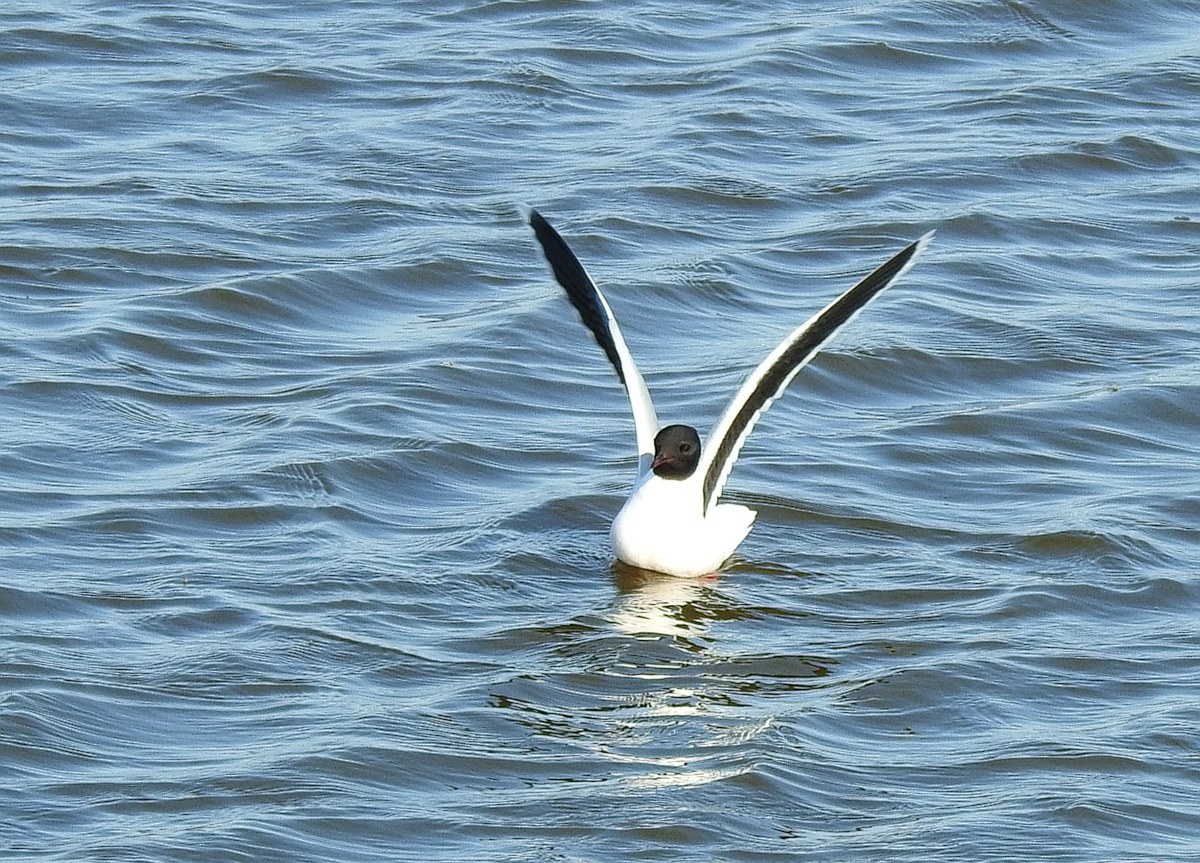
What Little Gull's Feathers Look Like
As the smallest gull species in the world, every feather from a Little Gull is scaled down accordingly — primaries typically run only 18-22 cm, notably short and narrow compared to any other gull. Mantle and back feathers are a soft pale grey, while body (contour) feathers are white on the underparts and, in breeding adults, sooty black across the head and nape forming the "hood."
The single most useful diagnostic feather feature is the underwing covert color: Little Gull's underwing is unusually dark sooty-grey to blackish, almost like a tern's, rather than the pale or white underwing typical of most small gulls. On the upperwing, the primaries are pale grey with clean white tips and no black — Little Gull lacks the dark wingtip markings that most gulls, including Black-headed Gull, show. Non-breeding and juvenile birds show a dark half-cap or dusky ear-spot instead of a full hood, and juvenile flight feathers carry a dark, zig-zag "W" pattern across the upperwing.
Step-by-Step: Is This Feather From a Little Gull?
- Measure first. Primaries under about 22 cm and small, delicate body feathers point strongly to Little Gull over any other regularly encountered gull.
- Check the wingtip color. Solid white at the primary tip with no black at all supports Little Gull; any black at the tip suggests a different species.
- Look at underwing coverts if present. Dark sooty-grey underwing feathers, rather than white or pale grey, are a strong Little Gull indicator.
- Assess the mantle grey. A soft, pale, unmarked grey on back feathers is consistent with an adult Little Gull.
- Look for a juvenile "W" pattern. A bold dark zig-zag band across paired upperwing feathers points to a young bird, since adults lack it.
Similar Species & How to Tell Them Apart
- Black-headed Gull — noticeably larger feathers, and critically, shows black outer primary tips and a white leading-edge wedge on the upperwing, unlike Little Gull's all-white wingtip.
- Ross's Gull — similarly small but has a distinctive wedge-shaped tail feather arrangement and a faint pinkish wash, without Little Gull's dark underwing.
- Bonaparte's Gull — comparable small size but shows a black wingtip pattern and pale, not dark, underwing coverts.
Where & When You'll Find Them
Little Gulls breed around freshwater marshes and wetlands across northern Eurasia, then winter along temperate coastlines and estuaries, often feeding buoyantly over water like a tern, dipping to the surface in flight rather than plunge-diving. Look for shed feathers around coastal roosts and estuary mudflats in autumn and winter, when non-breeding and juvenile birds gather, and near marshy breeding wetlands in summer during the post-breeding molt of adults. Because flocks often mix with Black-headed Gulls at shared roosts, a careful side-by-side size and wingtip comparison of any feathers collected in the same spot can help confirm which species they came from.
Frequently asked questions
What's the single best clue that a small gull feather is from a Little Gull?
A clean white wingtip with absolutely no black, combined with unusually dark, sooty underwing covert feathers — a combination not shared by similarly sized gulls like Black-headed Gull.
How small are Little Gull feathers compared to other gulls?
Primaries measure only about 18-22 cm, the shortest of any regularly encountered gull species, reflecting its status as the world's smallest gull.
Could a dark-tipped small gull feather still be a Little Gull?
No — genuine Little Gull primaries lack black wingtips entirely; a dark-tipped feather of similar size is more likely from a Black-headed Gull or Bonaparte's Gull.
What does a juvenile Little Gull feather look like?
Juveniles show a bold dark zig-zag or 'W' pattern across the upperwing feathers, along with a dusky ear-spot rather than a full black hood.
When and where are Little Gull feathers usually found?
Along coastal roosts and estuaries in autumn and winter when wintering flocks gather, and near freshwater marshes in summer during the breeding molt.