
How to Identify Laughing Falcon Feathers
How to identify the boldly barred black-and-cream tail and buffy head feathers of this Neotropical raptor, and distinguish it from forest-falcons.
Read the full Laughing Falcon encyclopedia entry →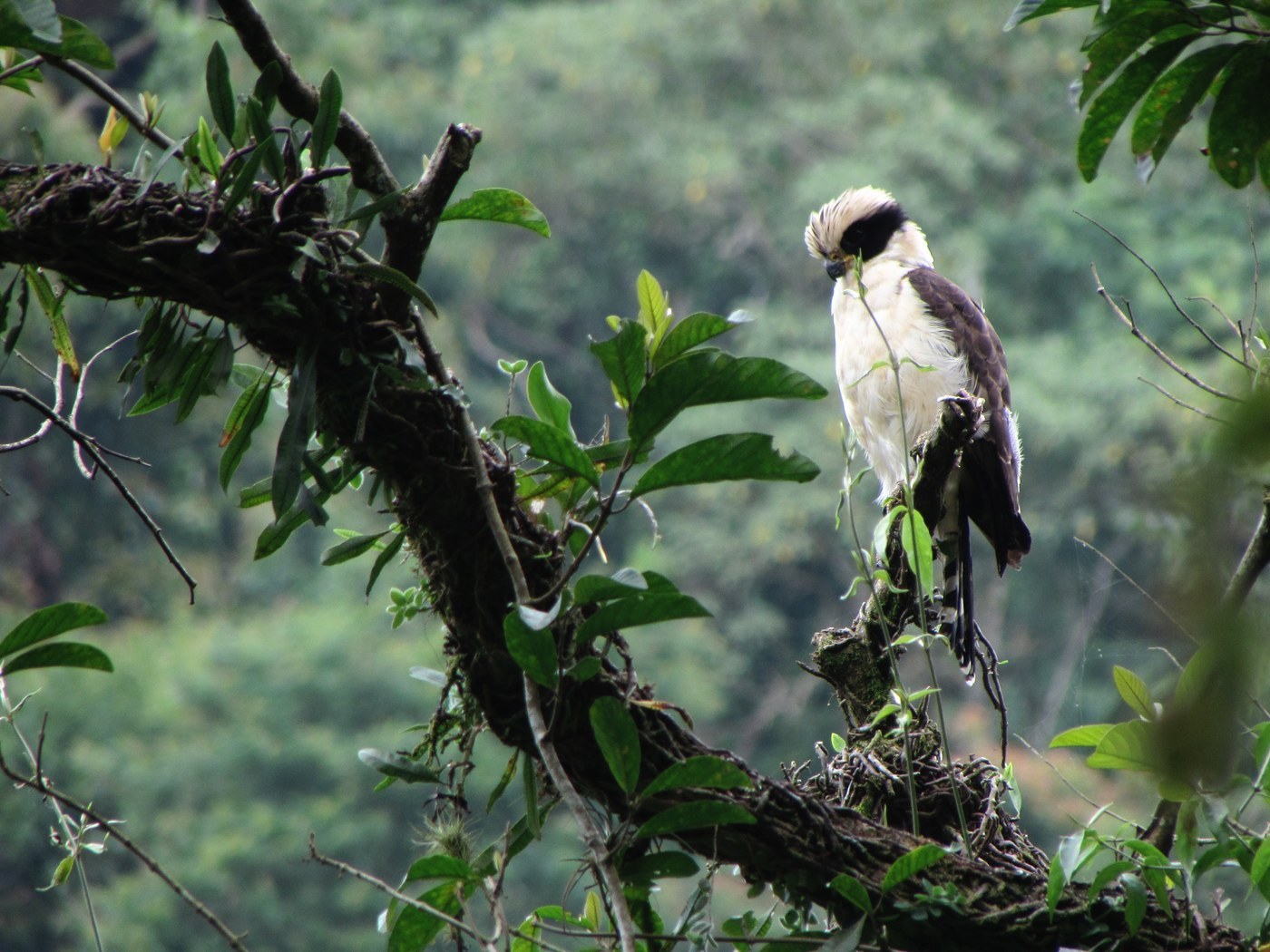
What Laughing Falcon Feathers Look Like
The Laughing Falcon is a mid-sized Neotropical raptor best known for its bold facial mask and, from a feather perspective, its striking barred tail.
- Tail feathers: The standout feature — broad black and creamy-buff or whitish bands alternate along the length of the feather, with several bold bars rather than fine barring. This banded tail feather is the most identifiable feather this species offers.
- Head/face feathers: Creamy-buff overall with a bold black mask through the eye extending around the head like a hood — a buffy feather with a sharply defined black edge likely came from this facial area.
- Body/contour feathers (underparts): Plain buffy-cream to pale cinnamon, largely unmarked.
- Upperpart/back feathers: Dark brown, contrasting with the pale head and underparts.
- Flight feathers: Dark brown barred with buff or tawny, though less boldly than the tail.
- Size: A crow-sized raptor; tail feathers can run 8-10 inches (20-25 cm), quite long and broad for the bird's overall size.
Step-by-Step: Is This Feather From a Laughing Falcon?
- Check for bold black-and-cream tail banding. Wide, high-contrast bars (not fine barring) running the length of a long tail feather is the strongest single clue.
- Look for a buffy feather with a crisp black edge. This fits the black facial mask against the pale head.
- Check underparts feathers for plain, unmarked buffy-cream color rather than streaking or spotting.
- Compare wing feather barring. Duller, less contrasty brown-and-buff bars than the tail supports this species over more sharply patterned raptors.
- Factor in habitat. A find in Neotropical forest edge, woodland, or semi-open country from Mexico through South America fits this species' range.
Similar Species & How to Tell Them Apart
- Barred Forest-Falcon: Shows fine, narrow barring across the underparts and tail rather than the Laughing Falcon's few, bold, wide bands — bar width and contrast level is the key difference.
- Collared Forest-Falcon: Has a pale collar but lacks the extensive buffy head and black mask combination, and its tail barring is narrower and more numerous.
- Bat Falcon: Much smaller overall with dark, barred underparts rather than a plain buffy chest, and lacks the bold black-and-cream tail bands.
- Crested Caracara: Larger with a different barred-and-barred tail pattern (fine black bars on white) and a longer, less contrasty overall tail pattern than Laughing Falcon's few bold bands.
Where & When You'll Find Them
Laughing Falcons range from Mexico through Central America into South America, inhabiting forest edges, gallery forest, and semi-open woodland, often perching prominently to hunt snakes. They are largely non-migratory residents, so feathers can be found year-round within range, with molt occurring gradually rather than in a narrow seasonal pulse. Look for feathers near forest-edge perches and clearings rather than deep closed-canopy forest interior, which the species tends to avoid.
Frequently asked questions
What's the most distinctive feather to look for from a Laughing Falcon?
A tail feather with a few bold, wide black-and-cream bands is the most recognizable, since the contrast and bar width are unusually strong compared to similar raptors.
How is the tail different from a Barred Forest-Falcon's?
Barred Forest-Falcon shows many narrow, fine bars, while Laughing Falcon shows fewer, much wider and higher-contrast bands.
Why does the head feather I found have such a sharp black edge?
That crisp boundary reflects the Laughing Falcon's bold black facial mask against its otherwise plain buffy-cream head, a distinctive field mark that carries through to individual feathers.
Is there a best season to find Laughing Falcon feathers?
Not particularly, since the species is a non-migratory resident with gradual, year-round molt, so feathers can appear at any time within its range.