
How to Identify Lanner Falcon Feathers
A guide to the rufous crown, buffy underparts, and barred upperparts of the Lanner Falcon, and how to distinguish its feathers from Peregrine and Saker Falcon feathers.
Read the full Lanner Falcon encyclopedia entry →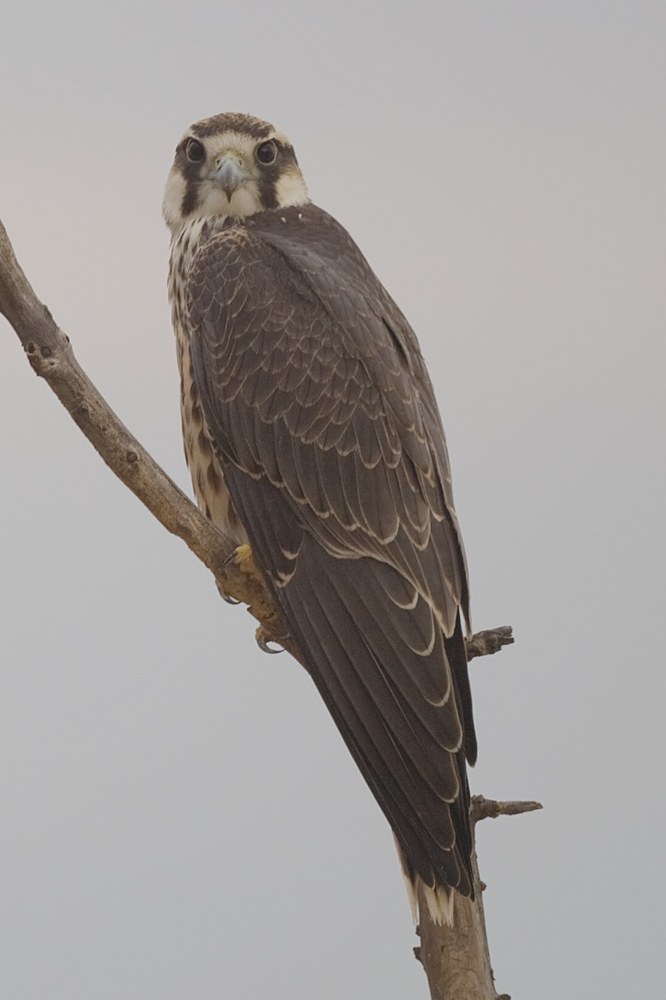
What Lanner Falcon Feathers Look Like
Lanner Falcon feathers combine a fairly pale, warm overall tone with one especially useful field mark: the crown and nape. Head feathers show a distinctive pale rufous to tan crown and nape, sometimes described as a rusty cap, contrasting gently with a grayer back — a warmer, more rufous-toned head than most other large falcons show. Back and wing covert feathers are a grayish-brown, marked with moderate dark barring, less densely and less darkly barred than in some closely related species. Underparts feathers are pale buff to creamy-white, with sparse, fairly light dark spotting or streaking concentrated more on the flanks than across the whole breast, giving an overall paler, cleaner-looking underside than many other falcons. The facial "moustache" mark — a dark stripe running down from the eye — is present but generally narrower and less bold than the heavy black moustache of a Peregrine Falcon, a useful distinction if a face feather is available for comparison. Flight feathers are long, pointed, and barred in brown and buff, typical of a fast, open-country falcon, and the tail shows even brown-and-buff barring along its length.
Step-by-Step: Is This Feather From a Lanner Falcon?
- Check the crown/nape color first. A pale rufous or tan-toned crown feather, rather than a dark slate-gray or blackish crown, strongly supports Lanner Falcon over Peregrine.
- Assess underparts spotting density. Sparse, light spotting concentrated on the flanks with a mostly clean, pale buff chest fits Lanner better than a heavily barred or densely spotted underside.
- Look at the moustache mark, if present. A narrower, less bold dark facial stripe supports Lanner over the thick black moustache typical of Peregrine.
- Compare overall upperpart tone. Grayish-brown with moderate barring, not as dark or as densely marked as Peregrine's slate-gray, heavily barred back.
- Consider size and range. A large, pale falcon feather found in open country, semi-desert, or savanna across Africa, southeastern Europe, or the Middle East/Central Asia supports Lanner over similarly sized falcons from other regions.
Similar Species & How to Tell Them Apart
- Peregrine Falcon shows a dark slate-gray to blackish crown and a much heavier, bolder black moustache mark, plus more densely barred underparts, all contrasting with Lanner's paler, rufous-crowned, more sparsely marked look.
- Saker Falcon is larger and typically paler overall than Lanner, with a less strongly rufous crown (more pale brown/whitish) and heavier dark streaking on the flanks in some individuals; range also helps, as Saker favors more central Asian steppe habitat while Lanner is more African/Mediterranean/Middle Eastern.
- Prairie Falcon (New World counterpart in similar open habitat) shows a browner overall tone with dark "wing-pit" markings on the underwing coverts, a feature not shared with Lanner, plus a different native range entirely (North America).
- Gyrfalcon is much larger and paler overall, especially in its whitest morphs, showing far less rufous tone on the crown than Lanner and inhabiting Arctic/subarctic regions rather than Lanner's warmer open country.
Where & When You'll Find Them
Lanner Falcons inhabit open country, semi-desert, savanna, and mountainous terrain across much of Africa, southeastern Europe, and into the Middle East and parts of Central Asia, nesting on cliff ledges, in old stick nests of other birds, or occasionally on tall structures. Largely resident across much of this range with some populations making local or seasonal movements, feathers can be found across the year, with the post-breeding molt in summer most likely to produce loose feathers near nest cliffs and regular hunting perches. Check around cliff faces, rocky outcrops, and open plains or savanna edges where this fast, open-country falcon hunts, particularly near known nest ledges where feathers accumulate from both adults and growing young over the breeding season.
Frequently asked questions
What's the fastest way to separate Lanner from Peregrine Falcon feathers?
Crown color and moustache boldness — Lanner shows a pale rufous-tan crown and a narrower, less bold dark moustache mark, while Peregrine shows a dark slate-gray crown and a much heavier black moustache.
How does Lanner differ from Saker Falcon?
Saker tends to run larger and paler overall with less rufous tone on the crown, and favors more central Asian steppe habitat compared to Lanner's more African/Mediterranean/Middle Eastern range.
Are Lanner Falcon underparts heavily marked?
No — underparts are pale buff to creamy-white with fairly sparse spotting concentrated on the flanks, giving a cleaner look than several other large falcons.
What habitat should I check for feathers?
Open country, semi-desert, savanna, and mountainous or cliff terrain across Africa, southeastern Europe, and the Middle East/Central Asia, especially near cliff nest ledges.
When are Lanner Falcon feathers most likely to be found?
Year-round where resident, with the summer post-breeding molt near nest cliffs and hunting perches being a particularly productive time.