
How to Identify Kakariki Feathers
How to identify the bright green body feathers and red crown patch of New Zealand's Kakariki parakeets and separate them from Kea, Kaka, and escaped exotic parakeets.
Read the full Kakariki encyclopedia entry →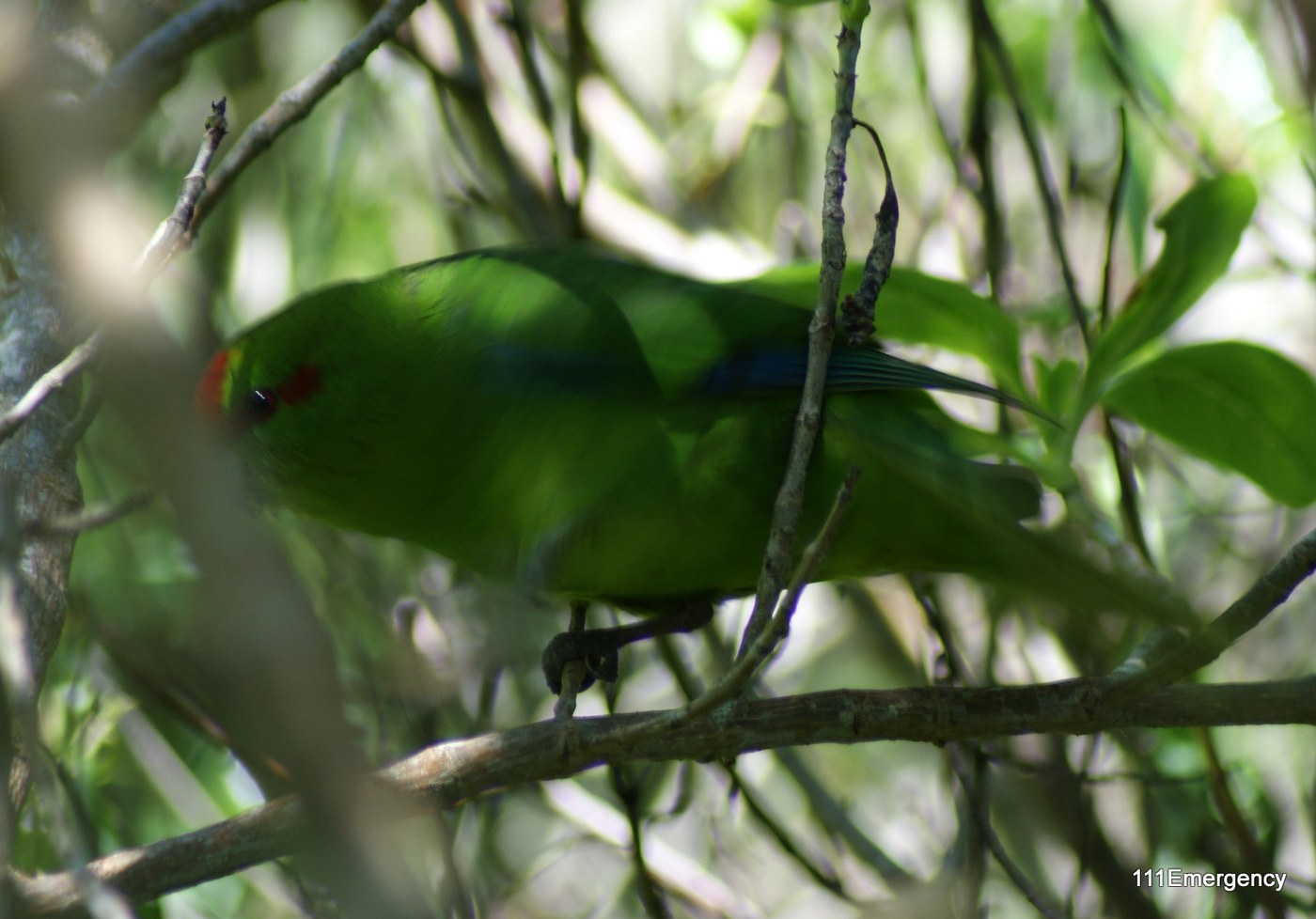
What Kakariki Feathers Look Like
Kakariki (the New Zealand parakeets, including Red-crowned and Yellow-crowned species) show clean, saturated bright green feathers across the back, wings, and belly, with little of the mottling or scalloping seen in their larger cousins Kea and Kaka. The most diagnostic feature is the crown patch: a small cap of feathers on the forehead/crown in a contrasting color — crimson-red in the Red-crowned Kakariki, or a narrower yellow-and-red combination in the Yellow-crowned Kakariki — standing out sharply against the green head feathers around it. Flight feathers show patches of blue on the outer webs of the primaries and sometimes the shoulder/carpal area, a splash of cooler color against the otherwise warm green. The tail is long and tapered, green above with a slightly duller olive tone underneath. Feather texture is typical small-parrot: smooth, glossy, and fairly stiff, with pale down at the feather base. Overall the birds are small, so feathers are modest in size — body feathers a few centimeters, tail feathers longer and tapered.
Step-by-Step: Is This Feather From a Kakariki?
- Check for solid, saturated green. A clean, unmottled green body feather (unlike Kea's or Kaka's textured/scalloped feathers) fits Kakariki well.
- Look for a crown feather with red or yellow. A small feather showing crimson (Red-crowned) or a yellow-red mix (Yellow-crowned) against green supports this genus specifically.
- Check flight feathers for blue patches. Blue on the outer primary webs, distinct from the green body, is a useful confirming detail.
- Measure the tail. A long, tapered, green tail feather fits a small parakeet rather than the larger Kea/Kaka.
- Rule out large scalloped or brown feathers. Anything olive-brown and scalloped points to Kaka; anything olive-green and heavily barred with orange-red underwing points to Kea — Kakariki lacks both.
Similar Species & How to Tell Them Apart
- Kea and Kaka are both considerably larger, with brown or olive-green scalloped/mottled body feathers rather than Kakariki's clean solid green, and neither shows a small red/yellow crown patch in the same way.
- Rosellas and other escaped exotic parakeets (where feral populations overlap in New Zealand) often show more complex multicolor patterning (blue cheeks, red breasts, scalloped backs) that Kakariki lacks, since Kakariki plumage is comparatively simple and uniform apart from the crown patch.
- Budgerigar (escaped/feral) is smaller still and typically shows fine barring on the nape and back in wild-type coloring, a pattern absent in Kakariki.
- Eastern Rosella (introduced/feral in parts of New Zealand) shows a red head and white cheek patch, very different from Kakariki's green head with a small localized crown patch.
Where & When You'll Find Them
Kakariki species are found in native forest, scrubland, and increasingly on offshore predator-free islands and mainland sanctuaries across New Zealand, having declined on the mainland due to introduced predators. As non-migratory residents, feathers can appear in any season, with the post-breeding molt in late summer/autumn (roughly February to April) producing the most loose feathers. Look in native forest understory, around fruiting and seeding trees, and especially on offshore islands and fenced sanctuaries where Kakariki populations are healthiest and most visible today.
Frequently asked questions
What's the fastest way to confirm a Kakariki feather?
Look for clean, solid bright green body feathers combined with a small crown feather showing crimson or yellow-red — that crown patch color is the genus's most reliable single clue.
How do Red-crowned and Yellow-crowned Kakariki feathers differ?
Red-crowned birds show a solid crimson crown patch, while Yellow-crowned birds show a narrower band combining yellow and red on the forehead/crown area.
What rules out Kea or Kaka?
Both are much larger with brown or olive-green mottled/scalloped feathers rather than Kakariki's clean, uniform green, so texture and pattern alone usually separate them.
Could an escaped pet parakeet be confused with Kakariki in New Zealand?
Yes — feral rosellas, budgerigars, and other exotic parakeets are established in parts of New Zealand and show more complex color patterns that Kakariki lacks, so checking for extra colors beyond green and the crown patch helps rule them out.
When are Kakariki feathers most likely to be found?
Year-round as residents, but most commonly during the late summer to autumn post-breeding molt.