
How to Identify Inca Dove Feathers
How to recognize the small, scale-patterned contour feathers and rufous wing flash of the Inca Dove, and separate it from ground doves and Mourning Doves.
Read the full Inca Dove encyclopedia entry →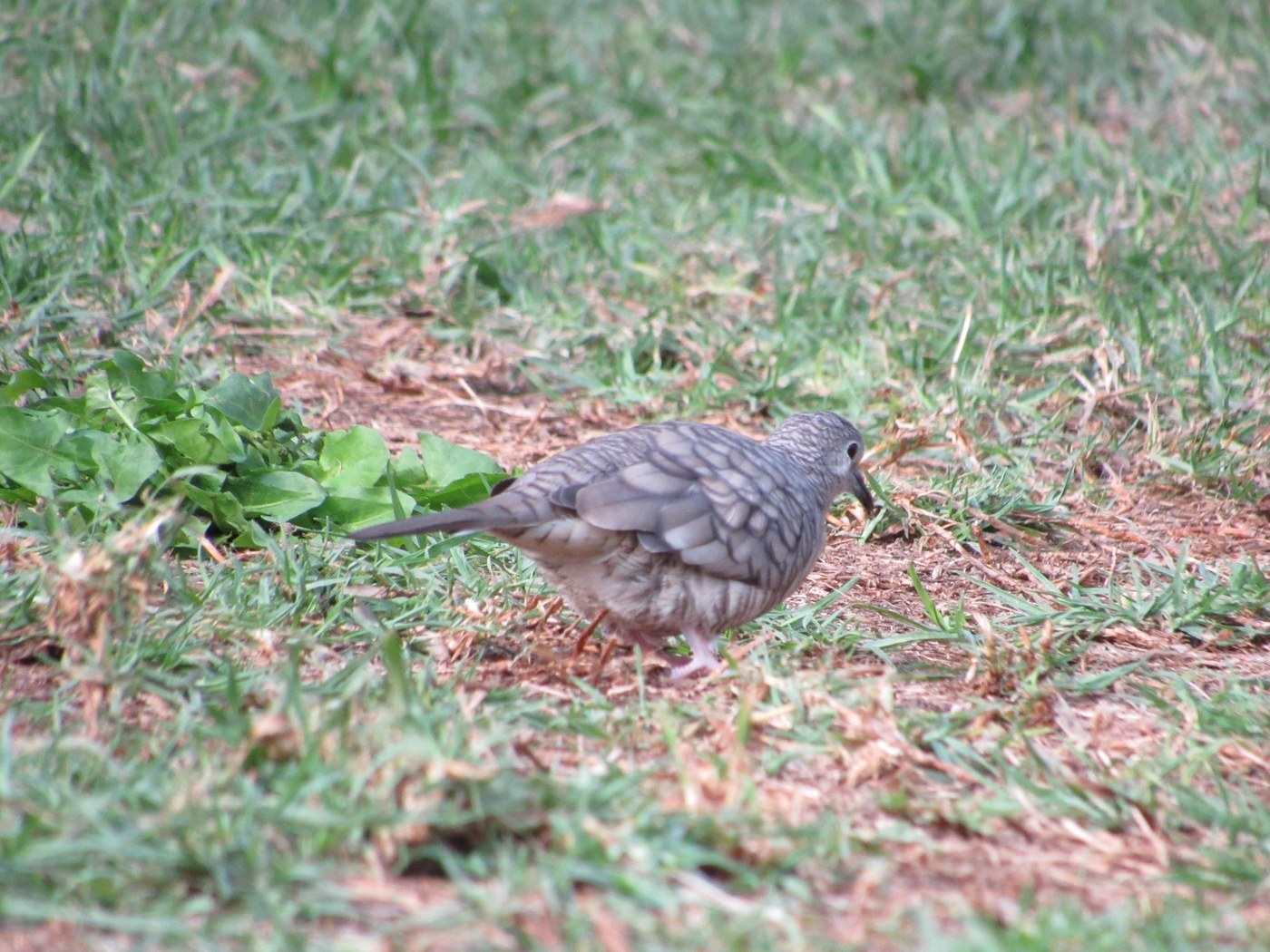
What Inca Dove Feathers Look Like
The Inca Dove is a small, slender desert dove, and its most distinctive feature is easy to spot even in a single loose feather: a scaled or scalloped pattern created by dark, crescent-shaped edges on otherwise pale grayish-tan body feathers. Each contour feather looks like a tiny fish scale — pale center, dark outline — and this pattern covers the head, neck, back, and breast, giving the living bird its "shingled" appearance. The flight feathers tell a different story: the primaries carry a rufous or cinnamon patch at the base that flashes conspicuously when the bird takes off, though it's hidden at rest. The tail is long and graduated for the bird's small size, with the outer tail feathers tipped in white, another useful field mark if you find a tail feather. Overall feather size is small — body feathers often under an inch, primaries in the 3-4 inch range — consistent with a dove barely 8 inches long.
Step-by-Step: Is This Feather From an Inca Dove?
- Check for scaling. Look for a dark crescent or half-moon edge outlining an otherwise plain pale feather — this scaled look is the single best diagnostic for a contour feather.
- Measure the feather. Small size (under 4 inches for flight feathers) fits Inca Dove and rules out Mourning Dove.
- Look for rufous in the flight feathers. A cinnamon or rust-colored patch near the base of a primary strongly supports Inca Dove.
- Check any tail feather for a white tip. White-cornered, long, graduated tail feathers match Inca Dove.
- Note the setting. Feathers found around desert towns, parking lots, or bird feeders in the arid Southwest fit this species' strongly urban-associated habits.
Similar Species & How to Tell Them Apart
The Common Ground Dove is the closest match — it is also tiny and scaled, but its tail is short and squared rather than long and white-cornered, and it lacks the strong rufous wing flash of the Inca Dove. The Mourning Dove is considerably larger, has plain (unscaled) grayish-tan feathers, and its tail feathers are pointed with white edges rather than scaled body plumage. Ruddy Ground Dove, found in similar range, is warmer rufous-brown overall without the crisp pale-and-dark scaling pattern. If the feather in hand has clean scalloped edging and is genuinely small, Inca Dove is the best fit among North American doves.
Where & When You'll Find Them
Inca Doves are year-round residents of arid and semi-arid lowlands across the southwestern United States, Mexico, and into Central America, and they thrive around human development — expect to find their feathers in parks, yards, gravel lots, and near bird feeders rather than deep wilderness. Because they are non-migratory and breed across much of the year in warm climates, molt is gradual and feathers can be found in any season, though loose contour feathers are most abundant in late summer after nesting activity peaks.
Frequently asked questions
What does the scaled pattern on Inca Dove feathers actually look like?
Each body feather is pale grayish-tan with a dark, crescent-shaped border, so overlapping feathers create a scale- or shingle-like texture across the head, neck, and breast.
Why don't I see any rufous color on the feather I found?
The cinnamon patch is on the primaries and only shows at the base, hidden when the wing is folded — you'll only see it on a flight feather or on a bird actually flying.
How do I tell an Inca Dove feather from a Common Ground Dove feather?
Both are small and scaled, but Inca Dove has a long, white-cornered graduated tail while Common Ground Dove's tail is short and squared without white corners.
Are Inca Dove feathers only found in the desert?
They're commonly found in urban and suburban settings within their arid-region range, since the species is strongly associated with towns, yards, and feeders.
Is there a season when Inca Dove feathers are most common?
They can turn up year-round since the species doesn't migrate, but loose feathers tend to be most numerous in late summer following the breeding season.