
How to Identify Harris's Sparrow Feathers
A guide to the black face, bib, and crown feathers that mark breeding Harris's Sparrows, North America's largest sparrow, and how they differ from White-crowned and White-throated Sparrows.
Read the full Harris's Sparrow encyclopedia entry →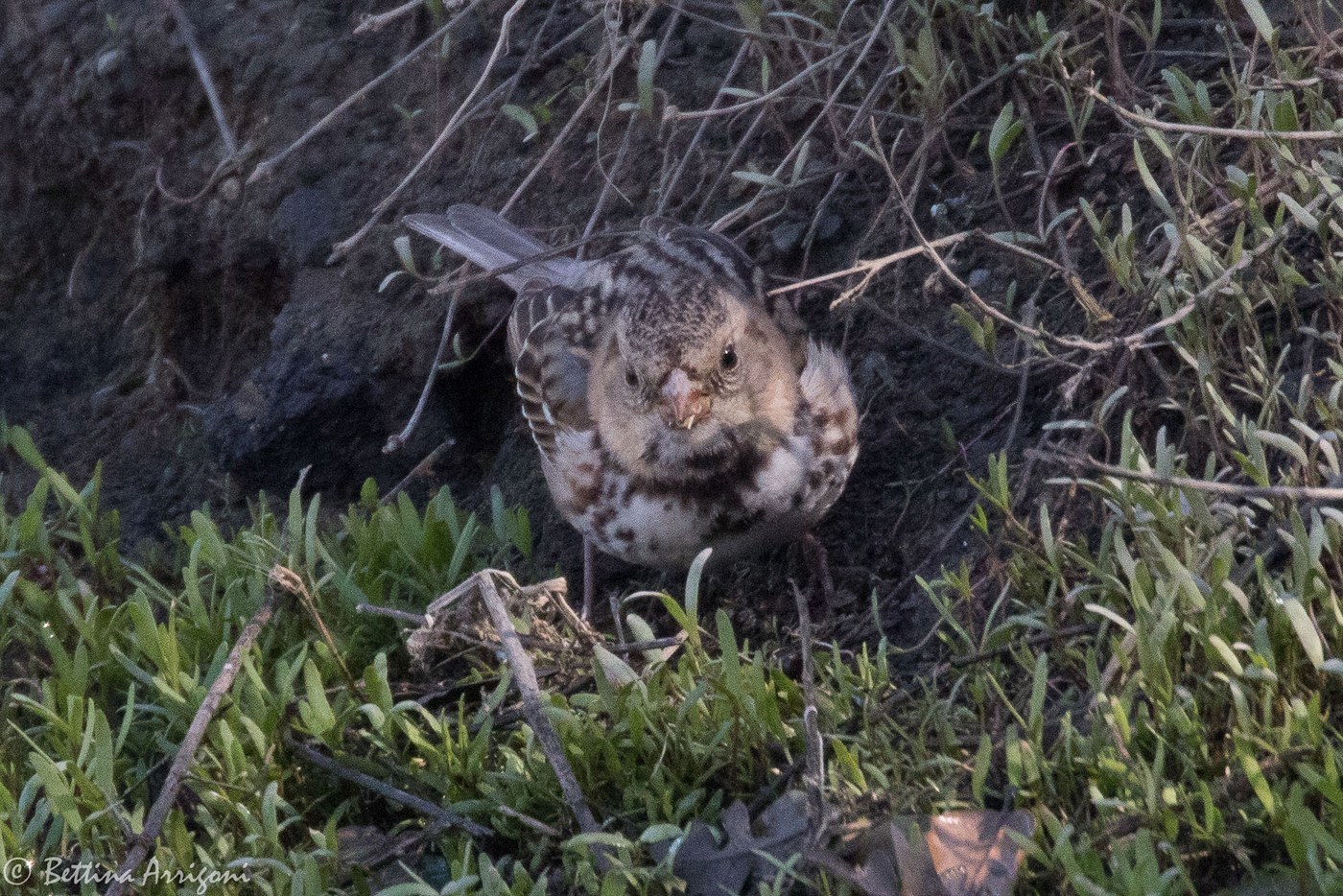
What Harris's Sparrow Feathers Look Like
Harris's Sparrow is the largest sparrow in North America, and breeding adults show a bold black face pattern that sets them apart from other streaky brown sparrows.
- Crown and face feathers (breeding adult): solid black covering the crown, face, and throat/bib — the species' most recognizable feature.
- Nape feathers: grey, framing the sides of the black crown.
- Back feathers: streaked brown, black, and buff, giving a classic sparrow "sparrow-streaked" look.
- Underparts: white belly with black streaking forming a bib that tapers down the breast.
- Winter/juvenile feathers: the black is more scaly and mottled with brown rather than solid, but a black chin patch usually persists even in duller plumages.
- Size: noticeably larger and chunkier than most other sparrow feathers, reflecting the species' larger overall body size (about 18–20 cm).
Step-by-Step: Is This Feather From a Harris's Sparrow?
- Look for solid black on the face/crown. A large sparrow feather that's black across the crown and throat, not just a stripe, is the strongest lead.
- Check for grey nape feathers bordering the black — this grey collar is a useful secondary clue.
- In duller feathers, find the black chin patch. Even non-breeding or juvenile birds usually retain at least a small solid black patch on the chin/throat.
- Measure the feather. Larger than a typical sparrow feather (this species is chunkier than White-crowned or White-throated Sparrow) supports Harris's Sparrow.
- Consider location and season. Feathers found in open woodland edges and brushy fields in the central US during winter, or in stunted spruce-tundra transition zones in summer, fit this species' range.
Similar Species & How to Tell Them Apart
- White-crowned Sparrow: has bold black-and-white stripes on the crown but a grey face, not the solid black face/bib of Harris's Sparrow.
- White-throated Sparrow: shows a white throat patch and yellow lores, lacking the extensive black face and bib.
- Fox Sparrow: heavily marked with rufous or grey streaking but no solid black face or bib pattern at all.
Where & When You'll Find Them
Harris's Sparrows breed in the stunted spruce-tundra transition zone of north-central Canada, a remote and limited breeding range, then migrate through the Great Plains to winter in brushy fields, hedgerows, and open woodlands of the central United States. Feathers are most likely to be found at winter feeders, brush piles, and weedy field edges in states like Nebraska, Kansas, and Oklahoma during the non-breeding season, with molt occurring on the breeding grounds before birds head south.
Frequently asked questions
What's the single best clue for identifying a Harris's Sparrow feather?
A black chin/throat patch persisting even in duller winter or juvenile plumage — solid black across the crown and face in breeding adults is the clearest sign.
How does a Harris's Sparrow feather differ from a White-crowned Sparrow's?
White-crowned Sparrow shows black-and-white crown stripes with a grey face, while Harris's Sparrow has a solid black face and throat, not just crown stripes.
Where in North America would I most likely find a Harris's Sparrow feather?
In winter, look in brushy fields and hedgerows across the central Great Plains states; in summer, feathers would come from the remote spruce-tundra transition zone of north-central Canada.
Are Harris's Sparrow feathers larger than other sparrows'?
Yes, this is North America's largest sparrow species, so its feathers run noticeably larger and chunkier than those of White-throated or Chipping Sparrows.